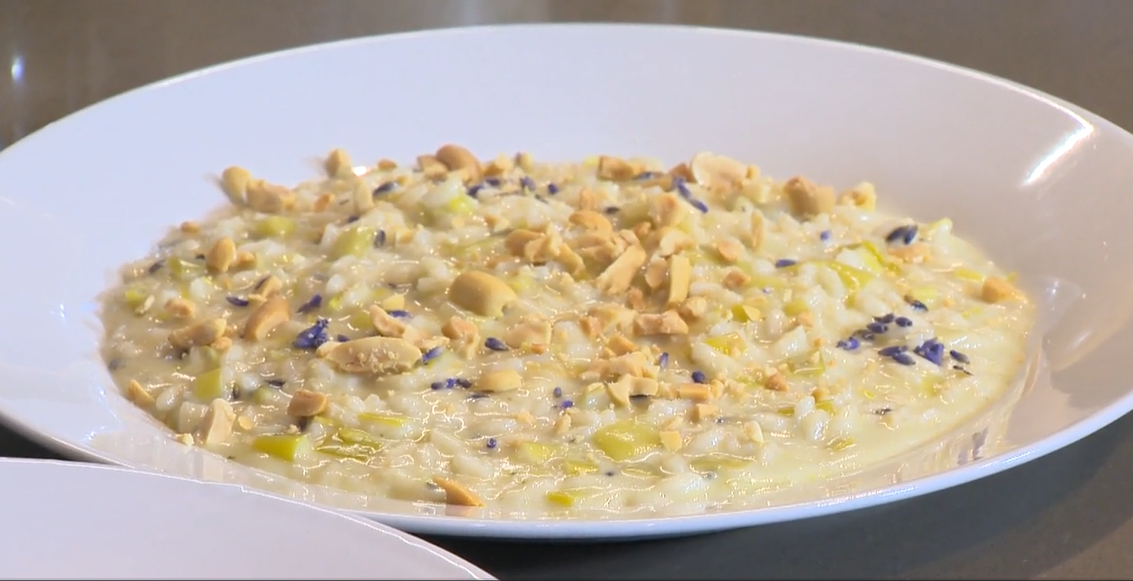
Most food writers pitching lavender risotto are selling you an aesthetic, not a meal.
They want you to picture a sun-drenched terrace in Provence. They want you to imagine yourself as the kind of effortless bohemian epicurean who casually tosses garden botanicals into a steaming copper pot. They write about "delicate floral notes" and "springtime elegance."
They are lying to you.
What they are actually serving you is warm, starch-thickened bathwater.
If you follow the standard online recipe for lavender risotto, you will end up with a dish that tastes like a bottle of high-end hand soap. It is a chemical inevitability. The culinary world has fallen into a lazy consensus that any herb can be treated like rosemary or thyme if you just chop it finely enough.
It is time to dismantle this pseudo-gourmet trend with basic organic chemistry and kitchen reality.
The Molecular Trapping of Volatiles
To understand why lavender risotto fails in almost every home kitchen, you have to look at what happens when you cook starch and fat.
Risotto is not a neutral canvas. It is a highly specific, hot emulsion of amylose starch, broth, and dairy fat. When you stir butter and Parmigiano-Reggiano into hot rice at the end of the cooking process—a step known as mantecatura—you are creating a physical trap for flavor compounds.
Lavender's flavor profile is dominated by two primary organic compounds: linalool and linalyl acetate.
These compounds are terpenes. They are highly volatile, and more importantly, they are lipophilic. This means they do not dissolve well in water, but they dissolve beautifully in fats.
When you toss raw or lightly simmered lavender buds into a risotto, the fat in the butter and cheese immediately strips the linalool and linalyl acetate from the plant matter. Because these compounds are now bound to the fat, they do not evaporate into the air as pleasant aromas. Instead, they coat your tongue.
Instead of a subtle, fleeting scent of the French countryside, you get a concentrated, fat-soluble dose of concentrated perfume that clings to your taste buds. Your brain associates this specific chemical concentration with cleaning products and cosmetics.
You aren't tasting "elegance." You are tasting detergent.
Saffron vs. Lavender: The Chemistry of Success
Defenders of the floral rice trend will inevitably point to Risotto alla Milanese—the classic Italian saffron risotto—as proof that flowers belong in starch.
This argument ignores fundamental botanical chemistry.
Saffron works in risotto because its primary active compounds are completely different from those in lavender:
| Compound | Solubility | Culinary Behavior in Risotto |
|---|---|---|
| Crocin (Saffron) | Highly Water-Soluble | Dissolves evenly throughout the cooking broth, coloring the starch without binding heavily to the finishing fats. |
| Picrocrocin (Saffron) | Water-Soluble | Breaks down during cooking into safranal, providing a earthy, hay-like bitter undertone that balances dairy fat. |
| Linalool (Lavender) | Highly Lipophilic (Fat-Soluble) | Binds instantly to butter and cheese, coating the palate and mimicking the sensory profile of cosmetics. |
Saffron is structurally built to disperse in water. Lavender is structurally built to cling to oil. Treating them as interchangeable botanical accents is a fundamental culinary error.
The Myth of "Culinary Lavender"
Browse any food blog and you will find the standard disclaimer: "Make sure you buy culinary lavender, not ornamental lavender!"
This advice is handed down like ancient wisdom, but it misses the entire point.
The distinction between culinary lavender (Lavandula angustifolia) and ornamental or French lavender (Lavandula x intermedia, often called lavandin) is real, but it is not a magic shield against soapy food.
Lavandula angustifolia (English lavender) has a lower concentration of camphor, making it sweeter and less medicinal than its cousin lavandin. Lavandin contains up to 8% camphor, which tastes like mothballs.
While using English lavender prevents your food from tasting like a cedar chest, it does not solve the linalool problem. English lavender still contains massive amounts of linalool. If you subject it to the traditional risotto cooking process—simmering it in broth or sweating it with onions at the start—you are still extracting a soapy concentration of essential oils.
"Culinary" does not mean foolproof. It just means slightly less toxic-tasting.
Dismantling the "People Also Ask" Nonsense
If you search for advice on cooking with lavender, the search engine results are flooded with soft, unhelpful advice. Let us dismantle the most common queries with brutal honesty.
"How do you cook with lavender without it tasting like soap?"
The standard advice is to "use less." This is a coward’s solution. If you use so little lavender that you cannot taste the soap, you also cannot taste the lavender. You have merely added useless blue specks to your rice.
The real answer is that you do not cook the lavender at all. You must change the extraction method entirely. You do not let the buds touch the fat directly at high temperatures.
"Can I substitute dried lavender for fresh?"
Most recipes say to use a third of the amount of dried lavender if substituting for fresh. This is a recipe for disaster. Dried lavender buds are concentrated capsules of dehydrated essential oil. They do not soften during the brief cooking time of a risotto. You are introducing tiny, hard, intensely bitter pellets into a creamy, smooth starch. It ruins the texture of the all'onda wave.
How to Actually Use Volatile Botanicals in Starch
If you are determined to create a botanical starch dish that actually tastes good, you must abandon the traditional risotto method. You cannot sweat lavender with the shallots, and you cannot stir raw buds into the rice at the end.
You must use a cold-extraction or highly diluted infusion method that isolates the aroma while leaving the bitter, soap-like terpenes behind.
Step 1: The Hydrosol Strategy
Instead of using physical buds, use lavender hydrosol (flower water) or make a highly diluted lavender tea.
- Simmer a tiny pinch of Lavandula angustifolia buds in water for exactly two minutes.
- Strain out the buds immediately. Do not leave them in.
- Use this lightly scented water as a tiny fraction (no more than 5%) of your total cooking stock.
This introduces the volatile aromas in a water-soluble environment, preventing them from overwhelming the fat emulsion at the end.
Step 2: The Acid Balance
Lavender is alkaline and soapy. To counter this on a sensory level, you need a powerful acid profile. The standard splash of cheap dry white wine used in basic risotto will not cut it.
You need a high-acid, citrus-forward brightener. Meyer lemon juice or a sharp verjus should be added at the very end of the cooking process. Acid cuts through the fatty barrier on your tongue, preventing the lipophilic lavender compounds from lingering and building up that cosmetic aftertaste.
Step 3: Dehydrate and Powder
If you must have visual lavender in the dish, do not use whole buds.
- Dehydrate the lavender buds until they are bone dry.
- Grind them into an incredibly fine micro-powder using a spice grinder.
- Combine this powder with a high-quality sea salt at a ratio of 1 part lavender to 20 parts salt.
- Dust a microscopic amount of this lavender salt over the finished plate from high above just before serving.
This ensures the lavender hits the nose first as an olfactory sensation, rather than dissolving into the hot fat of the pan and turning into liquid soap.
The next time a recipe developer tells you to toss a tablespoon of lavender buds into your arborio rice, ignore them. Stop trying to turn your dinner into an aromatherapy session. Respect the chemistry of starch, respect the physical limits of fat, and keep the essential oils out of your pan.