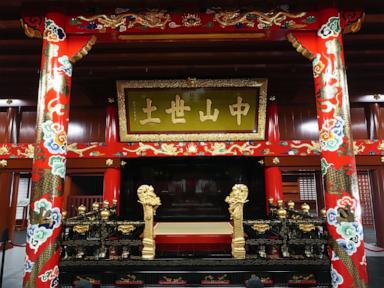
Seven years after smoke swallowed the red timber roofs of Shuri Castle, Okinawa is celebrating the return of its main hall. That sounds like a neat comeback story. Honestly, it is much messier, slower, and more meaningful than a simple rebuild.
Watching a wooden monument burn in the middle of the night hurts. Anyone who has stood on those stone terraces in Naha knows how heavy the silence feels when a symbol like that disappears. Yet celebrating the restored Shuri Castle hall seven years after the fire forces a sharper question than most travel roundups bother to ask. What are we really looking at when a reconstructed hall rises on old foundations, and why does its return matter so much to people in Okinawa?
I have spent years following how cultural landmarks recover from disaster, from earthquake-damaged shrines to rebuilt historic quarters. Too often, visitors treat a reconstructed building like a theme park prop or a quick photo stop between flights. That misses the whole point. In Okinawa, rebuilding is an act of memory, craft survival, and identity under pressure.
Why the Shuri Castle Fire Hit Okinawa So Hard
When fire broke out at Shuri Castle in the early hours of October 31, 2019, it did not just burn wood. It hit a nerve.
For centuries, Shuri Castle served as the political and cultural center of the Ryukyu Kingdom, a maritime trading state that linked Japan, China, Korea, and Southeast Asia. Its architecture blends influences from across that trading network into something distinctly Okinawan. Vermilion lacquer, curved roof lines, carved dragon motifs, and open courtyards were never meant to look like mainland Japanese castles. They tell a story of diplomacy, navigation, and island autonomy.
Then came World War II and the Battle of Okinawa in 1945, which reduced much of the site to ruins. Decades of painstaking reconstruction brought the main hall, known as the Seiden, back to life in 1992, followed by World Heritage recognition for related gusuku sites and cultural properties in 2000. Losing the hall again in 2019 felt like a cruel repeat of history.
People often assume rebuilding a famous landmark is mostly a matter of money and blueprints. In practice, wood and lacquer do not care about budgets. Traditional carpenters need seasoned timber, specialized joinery skills passed down through apprenticeships, and deep familiarity with historical records. When a hall burns, you do not just replace beams. You race to keep rare crafts alive while the public watches every delay.
Rebuilding a Hall Without Faking the Past
Here is a mistake plenty of travelers make when they hear a historic building has been restored. They expect an exact time capsule from five hundred years ago.
That is not how heritage conservation works. Even the pre-2019 hall was a modern reconstruction built using twentieth-century engineering alongside traditional methods. Seven years after the 2019 blaze, the newly restored hall represents another chapter in a long chain of survival rather than a single frozen moment from the Ryukyu era.
Still, craftspeople put serious effort into traditional techniques where they count most. Timber selection, mortise-and-tenon joinery, painted surfaces, and architectural proportions matter because they carry cultural continuity. You can see the difference up close when joiners fit wood without relying on modern brackets where traditional craft belongs, or when artisans work to match pigments and finishes that suit Okinawa's subtropical climate.
Let's be real about the debate around reconstructions, though. Some purists argue that once an original historic structure is lost, any replacement is a replica, not the real thing. I get where that criticism comes from. Authenticity in architecture is a genuine argument, not a made-up objection.
At the same time, writing off a rebuilt hall as "fake" ignores how living cultures work. For many Okinawans, the physical presence of the hall anchors ceremonies, local pride, and intergenerational teaching. A photograph or an empty plaza cannot do that work on its own.
What Visitors Usually Get Wrong About Shuri Castle
If you plan to visit Naha to see the restored hall, skip the rushed checklist approach. Most people show up expecting a samurai fortress like Himeji or Matsumoto. Wrong history. Wrong layout.
Shuri Castle was a royal palace and administrative seat of the Ryukyu Kingdom, not a classic feudal samurai stronghold. Its gates, courtyards, and halls reflect court life, state rituals, and international trade rather than mainland daimyo warfare. Once you shift that mental frame, the whole hill makes more sense.
Another common slip is treating Shuri as a standalone stop squeezed into a single afternoon. Heat, humidity, stairs, and slopes add up fast in Okinawa. Rushing through the grounds in forty-five minutes leaves you sweaty and skimming plaques. Giving the site half a day lets you notice how the gates lead your eye, how breezes move through the complex, and how the city of Naha stretches out below.
Timing matters too. Celebrations and major milestones draw big crowds, school groups, and local families. If you want space to take in the architecture without shoulder-to-shoulder bottlenecks, aim for earlier in the morning and check official site notices ahead of time for any special ceremonies or phased access rules.
Beyond the Main Hall in Naha
The main hall grabs the headlines, and rightly so. Seven years of waiting, planning, and craftwork will do that. Yet Okinawa's story does not start or end inside one building.
Around the castle grounds, stone walls, gates, and viewpoints connect the palace to broader neighborhoods in Shuri. Walking slowly through the surrounding streets reveals quieter corners where older residential lanes, local eateries, and traditional craft shops remind you that Okinawa has its own rhythm.
If you care about why this restoration matters beyond architecture, pay attention to local context. Okinawa carries a complex history shaped by kingdom days, annexation, wartime devastation, and ongoing political and economic debates over land and identity. A restored hall does not erase those tensions. It sits right inside them, giving residents a visible touchstone of heritage they can claim and celebrate on their own terms.
How to Plan a Thoughtful Visit
Want to make the most of seeing the restored hall without falling into tourist traps? Keep your plan simple and grounded.
- Check official Shuri Castle and Okinawa prefectural updates before you go so you know current visiting hours, ticketing details, and any ongoing surrounding restoration work.
- Pair your visit with historical context on the Ryukyu Kingdom beforehand so you recognize motifs, layout choices, and cultural references instead of guessing.
- Wear comfortable walking shoes and bring sun protection and water, because subtropical sun and stone steps wear people out faster than they expect.
- Leave room in your schedule for slow exploration rather than stacking five distant attractions into one day.
Seeing Shuri Castle's hall standing again seven years after the fire is a reason to celebrate craftsmanship and resilience. Go with curiosity, take your time on the hill, and let the place speak in its own voice.