Silence in a war zone is never empty. It is heavy, metallic, and tasted at the back of the throat like old copper coins.
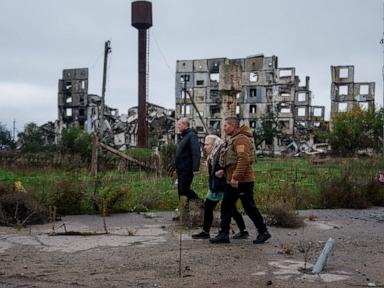
For forty-eight hours, the artillery stopped falling on the western bank of the Dnipro River. No incoming Grad rockets screaming like tearing sheet metal. No mortars thumping into the soft, black mud of the riverbanks. Just the wind rattling the skeletal remains of shattered window frames in Kherson, and the low, persistent hum of the water moving south toward the Black Sea.
A ceasefire. Brief. Fragile. Negotiated in rooms miles away from the shattered concrete of the Antonivka Road Bridge, designed to open a narrow humanitarian corridor out of what military analysts coldly call a kill zone.
To understand what that clinical phrase actually means, you have to stand in a basement in the Korabelnyi district at four in the morning. You have to smell the damp concrete, the stale wool of blankets that haven't seen sunlight in months, and the sharp, anxious sweat of people trying to pack a seventy-year life into two canvas bags.
The Architecture of a Trap
Geography is destiny, and in southern Ukraine, the Dnipro River is a cruel architect. Since the liberation of Kherson city in late 2022, the river ceased to be a trade route or a scenic backdrop for evening walks. It became a front line.
Imagine a football stadium where one team sits in the upper deck with binoculars, sniper rifles, and hundreds of remote-controlled drones, while the other team tries to buy groceries on the fifty-yard line. That is the geometry of Kherson’s riverside neighborhoods. The eastern bank, held by Russian forces, sits slightly higher in several strategic stretches, offering an unobstructed line of sight directly into the residential streets, apartment blocks, and bus stops on the western shore.
Military planners refer to this exposed strip—stretching roughly two to three kilometers inland from the water—as a tactical kill zone. In practice, it means that stepping outside to fetch water or walk a dog carries the statistical probability of a Russian roulette spin.
Before this temporary truce, the air above these streets buzzed with a specific, high-pitched whine that locals learned to distinguish from standard wind within seconds. First-person-view drones. Small, agile quadcopters rigged with explosives, piloted by operators sitting in bunkers across the water, hunting individual vehicles, bicycles, and pedestrians. According to United Nations monitoring reports and local regional administration data, drone strikes against civilians in the Kherson region surged dramatically throughout 2024 and 2025, accounting for the vast majority of daily casualties in the riverside districts.
When the guns suddenly go quiet, the mind does not immediately celebrate. It suspects a trick.
What Fits Inside a Canvas Bag
Consider a hypothetical resident—let us call her Olena, though her composite reality belongs to thousands of elderly pensioners who refused to leave during the first, second, and third waves of evacuation.
Olena is seventy-four. Her knees ache when the river mist rolls in, and she has lived in the same fourth-floor apartment overlooking the Dnipro since 1978. Why did she stay when the shells began falling? Outsiders ask this question with a mixture of pity and frustration, as if leaving were merely a matter of booking a ticket and packing a suitcase.
Leaving means admitting that the life you built is over. It means abandoning the graves of your parents, the stray cats you feed behind the bombed-out bakery, and the certainty of your own bed for the terrifying ambiguity of a cot in a gymnasium in Odesa or Mykolaiv. For someone on a fixed pension, displacement is not an adventure; it is a freefall into poverty.
Yet, when the news filters down—via battery-powered radios, sporadic cell signals, and volunteers shouting through megaphones in the courtyards—that a brief ceasefire has opened a window for evacuation, the calculus changes.
Watch Olena’s hands as she packs. This is the invisible stake of every humanitarian corridor: the brutal editing of a human existence.
She holds a porcelain teacup, painted with blue cornflowers, part of a set gifted at her wedding. It takes up too much space. It breaks easily. She sets it back on the table. Next to it goes a heavy wool coat—too bulky—and a stack of photo albums that weigh four kilograms. Four kilograms is four liters of water, or two days of canned meat, or the extra blanket needed if the evacuation bus breaks down on the cratered highway north.
In the end, you take documents. A passport wrapped in a plastic bag to keep out the rain. Blood pressure medication. A single photograph pulled from its frame. Everything else—the furniture, the books, the smell of your own kitchen—is left behind as an offering to whatever happens when the clock runs out.
The Mechanics of a Perilous Crossing
A ceasefire on paper is a clean, straight line. On the ground, it is a frayed rope stretched over a canyon.
The mechanics of extracting civilians from a contested riverbank require precision that war rarely permits. Volunteer networks—often working alongside the Ukrainian State Emergency Service and international aid organizations—operate on strict, unforgiving schedules. Armored vans, their windshields scarred by shrapnel and covered in heavy steel mesh to deflect drone impacts, roll into the silent streets just after dawn.
There is no time for long goodbyes. Every minute an evacuation vehicle remains stationary in the riverside zone increases the risk that a rogue drone operator, either out of communication with command or deliberately ignoring the truce, decides to take a shot.
I have watched evacuation teams work in similar grey zones across eastern and southern Ukraine, and the choreography is always the same. Nobody speaks above a normal conversational tone. Movements are brisk, economical, almost clinical. A volunteer takes the heaviest bag; another guides an elderly man down four flights of unlit stairs by the elbow, using a small red-tinted flashlight so the beam does not flash through shattered stairwell windows toward the opposite bank.
The drive out of the riverside belt is less than ten minutes, yet inside the armored cabin, time stretches until it feels elastic. Passengers stare at the floorboards. Nobody looks out the narrow, reinforced slits of the windows. Through the steel hull, you can hear the crunch of pulverized concrete under the tires, the scrape of fallen power lines brushing against the roof, and the heavy, rhythmic breathing of strangers pressed shoulder-to-shoulder.
You do not exhale until the van crosses the northern perimeter of the city, where the flat agricultural steppe opens up and the horizon no longer belongs to the artillery spotters across the water.
The History of Broken Promises
To trust a ceasefire in this war requires a deliberate suspension of memory.
The behavioral pattern of localized truces over the past decade—from the early Minsk agreements in the Donbas to the desperate, failed attempts to open green corridors out of Mariupol in 2022—offers a sobering historical record. Brief pauses in fighting are rarely born of sudden goodwill. More often, they are transactional necessities: a window to rotate exhausted troops, recover the dead from no-man's-land, or relieve international diplomatic pressure.
Because both sides know the pause is temporary, the truce itself becomes a weaponized countdown.
Military analysts point out a grim paradox inherent in short-term humanitarian windows. While they save hundreds of lives in the immediate term, they also strip the remaining zone of its civilian buffer. Once the buses leave and the last volunteers clear the checkpoint, the rules of engagement on the riverbank often harden. Those who remain behind—whether out of stubbornness, physical immobility, or deep psychological paralysis—find themselves in an even darker, quieter void, cut off from the dwindling supply of bread and medicine that volunteers previously risked their lives to deliver.
Furthermore, the psychological toll of a brief truce lingers long after the shelling resumes. Ask anyone who has survived a siege: the silence is harder on the nerves than the noise. During a bombardment, adrenaline narrows your focus to immediate survival. During a ceasefire, your brain suddenly has room to process the grief, the exhaustion, and the terrifying certainty that the quiet has an expiration date stamped on it.
What Waits Beyond the Checkpoint
When the armored vans finally pull into the transit hub miles away from the river, the relief is strangely muted.
There are no cinematic cheers. Instead, there is a quiet procession toward folding tables staffed by registration clerks, medics, and psychologists. People sit on plastic chairs, clutching their canvas bags to their chests as if someone might steal the few fragments of their past they managed to rescue.
An old man in a grease-stained cap asks a volunteer if the buses will go back tomorrow for his neighbor's dog. A woman in her fifties stares at a paper cup of hot tea, her hands trembling too violently to lift it to her lips.
This is the true cost that cold casualty statistics never capture. A news headline measures the success of a ceasefire in numbers: three hundred evacuated, zero fatalities during the six-hour window, an operational success. It cannot measure the phantom limb of a lost home, or the disorientation of waking up in a safe city and instinctively flinching at the sound of a garbage truck hitting a pothole outside.
Yet, when you look at the alternative—staying trapped in the concrete basements along the Dnipro while winter frost creeps into unheated rooms and drones patrol the intersections—the brutal arithmetic of the escape window becomes undeniable. You trade your history for your breath. You leave the teacups on the table so that you can remain alive to remember them.
Back in Kherson, as the final minutes of the ceasefire tick away, the wind shifts off the Dnipro. A stray dog trots down the center of a deserted boulevard, stopping briefly to sniff an abandoned suitcase lying beside a shuttered pharmacy. High above the river, a faint, familiar mechanical buzz begins to rise from the eastern bank, growing louder as the clock hits zero.