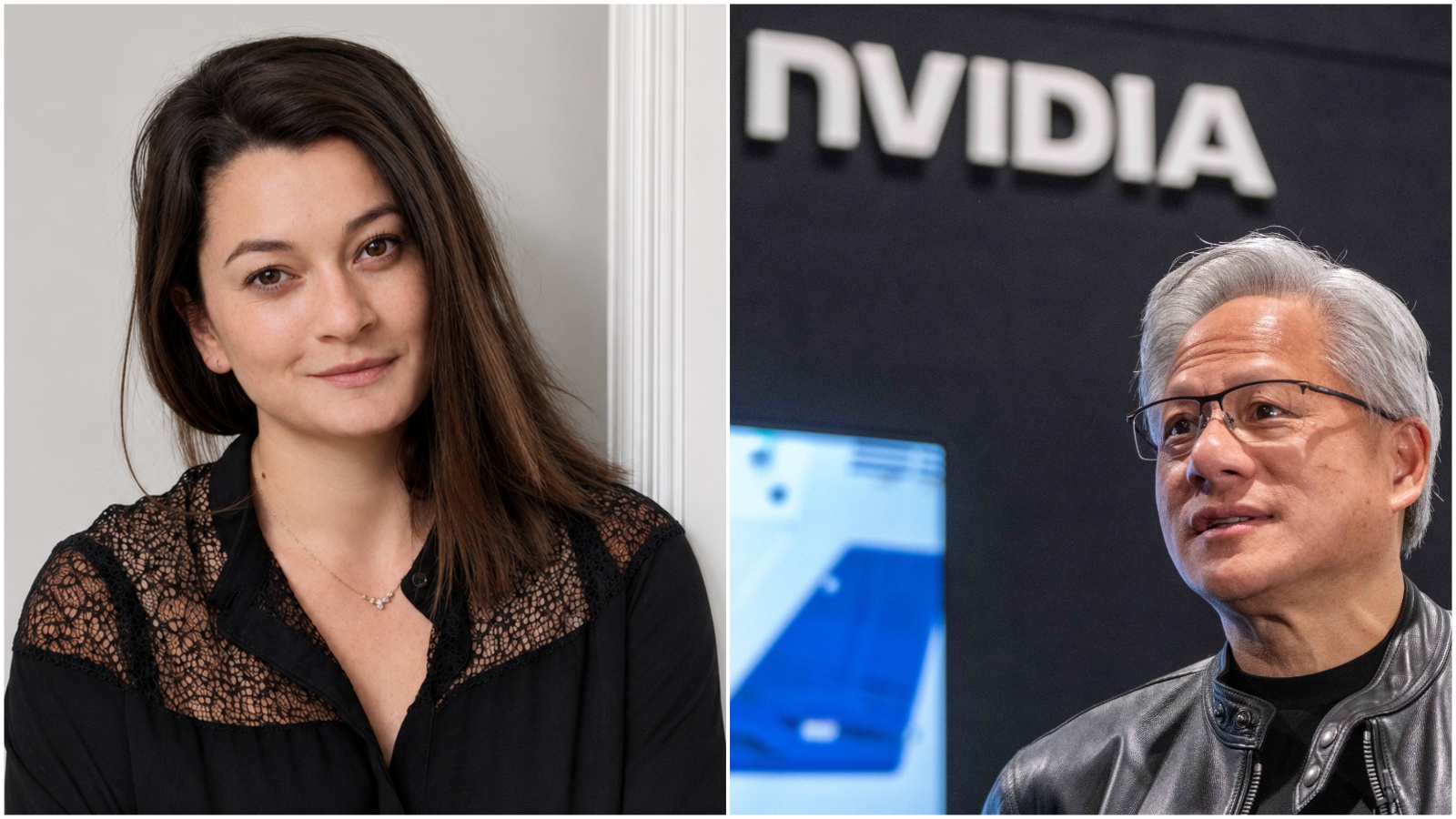
No, Jensen Huang hasn't stepped down from Nvidia, and his daughter isn't staging a hostile takeover of the boardroom. If you've seen viral headlines claiming "Jensen Huang gone, now his daughter yelling at seniors a worry for Nvidia," you're looking at pure clickbait distortion of a very real—and genuinely fascinating—corporate reality.
Let's separate the internet noise from what's actually happening inside the world's most valuable chipmaker. For an alternative view, consider: this related article.
Jensen Huang is still very much the CEO of Nvidia. He hasn't resigned, retired, or handed over the keys. However, his daughter, Madison Huang, does hold an increasingly visible leadership role at the company. And according to investigative reporting from outlets like The Information, her intense, demanding management style—mirrored closely after her father's famously blunt approach—has raised eyebrows among some veteran executives.
Where the Rumors About Madison Huang Actually Started
Viral stories rarely materialize out of thin air. Usually, they take a kernel of verified business reporting and twist it until it sounds like a soap opera. Similar insight on the subject has been shared by The Verge.
In late 2025, The Information published an extensive profile examining the growing influence of Jensen Huang's two children, Madison and Spencer Huang, inside Nvidia. Both joined the company after spending years in completely different industries. Spencer previously ran a cocktail bar in Taipei, while Madison studied culinary arts at Le Cordon Bleu and worked in luxury hospitality at LVMH before earning her MBA from London Business School.
Neither of them walked straight into a C-suite role on day one. They started in product marketing and rotational programs around 2020.
Fast forward to today, and Madison Huang is a senior director of product marketing, heavily involved in Nvidia's Omniverse platform and physical AI initiatives. She travels alongside her father to major global conferences, sits in high-level product reviews, and wields considerable influence over how Nvidia pitches its next-generation industrial software.
Because she works directly alongside her father and shares his relentless perfectionism, friction was inevitable. Reports indicated that she occasionally clashes with senior staff and pushes teams hard during product rollouts. Internet aggregators took that nuance, slapped a sensational headline on it claiming Jensen was "gone" and Madison was "yelling at seniors," and watched the clicks roll in.
Why Her Management Style Mirrors Jensen Huang
If you've ever studied how Nvidia operates, you know it isn't a cozy, consensus-driven workplace. Jensen Huang is famous for tearing apart presentations in front of dozens of people if the engineering logic doesn't hold up. He calls it "torturing" ideas into greatness.
Madison grew up watching that exact playbook.
From everything reported by people inside the building, she doesn't hide behind corporate pleasantries. When a demo lags or a marketing message misses the technical mark, she calls it out immediately. For longtime Nvidia engineers who spent years earning Jensen's trust, taking blunt criticism from the founder's thirty-something daughter can feel jarring.
Here is the real tension inside the company right now:
- Earned authority versus inherited proximity. When Jensen Huang berates a project, employees accept it because he built a multi-trillion-dollar company from a Denny's booth. When Madison does it, critics quietly wonder how much of that authority comes from her resume versus her last name.
- The flat hierarchy problem. Nvidia famously avoids traditional corporate layers, with dozens of executives reporting directly to Jensen. Adding a family member into that flat structure complicates internal politics, because nobody wants to be the person who picks a fight with the CEO's daughter.
- Cultural shift at scale. Nvidia went from a graphics card company to an AI juggernaut with over 30,000 employees in a remarkably short window. New hires and seasoned veterans alike are still adjusting to hyper-growth pressures.
Honestly, her behavior isn't an anomaly at Nvidia. It's the house style. The only difference is who is delivering the critique.
The Real Succession Question Nobody at Nvidia Answers Publicly
The reason these rumors gain so much traction isn't just workplace gossip. Wall Street is obsessed with what happens to Nvidia when Jensen Huang eventually steps aside.
He's in his early sixties and shows zero signs of slowing down. Watch any recent Computex or GTC keynote—the man still stands on stage in his signature leather jacket for two hours straight, rattling off data center architectures from memory. He has explicitly stated he plans to run Nvidia as long as he can contribute.
Still, institutional investors hate single-point-of-failure risk. Right now, Jensen Huang is Nvidia's strategic brain.
When investors see Madison and Spencer Huang taking on prominent roles, they immediately ask whether Nvidia is quietly grooming a family dynasty. Public tech giants almost never pass the CEO torch to the founder's children. Apple didn't do it. Microsoft didn't do it. Amazon didn't do it.
Nvidia's board of directors has remained tight-lipped about formal succession plans, which is standard practice while a founder-CEO is still active. Yet elevating Madison to senior director status ensures that the Huang family maintains eyes and ears deep inside the operational layers of the business, far beyond boardroom meetings.
Should Investors Actually Worry About This
If you hold Nvidia stock or follow the semiconductor space, you don't need to panic over clickbait headlines about family drama. You do, however, need to pay attention to executive retention.
Nvidia's biggest moat isn't just its Blackwell or Rubin GPU architectures, or even its CUDA software ecosystem. Its real moat is the unusually low turnover among its senior engineering and leadership ranks. While competitors like Intel and AMD have cycled through executives, Nvidia's core team has stayed intact for decades.
That stability gets tested when internal friction rises.
If senior vice presidents start heading for the exits because they feel undermined by younger, family-connected directors, that would be a legitimate red flag. So far, we haven't seen an exodus. Nvidia continues to dominate AI infrastructure spending, and its top technical lieutenants—people like Jonah Alben and Dwight Diercks—remain firmly in place.
How to Spot Fake Tech Leadership Panic Before It Costs You
Sensationalized headlines about tech founders are practically their own cottage industry now. Whenever you see dramatic claims about a major CEO disappearing or a company imploding over internal drama, run a quick sanity check before reacting:
- Check SEC Form 8-K filings. Public companies in the US are legally required to file an 8-K within four business days if a CEO resigns, retires, or is removed. No 8-K means Jensen Huang is still at his desk.
- Trace the quote back to primary journalism. Reliable tech reporting comes from outlets with named sources and editorial standards—places like Bloomberg, The Wall Street Journal, or The Information. If the story only exists on anonymous social media threads or content farms, ignore it.
- Watch executive departures, not gossip. In Silicon Valley, yelling happens every day. Track LinkedIn and proxy statements for actual VP-level resignations; that's the only metric that proves cultural rot is hurting the business.
Keep your focus on Nvidia's quarterly data center revenue, hyperscaler capital expenditure budgets, and gross margins. As long as Jensen Huang is calling the shots and the world's biggest cloud providers are buying every chip Nvidia can manufacture, internal friction in the marketing ranks is just background noise.