Picture a Tuesday evening on Interstate 280, just south of San Francisco, where the coastal fog rolls over the Santa Cruz Mountains like spilled milk and the asphalt curves along the Crystal Springs Reservoir.
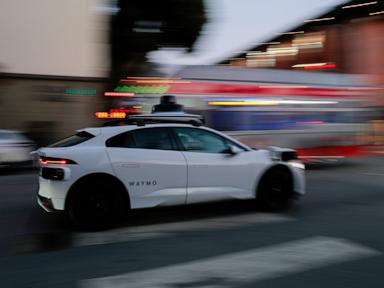
Traffic is moving at seventy miles an hour. To your left, a commuter in a dented Honda Civic is trying to merge across three lanes to make the exit for Highway 92. To your right, a semi-truck is downshifting on a slight grade, throwing up a fine mist of diesel exhaust and road grit. Now, imagine sitting in the back seat of a white Jaguar I-PACE, watching the steering wheel turn itself with the eerie, deliberate precision of a ghost, while the spinning lidar dome on the roof whirs silently against the wind. There is no one in the front seat. Not a soul. Meanwhile, you can read related stories here: What Security Teams Get Wrong About Google's Autonomous Attacks Warning.
For months, this was the promised next chapter of autonomous mobility in California. Waymo, the self-driving unit born out of Google’s secret laboratories over fifteen years ago, had already conquered the dense, chaotic, pedestrian-choked streets of San Francisco, Phoenix, and Los Angeles. Now, the company was pushing onto the open freeway—the arteries of American life where speeds double, reaction windows shrink to milliseconds, and the margin for error vanishes entirely.
Then, the brakes slammed on. Not in a car, but in a regulatory office in Sacramento. To see the full picture, we recommend the recent article by TechCrunch.
California regulators stepped in to bar Waymo’s driverless vehicles from operating on state freeways following a string of troubling incidents that exposed a widening gap between what artificial intelligence can do at twenty-five miles an hour and what happens when physics takes over at sixty-five.
Stop.
Read that again. The most advanced autonomous driving system on the planet—a fleet backed by billions of dollars, millions of logged miles, and decades of machine learning—was just told to stay off the highway.
To understand why this happened, and why it matters far beyond Silicon Valley, you have to step out of the boardroom and onto the asphalt. You have to look at what happens when a machine trained to be polite meets the brutal, unspoken choreography of human freeway driving.
The Anatomy of a Hesitation
Consider a hypothetical scenario, grounded entirely in the real-world telemetry and incident reports that have plagued autonomous fleets across the Bay Area.
Meet Elena, a night-shift nurse commuting home from Palo Alto at 11:30 PM. She is exhausted, running on lukewarm coffee and muscle memory, doing sixty-eight in the middle lane of Highway 101. Ahead of her, the brake lights of a driverless Waymo suddenly flare crimson.
There is no traffic jam ahead. There is no debris in the road. No deer has darted across the median.
Instead, the car’s sensors have registered a construction cone sitting slightly askew on the far right shoulder, paired with the erratic lane-drifting of a pickup truck two hundred yards ahead. To a human driver like Elena, this is background noise. Her brain processes the cone, registers that it isn't in her lane, notices the pickup truck correcting its path, and keeps her foot steady on the accelerator. She maintains momentum because she understands an unwritten rule of highway survival: sudden deceleration in fast-moving traffic is often more dangerous than the hazard you are trying to avoid.
The algorithm, however, does not have gut instincts. It has probability trees.
In those fractions of a second, the Waymo’s software calculates a spike in uncertainty. Bound by safety protocols designed to eliminate risk, the vehicle executes a hard, unprompted brake check—or, in other documented cases, slows down unpredictably or struggles to merge out of an ending lane when human drivers refuse to yield. Behind it, Elena has less than two seconds to react before forty-five hundred pounds of steel collide with sixty-five miles per hour of momentum.
This is not science fiction. Across California, state agencies—including the Department of Motor Vehicles and the California Public Utilities Commission—have been collecting data on exactly these kinds of friction points. While Waymo’s safety record on city streets has frequently outperformed human drivers in avoiding severe crashes, the freeway environment introduces an entirely different breed of danger. Incidents involving phantom braking, awkward merges, stalled vehicles blocking active lanes, and confusion around emergency response zones forced regulators to draw a hard line in the pavement.
Until the technology proves it can handle high-speed unpredictability without becoming a hazard itself, the on-ramps are closed.
Why City Streets Lie to Algorithms
When I first rode in an autonomous vehicle in downtown San Francisco two years ago, I remember feeling a strange, hypnotic sense of calm. The car navigated double-parked delivery vans, cyclists blowing through stop signs, and tourists stepping off curbs with their eyes glued to their phones. It felt invincible. Every time a pedestrian twitched toward the crosswalk, the car yielded smoothly, patiently, without a hint of road rage.
That experience created an illusion—one that fooled the public, investors, and perhaps even the engineers themselves.
We assumed that city driving was the final boss of autonomy. After all, cities are messy. Highways are just straight lines with painted stripes and no pedestrians. If a computer can handle Market Street at rush hour, surely cruising down Interstate 5 is child’s play.
We got the physics completely backward.
Think of city driving like a dense, crowded ballroom where everyone is walking at a brisk pace. People bump shoulders. Someone steps on your shoe. You pause, apologize, adjust your angle, and keep moving. If someone makes a mistake at twenty miles an hour, the result is a bruised ego or a dented bumper.
Freeway driving is an entirely different sport. It is a high-speed ballet performed on a tightrope. At seventy miles an hour, a vehicle covers over a hundred feet every single second. By the time your eyes register a hazard, your brain processes it, and your foot moves from the gas to the brake, you have already traveled the length of a basketball court.
In that environment, hesitation is lethal.
Human drivers survive freeways not because we have faster reflexes than computers—we don't—but because we are masters of social negotiation. We make eye contact through side mirrors. We read the subtle body language of another car—the slight drift toward the lane line that signals someone is about to cut us off, even without a blinker. We understand when to assert ourselves into a tight gap so we don't get trapped behind a stalled semi-truck.
A robot car is built to follow the rules to the letter. On a California freeway, where everyone is routinely driving ten miles over the speed limit and merging with aggressive precision, a machine that strictly obeys every rule becomes an unpredictable obstacle. It is the tourist stopping dead in the middle of a busy subway staircase to check a map. Everyone behind it has to swerve to survive.
The Invisible Stakes Behind the Ban
It is easy to read a headline about regulators barring driverless cars from freeways and shrug it off as another bureaucratic speed bump for tech billionaires. After all, Waymo is backed by Alphabet, one of the wealthiest corporations in human history. They can afford to wait. They can afford to hire more engineers, run more simulations, and lobby harder in Sacramento.
But look closer, and you see what is actually on the line.
First, there is the business model itself. Robotaxis cannot survive on city blocks alone. In sprawling metropolitan areas like Los Angeles, Phoenix, and the greater Bay Area, the vast majority of lucrative rides—airport runs, cross-town commutes, suburban errands—require highway travel. Taking a surface-street-only Waymo from downtown San Francisco to SFO turns a twenty-five-minute trip into an hour-long slog through traffic lights and residential neighborhoods. Nobody pays a premium for a slower ride. Without freeways, autonomous ride-hailing remains a novelty, a tourist attraction for tech enthusiasts rather than a viable replacement for car ownership.
Second, and far more personal, is the erosion of public trust.
Trust in new technology is earned in drops and lost in buckets. Every time a driverless car freezes in an intersection, blocks a fire truck, or slams its brakes on a highway for no visible reason, it leaves a scar on the collective psyche of the people sharing the road. You cannot opt out of being a beta tester when a six-thousand-pound autonomous SUV is merging next to you at seventy miles an hour.
When regulators step in to restrict freeway operations, they are acknowledging a truth that Silicon Valley often tries to bury beneath glossy press releases: public roads are not private laboratories.
The frustration among commuters is palpable, and frankly, it is justified. Imagine spending an hour stuck in traffic because a driverless car got confused by a construction zone and came to a complete stop in the fast lane, waiting for a remote human operator in a call center to log in and tell it what to do. Imagine being a firefighter trying to reach a multi-car pileup, only to find your path blocked by an empty vehicle whose sensors couldn't interpret the hand signals of a traffic officer. These aren't hypothetical edge cases; they are the exact real-world friction points that turned local officials and first responders into vocal skeptics.
What Really Happens When the Software Gets Confused
To understand why regulators had no choice, you have to understand how an autonomous vehicle actually sees the world—and where its vision goes blind.
A Waymo vehicle is draped in an extraordinary array of hardware. Spinning lidar units fire millions of laser pulses every second to build a three-dimensional map of the surroundings. High-resolution cameras read traffic lights, street signs, and lane markings. Radar sensors pierce through fog and rain to measure the speed of distant objects.
On paper, this is superhuman perception. The car can see in 360 degrees simultaneously. It never gets tired, never checks a text message, never drives drunk, and never loses its temper.
Yet for all its sensory brilliance, the machine suffers from a profound lack of common sense.
AI systems learn by recognizing patterns from massive datasets of past experiences. When the world behaves according to those patterns, the car is a genius. When the world throws a curveball—a mattress falling off the back of a truck, a police officer waving cars around a downed power line, a sudden torrential downpour that scrambles laser reflections, or a group of teenagers deliberately stepping in front of the bumper to watch it stop—the pattern breaks.
On a city street, when the pattern breaks, the car defaults to its safest programmed behavior: it slows down, pulls over, or stops.
On a freeway, pulling over is often impossible. Concrete barriers box in the lanes. Shoulders are narrow or nonexistent. Traffic is barreling forward like a freight train. When the AI encounters an edge case at highway speed, its default safety instinct—stopping—transforms from a shield into a weapon.
Even the backup system has limits. Like most autonomous operators, Waymo relies on remote fleet response agents—humans sitting in operations centers who can view the car’s camera feeds and offer high-level guidance when the vehicle gets stuck. They do not steer the car with a joystick like a video game; rather, they confirm whether a path is safe or suggest an alternate route. That works fine when a car is stalled at four miles an hour behind a garbage truck in a quiet neighborhood. It is utterly useless when a decision needs to be made in four hundred milliseconds on Interstate 880.
The Human Cost of Moving Too Fast
There is a familiar rhythm to how Silicon Valley introduces transformative technology. First comes the grand vision: a promise to save tens of thousands of lives lost every year to human error, drunk driving, and distraction. It is a noble, urgent goal. Roughly forty thousand Americans die in traffic crashes annually. Anything that can cut that number in half deserves serious attention.
Next comes the deployment: rapid, aggressive, driven by venture capital timelines and fierce competition against rivals like Tesla, Zoox, and traditional automakers.
Finally comes the reckoning: the moment reality pushes back against the code.
We saw this play out dramatically with Cruise, General Motors’ autonomous subsidiary, which saw its California permits suspended entirely after a pedestrian was dragged beneath one of its vehicles in San Francisco—an incident compounded by the company’s failure to immediately disclose full video footage to regulators. That catastrophe sent a shockwave through the entire industry. It proved that oversight couldn't simply be left to corporate self-policing.
Waymo has always positioned itself as the responsible adult in the room—methodical, transparent, and safety-obsessed. For years, that reputation bought them goodwill. While competitors stumbled, Waymo quietly expanded its footprint, logging millions of rider-only miles and publishing peer-reviewed safety data showing dramatic reductions in injury-causing crashes compared to human drivers.
Yet even the most careful student can fail the hardest exam if they sit for it before they are ready.
The troubling incidents on California freeways reveal that Waymo’s methodical approach still hasn't solved the fundamental tension of mixed traffic. For the next twenty years, autonomous vehicles will not be driving on roads filled with other autonomous vehicles—where cars could communicate seamlessly via wireless networks, coordinating merges and speeds with mathematical perfection. They will be driving alongside us.
They will share the road with twenty-two-year-olds rushing to class, exhausted parents juggling screaming toddlers in the back seat, elderly drivers squinting through bifocals in the glare of a setting sun, and truckers pushing the limits of their shift hours.
Human driving is deeply flawed, emotional, and inconsistent. Any technology that hopes to share our highways cannot simply demand that humans drive like robots. The robots have to learn how to survive humans.
The Long Road Back to the On-Ramp
So where does this leave the dream of stepping into a driverless car, leaning back, and letting it whisk you down the coast while you read a book?
It isn't dead. Not by a long shot. In fact, slamming the brakes on freeway operations right now might be the very thing that saves the industry from itself.
History shows that transformative technologies rarely follow a straight line upward. In the early days of commercial aviation, planes crashed with alarming frequency because pilots and engineers were learning the limits of aerodynamics and weather in real time. It took strict federal regulation, mandatory black boxes, rigorous pilot training, and painful pauses after accidents to turn flying into the safest mode of transportation on Earth.
Autonomous vehicles are going through their own turbulent adolescence.
To earn back the right to merge onto California’s highways, Waymo and its peers will have to prove more than just statistical superiority on spreadsheets. They will have to solve the choreography of high-speed human interaction. Engineers will need to refine how the software anticipates aggressive merges, how it handles sudden construction bottlenecks without freezing, and how it communicates its intentions clearly to the human drivers boxed in around it.
More importantly, the industry needs a culture shift—one that measures progress not by how fast a company can capture market share, but by how seamlessly its machines blend into the messy, unpredictable fabric of daily life without putting unwilling neighbors at risk.
Regulators in Sacramento made the unglamorous, unpopular choice. They looked past the futuristic sheen of self-driving Jaguars and the intoxicating promise of a driverless utopia, and they focused on a simple, non-negotiable truth: sixty-five miles per hour is no place for guesswork.
Late tonight, along that foggy stretch of Interstate 280 overlooking the reservoir, the taillights will streak past in rivers of red and white. Tired nurses, late-night cooks, delivery drivers, and college students will grip their steering wheels, leaning slightly forward into the mist, reading the subtle movements of the cars ahead of them through intuition built over thousands of hours behind the glass.
The on-ramps remain open to them, flawed and human as they are, while the machines wait patiently on the side streets below, still learning how to read the road.