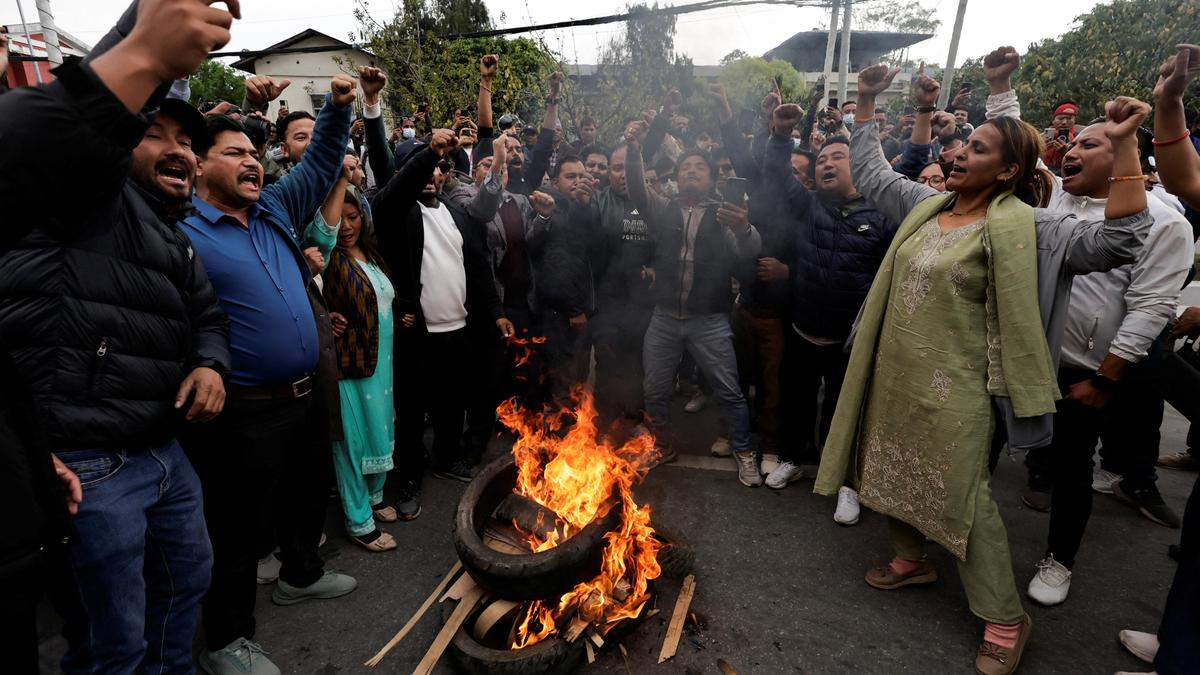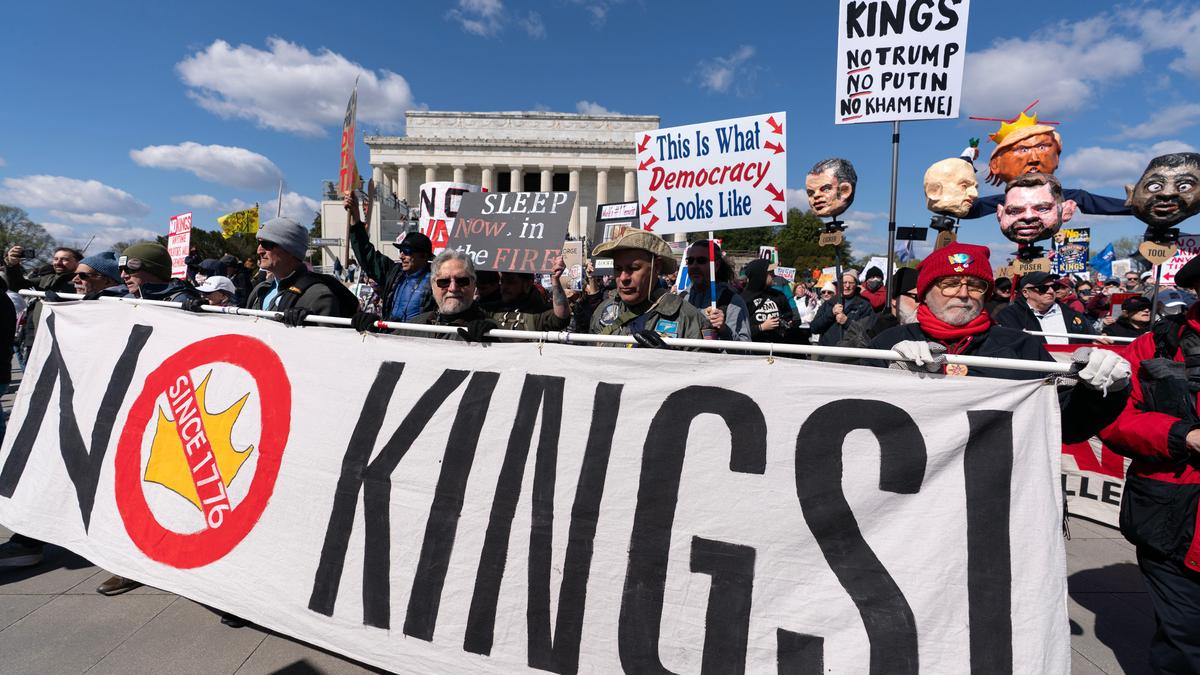
The recent surge in "No Kings" rallies and the accompanying swell of anti-war sentiment are not merely organic outbursts of pacifism. They are the symptoms of a profound collapse in institutional trust. While the surface-level rhetoric focuses on the immediate horrors of overseas conflict, the engine driving these protests is a domestic grievance. People are tired of being told that resources are scarce for healthcare or infrastructure while simultaneously watching billions flow into the machinery of distant attrition. This is not just a plea for peace. It is a demand for a return of sovereignty from a technocratic elite that many feel no longer represents the baseline interests of the citizenry.
To understand the current volatility, you have to look past the placards. The "No Kings" slogan isn't just a clever jab at authoritarianism; it is a direct challenge to the "emergency powers" that have become a permanent fixture of modern governance. We have lived through decades where the state of exception is the rule. Whether it is a global pandemic, a financial collapse, or a foreign intervention, the response is always a centralization of power and a suspension of normal democratic debate. The anti-war movement has finally realized that the bombs dropped abroad and the economic tightening at home are two sides of the same coin.
The Economics of Permanent Friction
War is expensive. Everyone knows this, yet few discuss the specific way it cannibalizes the middle class. When a government commits to a long-term conflict or the support of a proxy, it doesn't just spend money. It devalues the labor of its citizens through inflationary pressure and debt accumulation. The "No Kings" movement is gaining traction because the economic pain has become impossible to ignore. For a generation that cannot afford homes, the sight of high-tech weaponry being shipped across oceans feels like a personal insult.
The defense industry functions on a cycle of obsolescence. To keep the gears turning, older stockpiles must be used so they can be replaced by newer, more expensive iterations. This creates a perverse incentive structure where peace is a literal threat to the bottom line of some of the world's most powerful corporations. Protesters are beginning to connect these dots. They are no longer just arguing about the morality of a specific strike or invasion. They are questioning the entire structural necessity of a military-industrial complex that requires constant friction to justify its budget.
The Recruitment Crisis and the Class Divide
There is a glaring hole in the pro-war narrative that the media rarely touches. Nobody wants to fight. Recruitment numbers across Western nations are cratering, and for a very simple reason: the social contract is broken. In previous eras, military service was a path to upward mobility. You gave years of your life, and in return, you received an education, a home loan, and a respected place in society.
Today, that deal looks increasingly like a trap. When the "No Kings" rallies chant about the "meat grinder," they are talking about a system that expects the working class to provide the boots on the ground while the decision-makers stay insulated in climate-controlled offices. This is the "why" behind the movement's growth. It is a refusal to participate in a game where the risks are localized among the poor and the rewards are globalized among the shareholders.
The Illusion of Humanitarian Intervention
We have been sold a specific brand of "clean" war for twenty years. The promise is always the same: precision strikes, minimal collateral damage, and a swift transition to democracy. History shows a different reality. These interventions often leave behind power vacuums that are filled by even more radical elements, leading to a cycle of intervention that justifies itself indefinitely.
The current anti-war sentiment is fueled by a profound skepticism of these humanitarian justifications. Voters have learned that "bringing freedom" is often a euphemism for securing trade routes or natural resources. This cynicism is the movement's greatest strength. It is a protective layer of scar tissue formed by years of being lied to about the stakes of foreign entanglement. When a politician stands at a podium today and talks about a "moral obligation" to intervene, a significant portion of the audience is already looking for the hidden agenda.
The Digital Front Line of Dissent
In the past, controlling the narrative was easy. A few major networks and a handful of newspapers set the tone. If you were against a war, you were marginalized or labeled as a radical. That wall has crumbled. The "No Kings" movement thrives on decentralized platforms where raw footage from the front lines can be shared instantly, bypassing the sanitizing filters of corporate media.
This transparency is a double-edged sword. While it exposes the reality of war, it also makes the public susceptible to sophisticated foreign influence operations. It is a mistake to think that every anti-war post is a grassroots expression of a local citizen. State actors have a vested interest in destabilizing their rivals by fanning the flames of internal dissent. However, blaming the movement entirely on "foreign interference" is a lazy way to avoid addressing the legitimate grievances at its core. People aren't protesting because a bot told them to; they are protesting because they can see the disconnect between their lives and their government's priorities with their own eyes.
The Failure of Traditional Diplomacy
Why has the rally cry shifted from "Give Peace a Chance" to "No Kings"? Because the institutions designed to prevent war have become decorative. The United Nations and various international courts appear increasingly toothless when faced with the interests of major powers. When the mechanisms of diplomacy fail, the rhetoric of the street becomes more extreme.
We are seeing a rejection of the "professional" diplomatic class. These are the individuals who speak in hushed tones about "strategic depth" and "geopolitical interests" while ignoring the human cost. The anti-war movement views these experts not as problem-solvers, but as the architects of the very chaos they claim to manage. The demand for "No Kings" is a demand for a seat at the table—or at the very least, a demand to stop the table from being flipped by a handful of unelected bureaucrats.
The Strategy of De-escalation
If the goal is to actually reduce conflict, the focus must shift from military dominance to economic and cultural engagement. This is a hard sell in a political environment that thrives on fear. True de-escalation requires a level of courage that is rarely found in modern leadership. It requires admitting that you cannot bomb an ideology out of existence and that security is not a zero-sum game.
The protesters understand something that the analysts often miss: you cannot have a functioning democracy at home while acting like an empire abroad. The two are fundamentally incompatible. The resources, the mindset, and the power structures required to maintain an empire will eventually be turned inward against the domestic population. We saw this with the militarization of local police forces, who now carry the same gear used on foreign battlefields. The "No Kings" movement is an attempt to halt this domestic creep before the transition from citizen to subject is complete.
The Mirage of Neutrality
There is a common argument that staying out of global conflicts is a form of complicity. This is the "intervene or be a coward" binary that has dominated foreign policy for decades. It is a false choice. There is a vast middle ground between total isolationism and being the world's policeman. The current anti-war sentiment is a push toward "principled non-intervention."
This doesn't mean ignoring the world. It means engaging through trade, through diplomacy, and through the power of example rather than the power of the sword. The "No Kings" slogan reflects a desire to strip away the divine right of the state to gamble with the lives of its people for the sake of abstract geopolitical theories. When a movement reaches this level of fundamental questioning, it isn't going to be pacified by a few tweaks to the budget or a change in rhetoric.
The Cost of Apathy
The greatest danger to the anti-war movement isn't opposition; it's exhaustion. Protesting is hard. Staying informed is taxing. The system is designed to wait you out, to let the outrage simmer until it eventually evaporates into the background noise of the daily news cycle. To effect real change, the "No Kings" sentiment must transition from a series of rallies into a sustained political force that can hold representatives accountable at the ballot box.
This requires more than just being "against" something. It requires a coherent vision of what a post-interventionist society looks like. It means being willing to have difficult conversations about what we are prepared to lose if we step back from the global stage. There are no easy answers, and anyone promising a painless transition to world peace is selling a fantasy.
The Sovereignty of the Individual
At its heart, the "No Kings" movement is a reclamation project. It is individuals standing up and stating that their lives are not pawns in a grand strategy they never agreed to. The anti-war sentiment we see today is the first major pushback against a globalized elite that has become untethered from the realities of the people they lead.
The path forward isn't found in more rallies or louder slogans. It is found in the relentless demand for transparency and the refusal to accept "national security" as a blanket excuse for every questionable decision. If the movement can maintain its focus on the structural causes of war—the economic incentives, the institutional failures, and the erosion of domestic rights—it might actually stand a chance of changing the trajectory. If it doesn't, it will just be another footnote in the history of well-intentioned but ultimately futile protests. Stop waiting for a leader to fix this.