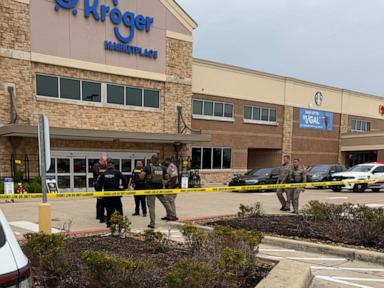
Another quiet Tuesday shattered. Another Kroger cordoned off with yellow tape. Two people are fighting for their lives in a local ICU, and the media has already deployed its standard playbook: run the security camera footage, quote a shaken witness, demand "increased security," and move on to the next cycle.
It is a predictable, hollow ritual.
We are told that grocery stores are "soft targets." We are told that if we just put a rent-a-cop at the sliding glass doors or install a few more high-definition cameras, we can shop for cereal in peace.
This is a comforting lie.
The standard corporate response to retail violence is fundamentally broken. It is a security theater designed to appease insurance underwriters and soothe jittery stockholders, and it does absolutely nothing to stop a bullet. If we want to actually address why supermarkets have become flashpoints for violence, we have to stop treating them like fortresses and start looking at them like the high-stress pressure cookers they actually are.
The Illusion of the "Soft Target"
When a shooting occurs at a major retail chain, the immediate outcry is always the same: Why wasn't there more security?
This question is built on a flawed premise. It assumes that opportunists and criminals calculate their targets based on a rational risk-benefit analysis of a store's physical defenses.
They do not.
I have spent nearly two decades consulting on corporate risk management and physical security operations. I have watched retail giants pour tens of millions of dollars into "hardening" their storefronts. They put up bollards. They hire third-party security guards who are paid slightly above minimum wage and explicitly instructed not to intervene in violent disputes to avoid corporate liability.
It is an expensive joke.
A unarmed guard standing by the shopping carts is not a deterrent; they are simply the first victim. In fact, adding visible, untrained security often creates a false sense of safety that prevents employees and shoppers from maintaining the situational awareness that could actually save their lives.
Let's look at the hard truth of the retail environment:
- Infinite Points of Failure: A grocery store is designed for maximum flow, not containment. You cannot secure an environment with constant foot traffic, multiple delivery bays, and massive glass storefronts without turning it into a prison—which ruins the business model entirely.
- The Liability Trap: Security guards are there to observe and report. If they draw a weapon or tackle a suspect, the parent company faces astronomical lawsuits. Therefore, their presence is purely psychological.
- The De-escalation Deficit: Retail staff are trained to be polite, not protective. When high-tension conflicts arise over shoplifting, parking spots, or personal disputes, employees lack the training to de-escalate the situation before it turns lethal.
Why Grocery Stores Are Actually Magnets for Conflict
To solve a problem, you have to diagnose it correctly. Supermarkets are not targeted simply because they are "open." They are targeted because they are the final collection points of societal friction.
Think about it. A grocery store is one of the very few places where every single demographic in a community is forced to interact in a confined space. It is a high-stimulus, high-stress environment. People are already anxious about inflation, rising food costs, and their own daily struggles. They are navigating narrow aisles, fighting for parking, and dealing with long checkout lines.
Add a spark to that dry tinder, and it blows.
A massive percentage of retail shootings do not start as planned mass casualty events. They start as petty arguments. A bumped shoulder in the produce aisle. A dispute over a spot in the self-checkout lane. A domestic confrontation that spills over from the parking lot.
[Spontaneous Dispute] ──> [Lack of Early Intervention] ──> [Escalated Violence] ──> [Tragedy]
When you understand that the violence is largely spontaneous, the solution of "better security guards" completely falls apart. You cannot deter a person who has lost all rational control in a split-second fit of rage with a badge and a flashlight.
Dismantling the "Active Shooter" Myth
The media loves to use the catch-all term "active shooter" because it drives ratings and fits a clean narrative. But treating every retail shooting as a highly coordinated, ideological attack is a massive mistake.
Most retail violence falls under two categories:
- Targeted Personal Violence: An individual brings a domestic or interpersonal dispute into the workplace because they know exactly where their target will be.
- Escalated Criminality: A robbery or shoplifting incident goes wrong because the perpetrator panics or is under the influence.
By preparing exclusively for the rare, highly planned ideological attack, corporations completely ignore the everyday volatility that actually threatens their staff and customers. They run their employees through generic, outdated active shooter training videos once a year—usually a passive "Run, Hide, Fight" PowerPoint—and tick the compliance box.
It is lazy. It is dangerous. And it keeps costing lives.
Imagine a scenario where a disgruntled former employee enters a store. He isn't looking to cause a mass casualty event; he is looking for a specific manager. A generic "Run, Hide, Fight" protocol doesn't help the cashier who is standing three feet away when the confrontation begins. What that cashier needed was real-time, behavioral threat detection training to spot the warning signs minutes before the first shot was fired, and a clear, friction-free way to alert management without fear of being fired for "causing a scene."
Stop Funding Security Theater: The Real Fix
If hiring more armed guards and installing more cameras is a dead end, what actually works?
It requires a radical shift in how we view retail operations. We must transition from a posture of reactive defense to one of proactive environmental management.
1. Radically Decentralize the Floor Plan
Modern grocery stores are designed to trap you. They want you to walk past as many items as possible to maximize impulse buys. This labyrinthine layout is a death trap during an emergency. Retailers must design clear, intuitive egress paths that do not require navigating a maze of endcaps and display racks. If a customer cannot see an exit sign from 80% of the sales floor, the design has failed.
2. Ditch the Guards, Train the Staff in De-escalation
Instead of spending $50,000 a year on a security contractor who will run away when the shooting starts, invest that money directly into the people on the payroll. Every single retail employee—from the stockers to the managers—should undergo rigorous, ongoing training in verbal de-escalation and behavioral profiling. They need to know how to spot a customer who is escalating, how to disengage safely, and when to immediately call for emergency services rather than trying to handle a volatile situation internally to protect the store's "reputation."
3. Embrace Frictionless Retail
The self-checkout lane is a breeding ground for rage. It is a known friction point where customers face technical errors, long waits, and suspicious glares from staff watching for theft. By reducing the physical and psychological friction of the shopping experience—through better layout, faster throughput, and human-centric service—you drastically lower the baseline stress level of the entire environment.
The Cold Truth Nobody Wants to Admit
Here is the hard pill to swallow: you cannot engineer a 100% safe public space in a society saturated with firearms and simmering with untreated mental health crises.
Any retail consultant who promises they can make a grocery store completely safe is selling snake oil.
The goal cannot be absolute prevention; it must be vulnerability reduction and rapid mitigation. This requires corporate executives to stop looking at security as a marketing tool to reassure customers and start looking at it as an operational discipline.
It means admitting that the local supermarket is no longer just a place to buy milk—it is a microcosm of our fractured society. And until we start treating the underlying friction instead of just buying bigger locks for the doors, the yellow tape will keep going up.