The global transition to net-zero emissions faces a structural bottleneck that moral imperatives and environmental metrics fail to solve: the iron law of marginal abatement cost. While public discourse prioritizes the carbon intensity of energy generation, the binding constraint on widespread industrial adoption is the absolute levelized cost of electricity (LCOE). Clean energy systems that command a price premium over incumbent fossil fuels trigger capital capital flight, carbon leakage, and severe political resistance in developing economies. To achieve global decarbonization, green electricity must achieve absolute cost parity—or a discount—against unabated coal and natural gas. When clean power becomes the cheapest power, market forces handle the substitution automatically.
Understanding this dynamic requires dissecting the mechanics of industrial capital allocation, grid integration challenges, and the geopolitical realities of energy demand. If you enjoyed this article, you should read: this related article.
The Cost Elasticity of Decarbonization
Industrial decarbonization is fundamentally an arbitrage problem. Heavy industries—such as primary steelmaking, chemical synthesis, and cement manufacturing—operate on thin margins and treat energy as a primary variable input. If a low-carbon process increases the marginal cost of production, the market penalizes the first mover.
The Green Premium Formula
The economic barrier to transitioning any industrial process can be quantified through the green premium framework. This premium represents the additional cost of choosing a clean technology over a fossil-fuel-based incumbent: For another look on this story, refer to the recent coverage from CNET.
$$GP = C_{clean} - C_{fossil}$$
Where $GP$ is the green premium, $C_{clean}$ is the total annualized cost of the zero-carbon alternative, and $C_{fossil}$ is the cost of the carbon-intensive incumbent.
To drive $GP$ to zero or below, energy inputs must drop drastically. In a standard hydrogen-based direct reduced iron (DRI) steel plant, for example, electricity accounts for up to 70% of the variable operating costs. If the electricity supply costs $60 per megawatt-hour (MWh), green steel cannot compete with traditional blast furnace production unless carbon prices exceed $150 per ton. If the cost of clean electricity drops to $20/MWh, the green premium evaporates without requiring regulatory interventions or carbon subsidies.
Capital Flight and Carbon Leakage
Imposing high-cost clean energy solutions within specific geographic jurisdictions fails to reduce global emissions. Instead, it drives carbon leakage. Under asymmetric regulatory frameworks, capital intensive industries relocate assets to regions with lower energy costs, regardless of the grid's carbon intensity. The net result is a geographic shift in emissions rather than a global reduction.
Absolute cost reduction is the only mechanism that prevents this arbitrage. Clean power must be deployed at a capital expenditure (CapEx) and operational expenditure (OpEx) profile that undercuts local fossil fuel baseloads on an un-subsidized basis.
The Grid Integration Penalty and Total System LCOE
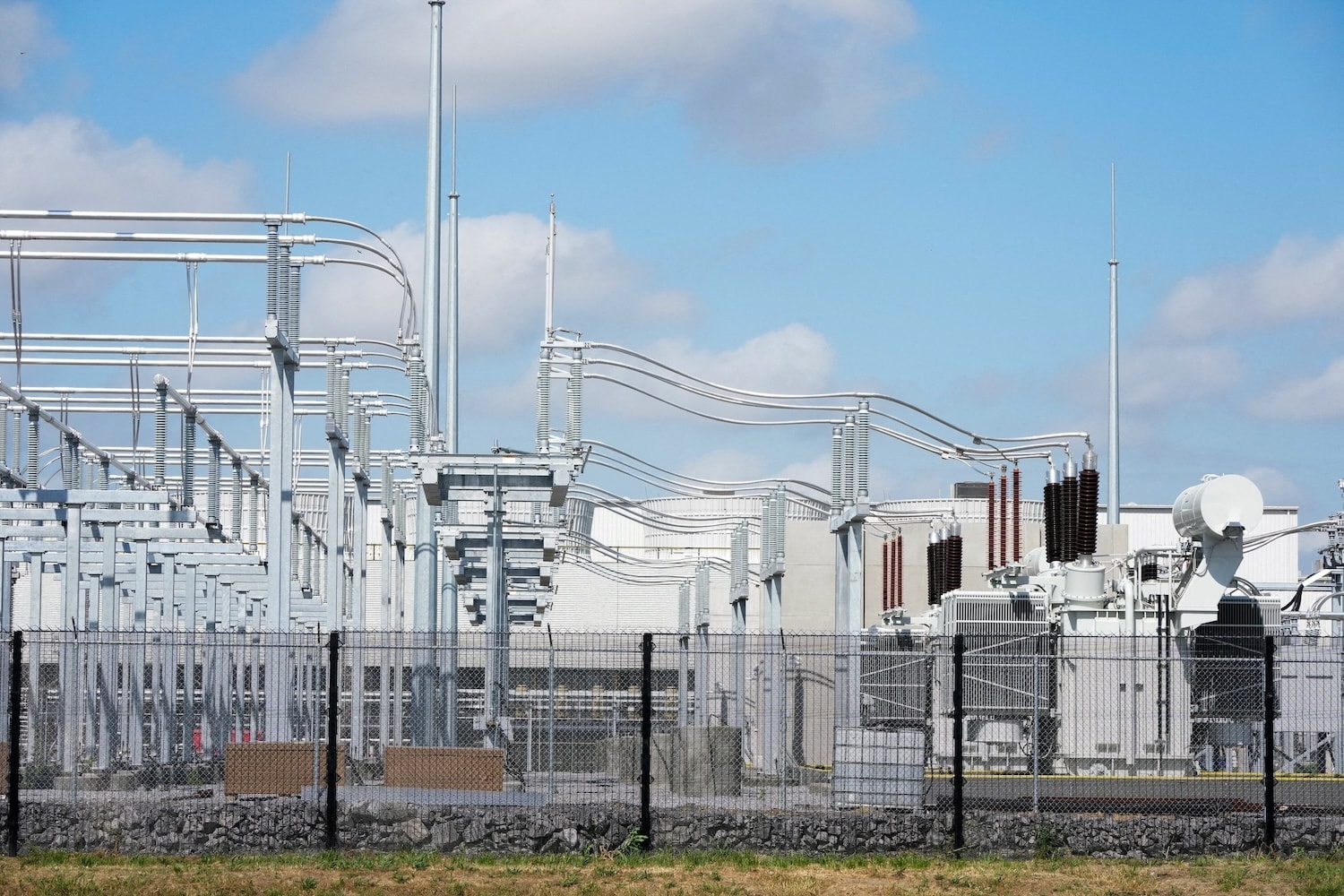
A primary fallacy in energy economics is equating the generation-site LCOE of intermittent renewables with the total system cost of delivering reliable, dispatchable power to the end consumer. As the penetration of variable renewable energy (VRE) like solar photovoltaics (PV) and wind increases, the marginal utility of the generated electricity declines, while system integration costs escalate non-linearly.
The Three Layers of System Integration Costs
Evaluating the true economic weight of clean power requires analyzing three distinct cost layers that are often omitted from basic LCOE calculations:
- Profile Costs (Utilization Effects): Solar and wind operate at low capacity factors (typically 20-40%). When VRE penetration is high, periods of peak production often coincide with low demand, causing market prices to collapse—sometimes entering negative territory. This deflation reduces the revenue earned by clean energy producers per asset, requiring higher initial power purchase agreement (PPA) prices to achieve financial viability.
- Balancing Costs (Short-term Volatility): Grids must maintain a continuous frequency equilibrium. Highly variable power injections necessitate rapid-response spinning reserves, utility-scale battery storage, or open-cycle gas turbines (OCGTs) operating at low efficiency. The cost of maintaining these standby assets must be factored into the price of clean power delivery.
- Grid Extension Costs (Spatial Mismatch): Optimal renewable resources are rarely located near industrial demand centers. High-yield solar farms require long-distance high-voltage direct current (HVDC) transmission lines to move power to urban or industrial hubs. This infrastructure demands immense upfront capital and introduces transmission line losses.
The true metric governing grid transition is the Total System LCOE ($LCOE_{system}$), which can be conceptualized as:
$$LCOE_{system} = LCOE_{generation} + C_{profile} + C_{balancing} + C_{grid}$$
When $LCOE_{system}$ exceeds the marginal cost of running existing, depreciated fossil fuel infrastructure, the transition stalls. Cheap generation at the source is meaningless if the delivery architecture doubles the end-user tariff. Therefore, innovations that lower the cost of firming assets—such as long-duration energy storage (LDES) or advanced geothermal—are more critical to the net-zero timeline than incremental efficiency gains in solar panels.
The Geopolitical Dichotomy of Energy Priorities
The decarbonization playbook is deeply fractured along economic development lines. Mature economies can afford to subsidize high system integration costs through complex tax mechanisms and consumer levies to meet climate targets. Developing economies cannot.
The Non-Negotiable Energy Trilemma
Developing nations operate under a strict hierarchy within the energy trilemma, prioritizing security and affordability over environmental sustainability.
- Affordability: Direct impact on industrial competitiveness and poverty alleviation.
- Security: Continuous availability to prevent economic disruption.
- Sustainability: Desirable only if it does not compromise points 1 and 2.
Between 2000 and 2025, East Asian industrial expansion was fueled predominantly by coal because it offered the lowest un-subsidized cost per unit of reliable thermal and electrical energy. For these regions, forcing a transition to clean power that increases consumer utility rates acts as a tax on economic development.
If Western supply chains mandate low-carbon inputs through mechanisms like the Carbon Border Adjustment Mechanism (CBAM), without cheap clean power alternatives, developing nations face an economic penalty: either lose export markets or absorb higher domestic production costs.
The Scalability of Fossil Infrastructure Reinvestment
Coal and gas plants possess an economic advantage that renewables struggle to match without cheap energy storage: high energy density and high capacity factors. A standard ultra-supercritical coal plant can operate at a 90% capacity factor, providing a predictable baseline for industrial planning. To displace this infrastructure, clean power cannot merely match the cost during peak sun or wind conditions; it must undercut the marginal operating cost of the existing coal plant. Once a fossil asset is built and its capital cost is depreciated, the owner will continue running it as long as the market price covers fuel and maintenance. Clean energy must compete against this depressed baseline.
The Technological Path to Absolute Cost Superiority
To drive the marginal cost of clean energy below that of fossil fuels globally, strategic focus must shift away from general capacity additions toward targeted technological inflections that address systemic bottlenecks.
Automation and Scaling in Solar Supply Chains
Solar PV has followed Wright’s Law, where every doubling of cumulative manufacturing capacity yields a consistent percentage reduction in cost. To sustain this trajectory and achieve sub-$10/MWh generation costs, the industry requires structural changes:
- Perovskite-Silicon Tandem Cells: Layering materials to capture different spectrums of sunlight increases cell efficiency beyond the theoretical silicon limit (the Shockley-Queisser limit of ~29.4%), lowering the required footprint and structural balance-of-system (BOS) costs per watt.
- Automated Civil Works: High-speed, robotic installation of racking and module placement reduces the field-labor component of CapEx, which remains a stubborn variable cost in high-income regions.
Over-Provisional Generation and Thermal Storage Strategy
An alternative to expensive electrochemical battery storage (like lithium-ion) is the strategy of over-provisioning VRE combined with industrial thermal storage.
Instead of building a grid optimized to match generation precisely to demand, developers build massive solar and wind arrays that intentionally produce 300% of peak demand during optimal conditions. The excess, near-zero-cost electricity during peak production is diverted directly into thermal storage mediums (e.g., molten salts, crushed rock, or specialized brick matrices) or used to run flexible, interruptible industrial processes. This thermal energy can then be converted back to electricity or used directly as high-temperature process heat for heavy industry, undercutting the economics of burning natural gas for industrial boilers.
Strategic Realities of the Transition
Relying on carbon taxes or corporate sustainability pledges to drive net zero introduces structural friction. Regulations can be rolled back; corporate mandates shift with economic cycles. Capital moves to the path of least resistance. The permanent path to zero emissions runs through industrial cost minimization.
The immediate priority for energy developers and industrial consumers is the aggressive optimization of asset co-location. Industrial facilities must be built directly adjacent to high-yield renewable zones—such as the co-location of green ammonia plants next to high-capacity-factor wind-and-solar corridors in desert regions—to bypass grid integration and transmission costs entirely.
Furthermore, investment must prioritize technologies that turn variable clean power into a dispatchable resource without relying on rare-earth dependent battery supply chains. Until the total delivered cost of a low-carbon megawatt-hour is systematically lower than the marginal cost of a fossil-fuel-fired megawatt-hour everywhere in the world, fossil fuels will continue to anchor global industrial production. The climate challenge is fundamentally a cost reduction challenge.