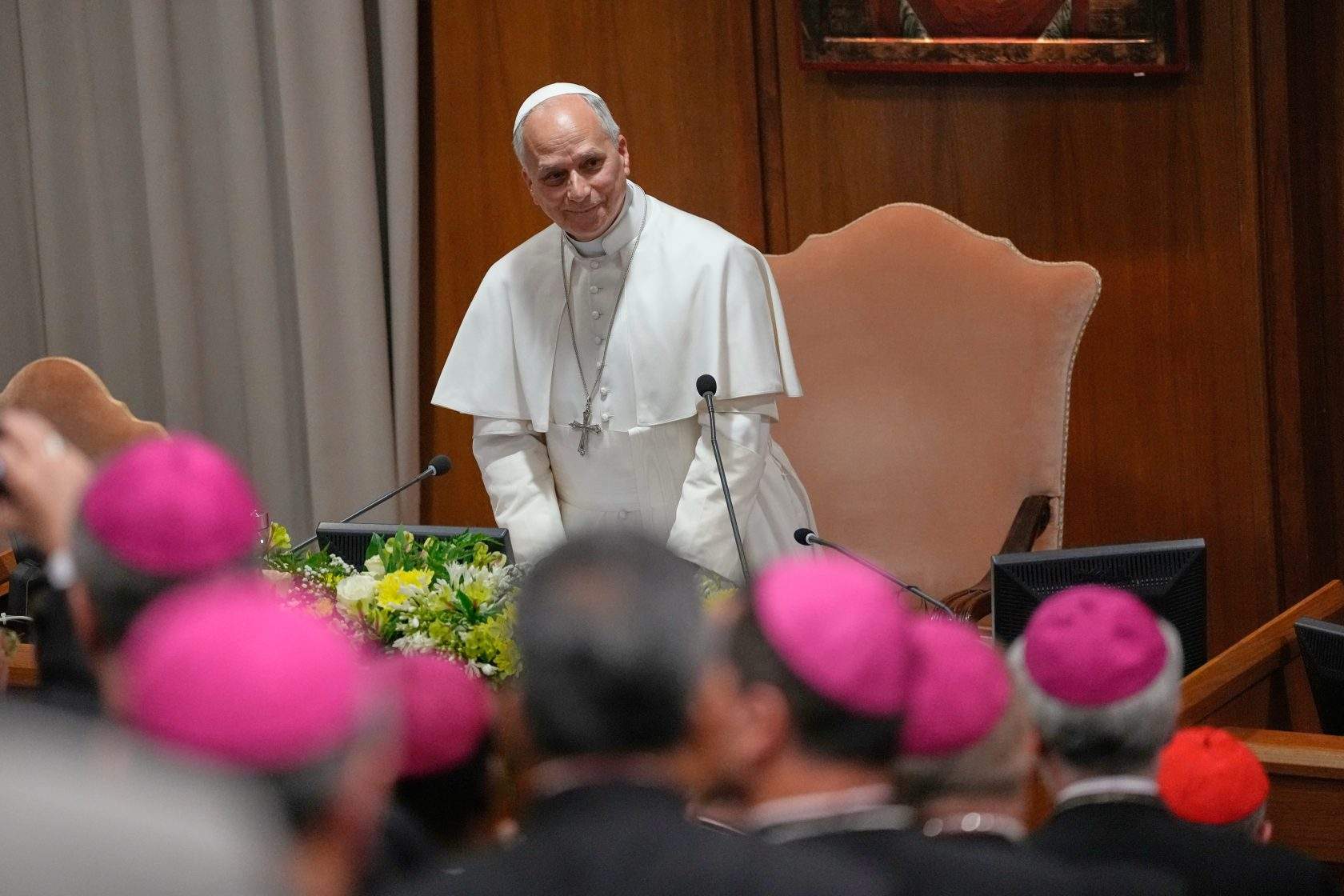
Pope Francis has issued a stark theological warning against the unchecked rise of artificial intelligence, arguing that the technology is actively fueling global conflict and embedding a dangerous culture of power. The Vatican's latest doctrinal declaration moves beyond mere ethical concern, positioning AI as a systemic threat to human dignity and global peace. This intervention targets the core mechanism of modern algorithmic development: the erasure of human accountability in life-or-death decisions. By analyzing the intersection of military procurement and theological critique, it becomes clear that the Holy See is addressing a reality where software dictates the terms of human survival.
The Algorithmic Architecture of Modern Conflict
The Vatican's critique arrives at a moment when the defense sector is rapidly shifting from human-centric command to algorithmic execution. Silicon Valley contracting firms and traditional defense giants have quietly integrated machine learning models into targeting suites, logistics networks, and autonomous drone swarms. This is not science fiction. It is the current state of procurement.
Military AI relies on neural networks trained on vast datasets of battlefield telemetry. These systems are designed to identify anomalies, predict enemy movements, and suggest kinetic strikes. The institutional danger lies in the automation bias of the operators. When a software package flags a target with a ninety-five percent confidence interval, a human supervisor facing intense time pressure rarely overrules the machine.
The Holy See zeroes in on this specific vulnerability. The doctrinal text argues that reducing human existence to data points strips away the moral weight of warfare. When data replaces conscience, killing becomes an optimization problem.
The Mechanics of the Culture of Power
Technology has never been neutral. It reflects the priorities, biases, and power structures of its creators. The Vatican’s document highlights how AI concentrates authority within a small group of technocrats and state actors, creating an asymmetric distribution of influence that marginalizes the global south and disenfranchised populations.
This concentration of power operates through three distinct vectors:
- Data Hegemony: A handful of multinational corporations and sovereign states control the infrastructure required to train foundational models. This creates a digital feudalism where smaller nations must accept western or authoritarian algorithmic frameworks.
- The Black Box Problem: Modern deep learning models operate with a level of complexity that defies simple explanation. When an AI system makes a decision regarding resource allocation, immigration status, or criminal sentencing, the underlying rationale is often opaque even to the engineers who built it.
- Asymmetric Warfare: Autonomous weapon systems lower the political cost of entry for state-sponsored violence. By removing soldiers from immediate physical danger, governments face less domestic resistance when engaging in foreign interventions, fundamentally altering the calculus of deterrence.
Consider a hypothetical scenario where a border enforcement agency deploys an automated surveillance grid. The system uses predictive policing algorithms to flag individuals attempting to cross a frontier. If the training data contains historical biases against specific ethnic groups, the algorithm will systematically replicate those biases under the guise of objective, mathematical neutrality. The bureaucrat operating the system can claim innocence, pointing to the software as the ultimate arbiter of truth. This is the exact culture of power the Pope warns against—a structure where power is exercised aggressively but accountability vanishes into lines of code.
The Myth of Precision and the Reality of Friction
Proponents of military AI frequently argue that algorithmic targeting reduces collateral damage. They claim that machine vision can distinguish between combatants and civilians with greater accuracy than a terrified soldier on the ground. This argument ignores the fundamental reality of conflict.
War is defined by chaos and incomplete information. Machine learning models require clean, structured data to operate effectively. In a combat zone, data is messy, corrupted, and intentionally manipulated by adversaries through electronic warfare and deception. When a model encounters data outside its training distribution, it does not politely decline to answer. It hallucinates a conclusion with high statistical confidence.
The defense industry's push for autonomy is driven by market dynamics as much as strategic necessity. Venture capital has flooded defense tech startups over the last five years, demanding rapid returns and scalable products. This financial pressure incentivizes the deployment of systems that may not be fully vetted for edge cases or systemic vulnerabilities. The rush to field autonomous assets creates a race to the bottom, where safety protocols are viewed as regulatory friction rather than essential safeguards.
Theological Realism Against Technocratic Optimism
The Vatican is uniquely positioned to mount this critique because it operates on a timescale measured in centuries, not quarterly fiscal periods. While tech executives promise that the next iteration of their large language model will solve systemic human flaws, the Church views these promises with deep skepticism rooted in historical awareness.
The document challenges the underlying philosophy of Silicon Valley: technopoly. This is the belief that every human problem, from poverty to war, can be solved through technical engineering. The Holy See counters that certain problems are fundamentally moral and spiritual, requiring human empathy, diplomacy, and sacrifice. Replacing a diplomat with a predictive model or a soldier with an autonomous drone does not solve the problem of human malice. It merely automates it.
This theological stance is not an anti-technology position. It is a defense of human agency. The document insists that certain decisions must remain exclusively within the domain of human consciousness. If a machine cannot feel the weight of taking a life, it must never be given the authority to do so.
The Limits of Existing Regulatory Frameworks
Current international efforts to govern AI are failing to keep pace with deployment. Treaties like the Geneva Conventions were drafted in an era of kinetic, human-directed warfare. They are ill-equipped to handle situations where a loitering munition makes an autonomous decision to strike a target based on facial recognition data or radio frequency signatures.
The United Nations has hosted numerous panels on Lethal Autonomous Weapons Systems (LAWS), but these discussions frequently stall. Major military powers are reluctant to sign binding treaties that might restrict their technological development while their adversaries push forward. The result is a regulatory vacuum where corporate policy stands in for international law.
+------------------------------------+------------------------------------+
| Traditional Arms Control           | Autonomous AI Warfare              |
+------------------------------------+------------------------------------+
| Verifiable through satellite       | Intangible software updates code   |
| imagery and physical inspection.   | hidden in secure servers.          |
+------------------------------------+------------------------------------+
| Clear attribution of state         | Plausible deniability via cyber    |
| responsibility for deployment.     | operations and emergent behavior.  |
+------------------------------------+------------------------------------+
| High cost of manufacturing and     | Low marginal cost of duplicating   |
| supply chain constraints.          | software across thousands of units.|
+------------------------------------+------------------------------------+
The table above illustrates the core disconnect facing regulators. You cannot count algorithms the way you count nuclear warheads. A line of code can be copied instantly and deployed globally without triggering a single border inspection. This immaterial nature of software renders traditional non-proliferation strategies obsolete.
The Crux of Human Responsibility
The Vatican's document forces a confrontation with a uncomfortable truth. The integration of AI into warfare and governance is popular not because it is perfect, but because it offers an escape from the burden of moral choice. It allows commanders, politicians, and corporate executives to delegate the most agonizing decisions of human existence to an unfeeling entity.
When an automated strike goes wrong and hits a civilian infrastructure target, who is to blame? The engineer who wrote the optimization algorithm? The data scientist who curated the biased training set? The commander who authorized the deployment? Or the machine itself? By fracturing responsibility across a vast corporate and military apparatus, accountability is effectively dissolved. No one is responsible because everyone was just following the data.
This erosion of personal responsibility is the true victory of the culture of power. It creates a system that can inflict violence, enforce inequality, and perpetuate injustice without ever requiring its operators to confront their own conscience. The Pope's theological document is an attempt to disrupt this comfort. It reminds the world that efficiency is not a moral virtue, and optimization is a poor substitute for justice. The future of human dignity depends on our willingness to reclaim the decisions we are currently trying to automate away.

