Diplomats love maps. They look at a massive landmass, draw a straight line from New Delhi to Berlin, and declare they have found a "natural transit corridor."
This week, India’s Ministry of External Affairs spent significant energy hyping up Eastern Europe as the next great gateway for Indian businesses. The narrative is comforting: as traditional maritime routes face geopolitical friction, countries like Serbia, Croatia, and Poland will serve as the friction-free highway for Indian goods flowing into the broader European market.
It is a beautiful theory. It is also completely detached from the reality of global logistics.
The consensus view among trade bureaucrats is that geographic proximity equals supply chain efficiency. It does not. By treating Eastern Europe as a mere highway rather than a complex, bottleneck-ridden destination, Indian strategy is setting up businesses for a costly awakening.
The Geography Fallacy
The fundamental flaw in the "natural transit corridor" argument is the confusion between distance and throughput.
For decades, logistics networks have been optimized not by the shortest line on a map, but by the path of least administrative and infrastructural resistance. Western European ports like Rotterdam and Antwerp did not become dominant because they were close to Asia; they became dominant because their customs clearance, deep-water infrastructure, and automated rail links operate at a scale that reduces per-unit costs to absolute minimums.
When you route goods through Eastern and Central Europe under the guise of an alternative corridor, you encounter three immediate friction points:
- Infrastructure Chokepoints: While Poland and the Baltic states have upgraded their highway networks, cross-border rail infrastructure remains fragmented. Gauge differences and historical structural deficits mean cargo trains frequently sit idle at borders, waiting for locomotive swaps or bureaucratic sign-offs.
- Customs Asymmetry: Entering the European Union via its eastern periphery means dealing with front-line customs authorities who are hyper-vigilant, frequently understaffed, and prone to lengthy inspections that obliterate the time savings promised on paper.
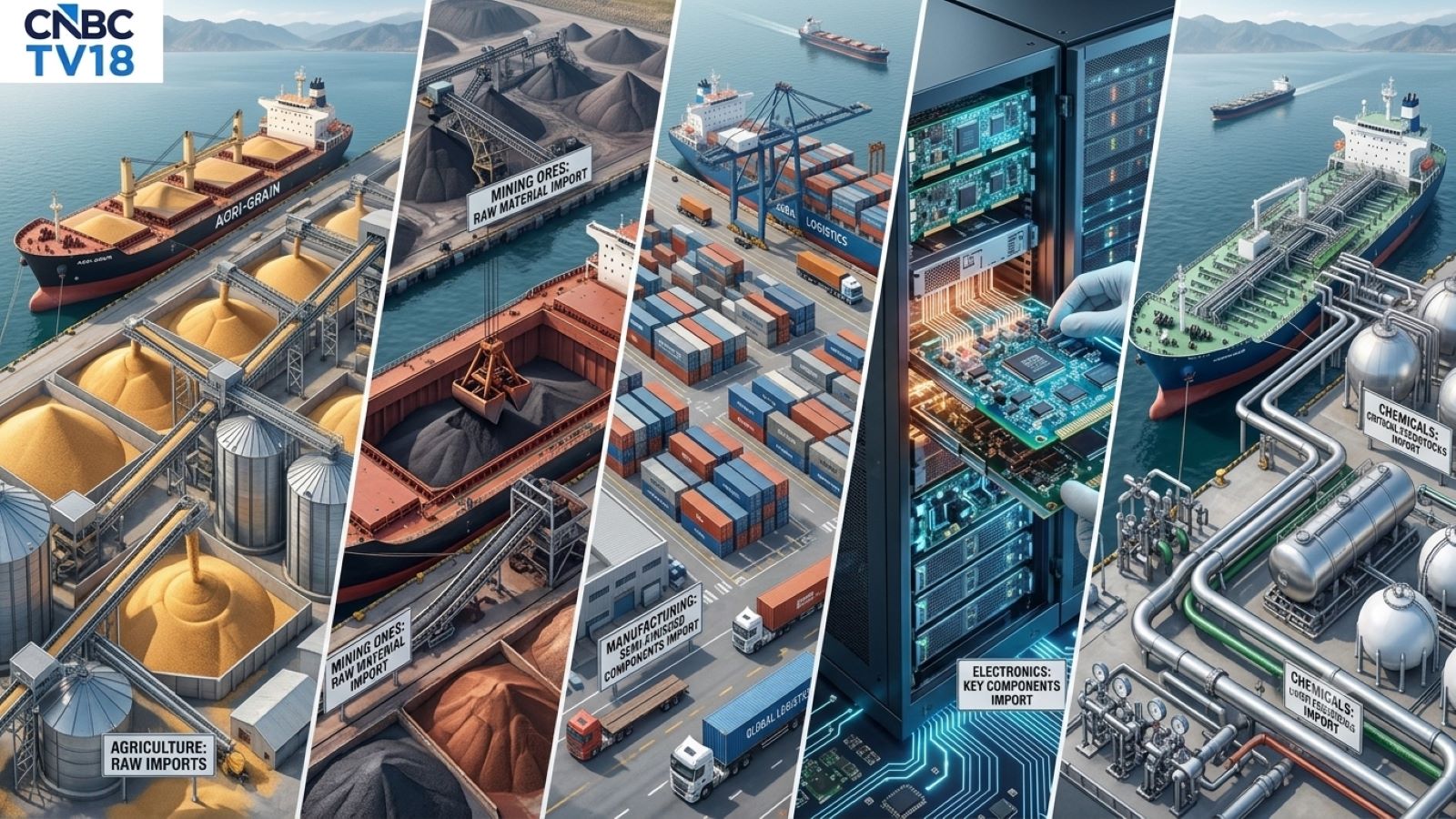
- The Scale Problem: The maritime shipping capacity serving the Mediterranean and Northern Europe dwarf anything passing through regional overland routes. A single modern container ship carries twenty thousand twenty-foot equivalent units (TEUs). Attempting to move that volume via overland corridors requires hundreds of trains running in flawless synchronization—a feat the current regional infrastructure cannot support.
I have watched corporate logistics directors blow millions of dollars trying to establish alternative overland routes through developing trade corridors, only to crawl back to traditional ocean freight six months later. They fell for the map trick. They forgot that every time a container changes hands or modes of transport, costs compound exponentially.
Dismantling the Supply Chain Questions That Matter
When executives ask how to penetrate the European market, they inevitably focus on the wrong metrics.
Can Eastern Europe replace traditional maritime shipping routes for India?
Absolutely not. The premise assumes that the current shipping vulnerabilities in the Red Sea and Suez Canal can be bypassed by simply unloading goods earlier or moving them overland.
Let’s look at the math. If you unload cargo at a Greek port like Piraeus and attempt to move it north through the Balkans into Central Europe via rail or truck, you are introducing multiple handling steps. In logistics, every touchpoint is a profit killer. The cost of double-handling containers, combined with the volatile spot rates of European trucking, completely erases any savings gained by avoiding northern ports.
The hard truth is that ocean freight via the Cape of Good Hope, despite adding ten to fourteen days to the journey, remains more economically viable for mass consumer goods than any experimental overland route through Eastern Europe.
Why are bureaucrats pushing the natural transit narrative?
Because diplomacy operates on optics, not operating margins. A state visit requires deliverables—memorandums of understanding, joint statements, and grand visions of connectivity.
Declaring a region a strategic transit zone sounds forward-thinking. It satisfies the political need to demonstrate diversification away from dependence on singular trade routes. But Indian businesses operating on razor-thin margins cannot afford to fund a diplomatic experiment.
The Real Value Proposition Everyone is Missing
The irony of the Ministry of External Affairs' push is that Eastern Europe actually holds immense value for Indian business—just not as a transit corridor.
By treating these nations as a hallway to Western Europe, India is ignoring the value of the rooms inside the house. The real opportunity lies in localized nearshoring and manufacturing, not transportation.
+-----------------------------------+-----------------------------------+
| The Transit Corridor Fantasy      | The Nearshoring Reality           |
+-----------------------------------+-----------------------------------+
| High logistics touchpoints        | Single-entry market access        |
| Volatile overland freight costs   | Stable regional manufacturing base|
| Fragmented infrastructure         | Skilled technical workforce       |
| Bureaucratic border friction      | Direct EU integration benefits    |
+-----------------------------------+-----------------------------------+
Instead of using Poland or Hungary as a pipeline to ship finished goods to France or Germany, Indian companies should be establishing manufacturing, assembly, and fulfillment hubs within Eastern Europe itself.
The region offers a highly educated technical workforce, competitive wage structures compared to Western Europe, and direct access to the single market without cross-border customs checks once inside the Schengen zone.
Automotive components, pharmaceuticals, and electronics assembly plants located in Central and Eastern Europe can act as the final staging ground. Goods can arrive as semi-knocked-down kits, undergo final assembly within the region, and then move seamlessly into Western Europe as EU-origin products. This bypasses the regulatory hurdles, environmental taxes, and carbon border adjustments that will soon penalize direct imports from outside the bloc.
The Actionable Pivot for Indian Capital
Stop looking at the map of Europe from east to west. Start looking at it from the perspective of total landed cost.
If your corporate strategy involves routing freight through Baltic or Balkan ports to supply Western European clients, halt the initiative immediately. The regulatory overhead, infrastructure deficits, and lack of scale will turn your supply chain into a liability.
Instead, allocate that capital toward acquiring existing mid-sized manufacturing facilities or setting up greenfield operations in industrial zones across Poland, Czechia, or Romania.
Use these locations to absorb raw materials or components shipped through high-volume, traditional maritime channels. Assemble the final product locally. You get the benefit of lower production costs while insulating your business from the geopolitical shocks of long-distance transit.
The "natural transit corridor" is an illusion born of geographic convenience and diplomatic optimism. The future belongs to businesses that ignore the lines drawn on political maps and focus entirely on the hard, unyielding mechanics of supply chain friction.
Stop moving goods through the corridor. Start building inside it.