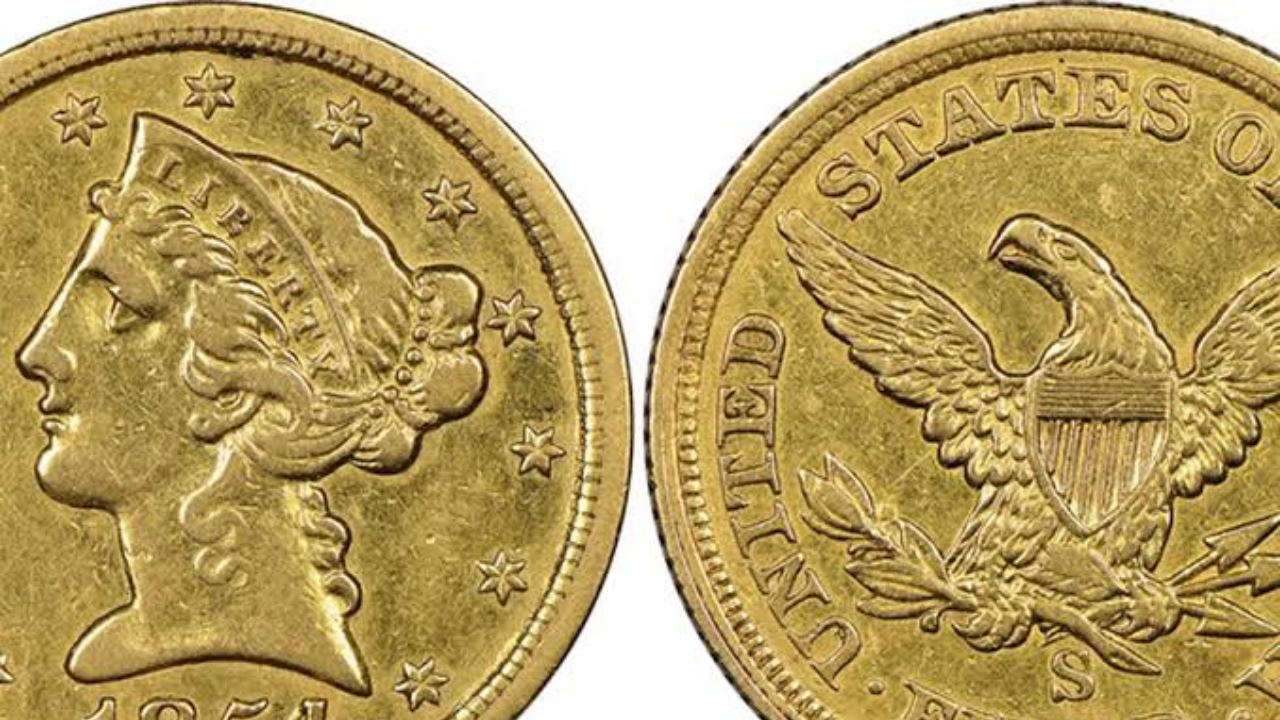
Most old coins sitting in a cigar box aren't retirement tickets. Usually they're tarnished silver, common wheat pennies, or damaged pieces worth a few bucks over melt value.
Every once in a while, though, a routine cleanout turns up something crazy. In Buda, Texas, an estate evaluation turned up an 1867-S Liberty Half Eagle—a $5 gold coin struck at the San Francisco Mint—that had been passed down through a family and tucked away in a closet for 159 years. When it hit the block at Heritage Auctions' GACC U.S. Coins Signature event in October 2026, it sold for $97,600.
That number jumps off the page because the previous public auction record for an 1867-S half eagle was $22,800. More than quadrupling a long-standing benchmark doesn't happen because a coin is merely old. It happens when extreme scarcity collides with top-tier condition and a buyer pool willing to fight over a one-of-a-kind registry piece.
Why The 1867-S Gold Coin Broke Every Expectation
If you look strictly at the mintage numbers, 29,000 coins sounds like a decent run. Back in 1867, though, a $5 gold piece wasn't a collector's item sitting in a velvet tray. It was serious working money on the American frontier—heavy, useful, and constantly changing hands in merchants' tills, stagecoach stops, and bank vaults.
Over time, commerce wore those coins down, melted some for bullion, and scattered the rest. According to Heritage Auctions estimates, fewer than 100 examples of the 1867-S $5 gold coin are believed to survive in any condition today, and only two are confirmed in uncirculated Mint State.
Condition is where the money really lives in rare coins. According to PCGS CoinFacts, the 1867-S Liberty Half Eagle is composed of 90% gold and 10% copper, and serious collectors have long hunted for higher-grade survivors. Grading this Texas closet discovery at PCGS MS63 placed it two full grade points ahead of the next-finest known example, making it the finest-known surviving specimen of the issue.
When a conditional rarity sits at the very top of a series' census, buyers aren't pricing gold weight anymore—they're pricing bragging rights and completeness.
That distinction matters. Plenty of pre-1900 U.S. gold coins carry modest premiums over gold melt value because they circulated heavily or show bag marks and hairlines. A coin graded Mint State 63 with original luster and minimal contact marks is a completely different animal. Advanced collectors building top sets rarely get a second shot at the finest-known piece.
What Makes Closet Finds So Tricky In Real Life
Stories like the Buda discovery tend to spark two opposite reactions. Some folks start ripping apart dresser drawers expecting five-figure windfalls. Others assume everything in an old family box is junk and dump it at the nearest pawn shop or cash-for-gold counter for scrap value.
Both instincts get people burned.
I've seen plenty of estate situations where people treat an inherited tin like a lottery ticket, only to find out the coins are heavily cleaned, damaged, or common dates worth closer to bullion value. Cleaning is the biggest heartbreaker in the hobby. Rubbing an old coin with baking soda, polishing cloth, or harsh chemicals might make it look "shiny" to an untrained eye, yet grading services routinely flag cleaned coins with a "Details" grade—which can slash collector value dramatically.
On the flip side, selling raw coins cold without knowing what you have is a fast way to leave serious money on the table. A local shop paying spot gold doesn't always have a specialist on staff who knows regional mint diagnostics, subtle die varieties, or current condition-census gaps. Even if a coin isn't a $97,600 record-breaker, the difference between a wholesale offer and a knowledgeable collector or auction price can be huge.
The Hidden Details Experts Look At First
When appraisers examine a vintage gold piece like an 1867-S gold coin, they aren't guessing based on romance or family lore. They're checking concrete physical clues:
- Mint mark and date: That little "S" tells you it was struck in San Francisco rather than Philadelphia, which completely changes mintage context and survival rates.
- Surface preservation: Mint luster, strike sharpness on Liberty's hair and the eagle's feathers, and freedom from heavy scratches or rim dings separate average survivors from condition rarities.
- Authenticity and originality: Counterfeits and altered dates exist across popular U.S. gold series, and unmessed-with surfaces carry far more trust than tampered or over-cleaned pieces.
- Provenance: Knowing a coin stayed in one family for generations adds color, though third-party grading and market demand still do the heavy lifting at auction.
A Quick Reality Check On Auction Headlines
Headline numbers can distort how people think about collectibles. A $97,600 sale price is real and historic for this specific 1867-S half eagle, yet it reflects a razor-thin slice of the market: an uncirculated survivor of a scarce date/mintmark combination at the top of the known condition ladder.
Not every 19th-century gold coin is rare. Some dates from the Liberty Head series were struck in much larger quantities or survived in higher numbers, so they trade much closer to their gold content plus a modest collector premium. Also, auction results can swing depending on timing, buyer competition, and buyer's premiums, so one record sale shouldn't be treated as a blanket price tag for every coin from 1867.
There's also a practical side to big windfalls that articles rarely mention. Once an item crosses from pocket change into serious money, you have to think about insured shipping, auction house terms, timing, and potential tax or estate questions—none of which are one-size-fits-all.
How To Check Old Family Coins Without Ruining Them
If you have old coins sitting in a drawer, safe, or cigar box, you don't need to panic—and you definitely don't need to scrub them. A calm, methodical approach protects both the coins and your wallet.
- Handle them by the edges only. Skin oils and fingerprints leave marks on surfaces over time, especially on uncirculated coins. Hold pieces gently by the rim over a soft surface like a towel.
- Leave them completely uncleaned. Seriously, put the polish away. Even a quick wipe can leave microscopic hairlines that a grader spots under magnification.
- Group and photograph them clearly. Sort coins by denomination, year, and any small mint mark letters (often near the bottom on the reverse). Take sharp photos in good light of both sides—avoiding heavy glare—so you have a clean record before moving them.
- Look up baseline facts from reputable sources. Check mintages and basic series info through established numismatic references like PCGS CoinFacts or NGC just to understand what you're looking at, while keeping in mind that condition makes all the difference.
- Get an informed, low-pressure evaluation. If you suspect something genuinely scarce or high-grade, talk to a reputable coin dealer, numismatic appraiser, or established auction house before selling—and if you're ever unsure about an offer, getting a second opinion costs nothing but patience.