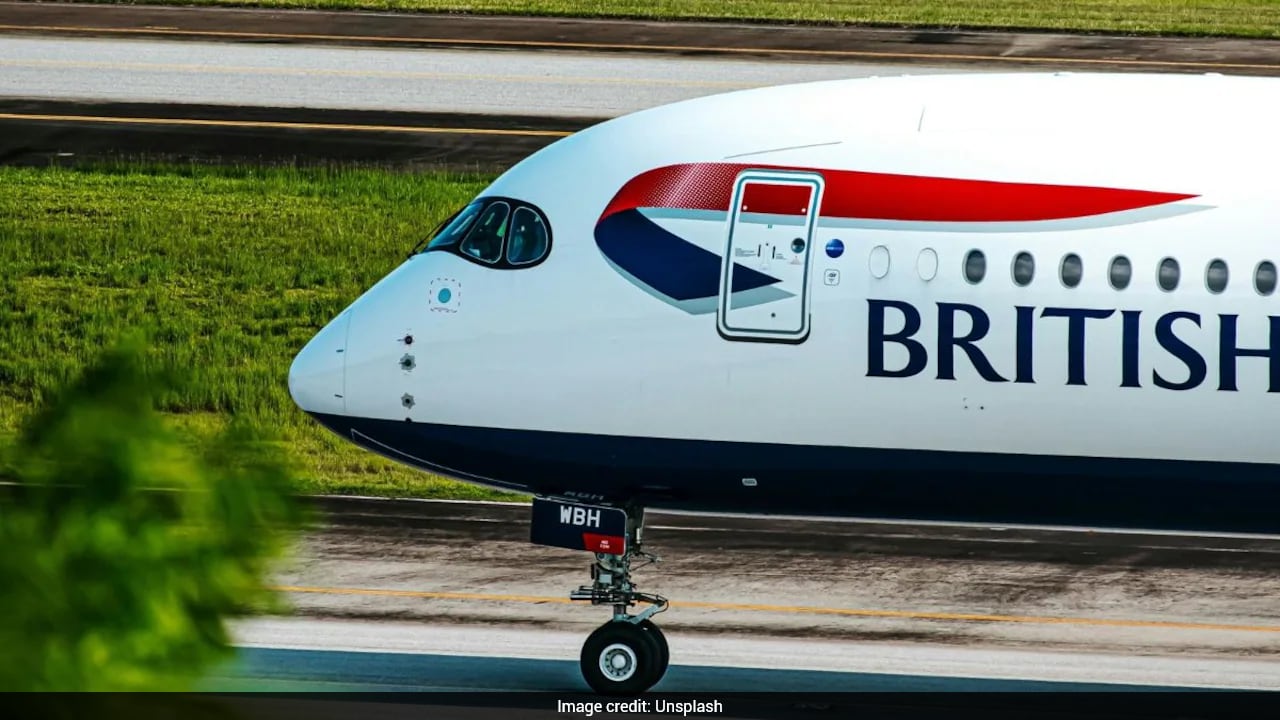
Every time an airliner drops a main landing gear bogie into the grass beside a taxiway, the aviation press loses its collective mind.
You have seen the headlines. A British Airways jet—specifically an Airbus A350-1000 or Boeing 777—rolls off the asphalt at London Heathrow, sinks axle-deep into saturated British clay, and suddenly the comment sections fill up with armchair pilots screaming about pilot incompetence, crumbling airport infrastructure, and a supposed decline in commercial aviation standards.
They are wrong. Every single one of them is looking at the mud and missing the concrete engineering miracle happening right beneath the fuselage.
A taxiway excursion where nobody gets hurt, the airframe stays intact, and the engines do not ingest a single clod of earth is not a systemic failure. It is the exact, mathematically engineered outcome that airport civil engineers and aircraft manufacturers spend billions of dollars to guarantee.
The Lazy Consensus About Taxiway Excursions
Mainstream travel outlets treat a mud-stuck widebody like a slapstick comedy routine mixed with an impending disaster. Their narrative relies on a lazy consensus: pilots should be able to keep a 300-ton tube between two yellow lines, and when they fail, someone needs to be fired.
That perspective ignores the brutal physics of ground operations at high-density hubs like Heathrow.
Consider what a flight crew actually manages during a taxi out at LHR. They are steering an aircraft with a wheelbase stretching over 100 feet. Their cockpit sits nearly 25 feet above the pavement, far ahead of the nose wheel. When executing a 90-degree turn onto a taxiway link in low visibility, rain, or congested ground traffic, the pilots cannot physically see their main landing gear. They rely on judgmental oversteering—pushing the cockpit out over the grass so the trailing main wheels track cleanly around the inside radius of the turn.
Get that calculation off by three feet in a gust of wind or on slick asphalt, and the outer tires drop off the paved shoulder.
I have spent years dissecting ground incident reports and walking ramp operations with airfield safety officers. When operators panic over a muddy wheel, they usually end up over-correcting with rigid, punitive simulator checks that make pilots hesitant and slow on the taxiways—which ironically increases runway occupancy times and creates far more dangerous airborne conflicts.
The Engineering Secret Hidden in Heathrow Grass
The public looks at the verges beside Heathrow runways and sees a manicured lawn. Civil engineers see a graded runway strip and a bearing-strength transition zone built to strict International Civil Aviation Organization (ICAO) Annex 14 standards.
If you build a concrete wall or a deep drainage ditch right next to a taxiway to keep planes on the pavement, a minor steering error turns into a sheared landing gear, a ruptured wing fuel tank, and a fireball. Instead, airfield designers engineer the unpaved shoulders with specific California Bearing Ratio (CBR) soil profiles.
The ground is intentionally designed to yield.
When a 250-ton widebody leaves the load-bearing asphalt, the soft topsoil and underlying sub-base deform under the massive point-load of the tires. That deformation creates immediate, predictable rolling resistance. It acts as a passive arresting system, bringing a rolling aircraft to a dead stop within meters without subjecting the airframe to violent lateral G-forces.
Look at the mechanics of what happens during one of these incidents:
- Controlled Deceleration: The mud absorbs kinetic energy smoothly, preventing the aircraft from sliding sideways into adjacent lighting gantries, signage, or other queuing jets.
- Strut Protection: Landing gear oleo struts are built to handle extreme vertical loads, not massive side-loads. Soft turf yields before the lateral torque can snap a trunnion pin or collapse the gear.
- Engine Clearance: Even when an Airbus A350 or Boeing 777 settles down to its wheel hubs, the engine nacelles are positioned high enough above the ground line to avoid sucking in mud and debris, preventing catastrophic compressor stalls or FOD (Foreign Object Damage) destruction.
The airplane getting stuck is not a bug in the system. Getting stuck is the safety feature doing its job.
Why Heathrow Makes This Inevitable
If you want to understand why these incidents cluster at major European hubs, stop blaming the pilots and look at the asphalt layout.
London Heathrow operates at roughly 98 to 99 percent of its maximum theoretical runway capacity. Unlike sprawling American megahubs like Dallas/Fort Worth or Denver—which were built on vast tracts of flat prairie with wide, forgiving taxiway fillets—Heathrow is hemmed in by motorways, reservoirs, and dense residential suburbs.
Every square meter of pavement at LHR is a compromise.
Taxiways sit tightly parallel to active runways. Turning radii are notoriously tight for Code E and Code F aircraft (the massive widebodies like the A350-1000, Boeing 777-300ER, and Airbus A380). Add persistent British drizzle, greasy rubber deposits on the pavement, and relentless ATC pressure to keep departures moving at 90-second intervals, and the margin for error shrinks to inches.
Under guidelines established by the UK Civil Aviation Authority (CAA) and the Air Accidents Investigation Branch (AAIB), ground excursions are tracked relentlessly. The data consistently shows that low-speed taxiway excursions rarely stem from reckless flying. They stem from spatial geometry meeting human perception limits in constrained environments.
Dismantling the Questions Everyone Gets Wrong
Whenever photos of a recovery crew jacking up a British Airways jet hit social media, the same flawed questions dominate the search trends. Let us tear them apart.
"How can professional pilots miss a massive taxiway?"
They did not miss the taxiway. In almost every single case, the nose wheel was squarely on the centerline or only slightly offset. Because of the immense distance between the cockpit and the main landing gear on modern long-haul jets, a pilot can sit directly over the yellow centerline while the rear bogies cut the corner across the grass. Calling this "missing the taxiway" demonstrates a complete ignorance of multi-axle vehicle geometry.
"Why doesn't Heathrow just pave wider shoulders?"
Airports do pave shoulders—usually 7.5 to 15 meters wide—to prevent jet blast from eroding the soil. However, full-strength pavement capable of supporting a fully fueled widebody costs millions per linear meter to lay and maintain. More importantly, paving the entire airfield turns the airport into an impermeable concrete desert, creating massive stormwater runoff nightmares and eliminating the soft-ground arresting properties that stop stray aircraft safely.
"Isn't towing the plane out going to destroy the landing gear?"
No, because recovery teams do not just hook a tug to the nose wheel and yank. Airfield recovery specialists—often using specialized pneumatic lifting bags and modular steel trackway mats—de-fuel the aircraft to shed tens of thousands of kilograms of weight, lift the fuselage evenly, slide load-spreading plates under the tires, and winch the jet out along the exact reverse path of its entry. It looks dramatic on a telephoto lens, which is why news editors love it, even though the engineering behind it is routine.
The Uncomfortable Truth About Over-Automating the Ramp
There is a legitimate downside to defending the status quo of current taxiway operations, and ignoring it would be dishonest. While the soft-ground safety net works brilliantly, every mud excursion still triggers hours of taxiway closures, cascading flight delays across the network, and hundreds of thousands of pounds in recovery and inspection costs.
The aviation industry's current obsession with solving this through cockpit technology—specifically exterior taxi cameras and electronic moving maps—has created a dangerous new trap: heads-down taxiing.
Modern jets like the A350 and 787 feature high-definition belly and tail cameras designed to help pilots watch their main gear during tight turns. In theory, it is brilliant. In practice, staring at a two-dimensional video screen inside the cockpit while steering a moving aircraft through a congested ramp pulls the pilots' eyes away from the outside world.
You trade a low-speed mud excursion for a high-consequence wingtip collision with a catering truck or another airliner.
If airlines want to actually reduce ground excursions without compromising safety, they need to abandon the tech-bro obsession with cockpit screens and fix the physical environment:
- Install Centerline-Guided Oversteer Lighting: Dynamic green taxiway centerline lights that physically curve outward at tight intersections force pilots to execute the exact oversteer arc required for Code E/F aircraft without guessing.
- Enforce Mandatory Wing-Walkers and Marshalling in Tight Aprons: Human eyes outside the aircraft beat a 2D camera feed every single time during complex ramp transitions.
- Decouple ATC Departure Pressure from Taxi Speeds: Stop penalizing flight crews with missed slot times when they slow down to 5 knots to navigate wet, tight fillets.
Stop Panicking Over Mud
The next time a British Airways jet sinks into the turf at Heathrow, ignore the breathless breaking-news banners. Look at the upright fuselage. Look at the intact engines. Look at the passengers walking calmly down air stairs onto buses without a scratch on them.
Aviation safety is not the absence of human error—that is an impossible fantasy. Real safety is building a physical and procedural environment where an inevitable human miscalculation ends in a muddy tire instead of a tragedy.
Put down the pitchforks, let the recovery crew lay their steel mats, and let the engineers do their job.