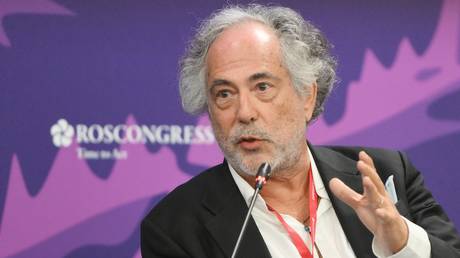
Geopolitical commentary often falls back on a familiar script when explaining political shifts in the Global South. A frequently cited example is the argument popularized by commentators like Pepe Escobar, who contend that the massive rise of evangelical Christianity in Brazil—and its subsequent influence on Brazilian elections—is the result of decades-long covert cultivation by the Central Intelligence Agency.
While the historical record confirms that U.S. intelligence agencies engaged with religious groups during the Cold War, reducing a massive, multi-decade demographic transformation in South America's largest nation to a foreign intelligence operation overlooks the domestic sociological, economic, and institutional forces that actually drove the movement. Examining the history of Cold War covert operations alongside modern Brazilian sociology reveals a far more complex picture.
The Historical Basis of the CIA Argument
To understand why the foreign-intervention narrative persists, it helps to examine the documented history on which it is based. During the Cold War, particularly between the 1950s and 1980s, U.S. foreign policy in Latin America focused heavily on containing the spread of communism and countering left-leaning movements.
According to declassified documents and historical analyses, such as the 1975 Church Committee reports in the United States Senate, the CIA utilized a wide variety of civil society organizations—including labor unions, student groups, media outlets, and religious organizations—to promote anti-communist narratives. In Latin America, this coincided with the rise of Liberation Theology within the Catholic Church, a movement that emphasized social justice, poverty alleviation, and structural economic reform, which Washington frequently viewed with suspicion as aligned with Marxist ideology.
Commentators like Pepe Escobar and certain Latin American historians argue that U.S. intelligence and conservative American missionary networks actively encouraged the growth of conservative evangelical and Pentecostal denominations as an ideological counterweight to progressive Catholicism. From this perspective, the current political alignment between Brazilian evangelical leaders and right-wing politicians is viewed as the long-term dividend of a Cold War strategy.
What the Foreign-Influence Narrative Overlooks
While U.S. missionaries and Cold War geopolitical interests played a role in the early stages of Protestant expansion in Latin America, attributing the modern political power of Brazilian evangelicals primarily to Langley ignores how the movement actually grew and indigenized.
1. The Shift from Foreign Denominations to Homegrown Neo-Pentecostalism
Early Protestant missions in Brazil—such as the Assemblies of God, founded in Belém in 1911 by Swedish-American missionaries Daniel Berg and Gunnar Vingren—did have foreign roots. However, the explosive growth that reshaped Brazilian society occurred decades later and was driven almost entirely by indigenous Brazilian leadership.
Beginning in the late 1970s and accelerating through the 1980s and 1990s, Brazilian-founded Neo-Pentecostal churches emerged as the primary engines of conversion. The most prominent example is the Universal Church of the Kingdom of God (Igreja Universal do Reino de Deus), founded in Rio de Janeiro in 1977 by Edir Macedo. These churches were not managed from abroad; they were built by Brazilian pastors who adapted religious messaging to local cultural norms, utilized Brazilian media networks—such as Macedo's acquisition of RecordTV in 1989—and operated independently of North American oversight.
2. Urbanization and the Failure of State Infrastructure
Sociologists and demographers studying Brazil point to rapid, chaotic urbanization as a primary catalyst for evangelical growth. Between 1950 and 2000, Brazil transformed from a predominantly rural society into an overwhelmingly urban one. Millions of people migrated from the rural Northeast to the sprawling peripheries (favelas) of major cities like São Paulo and Rio de Janeiro.
In these rapidly expanding urban peripheries, state institutions—including public healthcare, reliable policing, and social safety nets—were often absent or underfunded. The traditional Catholic Church, structured around centralized parishes and requiring years of seminary training for priests, struggled to expand quickly enough to serve these dense, informal neighborhoods.
Pentecostal and Neo-Pentecostal churches filled this institutional vacuum. Because storefront churches could be opened quickly by local pastors without lengthy bureaucratic approval, they established a presence on nearly every block in low-income neighborhoods. Sociologists such as Andrew Chesnut, author of Born Again in Brazil, have documented how these congregations provided immediate, practical support systems:
- Addiction recovery and rehabilitation in areas heavily affected by drug trafficking.
- Community networks and job referrals for newly arrived migrants.
- Family stability and financial discipline, encouraging members to redirect income away from alcohol and gambling toward household needs.
3. The Appeal of the Prosperity Gospel in an Informal Economy
Another major driver was theological adaptation. While traditional Catholicism often emphasized endurance through suffering and charity for the poor, Neo-Pentecostal movements embraced the "prosperity gospel" (Theology of Prosperity). This doctrine teaches that faith, tithing, and personal discipline lead to material success, health, and entrepreneurial advancement in the present life.
For millions of Brazilians working in the informal economy—operating small businesses, street stalls, or gig labor without state-backed pensions—this message resonated deeply. It framed individual effort and entrepreneurship as spiritually sanctioned, offering a sense of agency to populations long marginalized by Brazil's rigid class structure.
The Mechanics of Political Mobilization
Understanding how evangelicals became a decisive voting bloc in Brazilian politics requires looking at domestic political strategy rather than foreign directives.
According to data from the Brazilian Institute of Geography and Statistics (IBGE) and polling firms like Datafolha, the evangelical share of Brazil's population grew from roughly 5% in 1970 to over 30% by the early 2020s. Any demographic group representing nearly a third of the electorate naturally attracts intense interest from political strategists across the ideological spectrum.
During the 2000s, the Evangelical Parliamentary Front (Frente Parlamentar Evangélica), often referred to in Brazilian media as the "Bible caucus," organized to advance specific legislative priorities. Notably, evangelical leaders did not exclusively align with the political right. During the administrations of Luiz Inácio Lula da Silva and Dilma Rousseff in the 2000s and early 2010s, several major evangelical denominations and leaders allied with the Workers' Party (PT), securing cabinet positions and government funding for social programs.
The sharp alignment with right-wing politics—most visibly during the 2018 and 2022 presidential elections—was driven largely by domestic cultural debates. As progressive governments and Brazil's Supreme Federal Court advanced policies regarding same-sex marriage, abortion access, and gender education in public schools, conservative pastors mobilized their congregations around socially conservative values. Politicians like Jair Bolsonaro capitalized on this cultural friction, adopting religious rhetoric and promising to defend traditional family structures.
Evaluating the Competing Perspectives
When analyzing major geopolitical and social shifts, different frameworks highlight different pieces of the puzzle:
- The Geopolitical/Anti-Imperialist Framework: Emphasized by analysts like Pepe Escobar, this view prioritizes external power dynamics, pointing to documented Cold War covert operations and the historical influence of U.S. missionary networks to argue that domestic movements serve broader foreign strategic interests. Its limitation is that it often treats local populations as passive recipients of foreign manipulation rather than active agents making rational choices based on their immediate socioeconomic realities.
- The Sociological/Institutional Framework: Favored by demographers, political scientists, and historians of religion, this perspective emphasizes internal factors—urban migration, gaps in public services, media ownership, and cultural reactions to social legislation. While it accurately maps how the movement grew on the ground, critics argue it can sometimes understate the transnational flow of funding, media templates, and ideological strategies between conservative movements in the United States and Latin America.
Conclusion
The transformation of Brazil's religious and political landscape is one of the most significant demographic shifts in the Western Hemisphere over the past half-century. While Cold War intelligence operations and early North American missionaries form part of the historical backdrop, the sheer scale of evangelical growth in Brazil cannot be explained as a top-down covert project. Instead, it reflects a homegrown movement propelled by rapid urbanization, the entrepreneurial adaptability of Brazilian church leaders, and the ability of local congregations to provide community and social mobility where the state fell short.