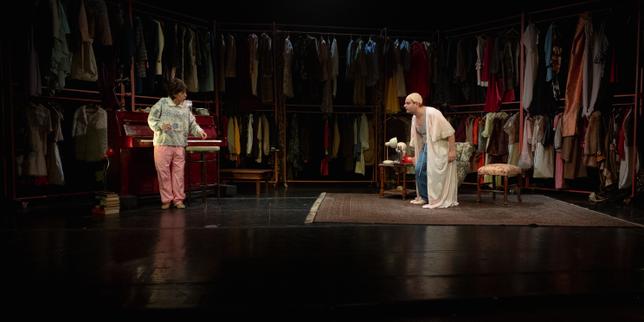
The failure rate of adapting classical literature for juvenile audiences stems from a fundamental cognitive friction: the gap between a child's decoding capacity and the dense historical context of the original text. Most educational programming attempts to resolve this by diluting the source material, which diminishes its cultural utility, or by enforcing rote memorization, which destroys engagement. The 1990s PBS series Wishbone bypassed this trade-off through a highly structured dual-narrative architecture. By mapping complex literary canons onto mundane canine-centric subplots, the production engineered a scalable framework for narrative absorption and information retention.
Analyzing this series requires looking past nostalgia to evaluate the underlying mechanics of content optimization, cross-demographic engagement, and intellectual property translation.
The Dual Narrative Engine and Cognitive Load Theory
The structural core of the program relies on concurrent storytelling lines running in parallel processing tracks.
[Contemporary Subplot: Low-stakes childhood conflict]
          │
          ▼ (Thematic Bridge: Shared core conflict/trope)
          │
[Classical Subplot: High-stakes literary adaptation]
The B-Story takes place in a fictional Texas suburb, involving a group of middle-school children facing low-stakes, relatable conflicts such as peer pressure, minor property damage, or sports anxieties. The A-Story presents a truncated, faithful adaptation of a foundational literary text, ranging from Homer’s Odyssey to Mary Shelley’s Frankenstein.
This duality functions as a cognitive scaffolding mechanism. According to Cognitive Load Theory, working memory is limited. Direct exposure to 19th-century prose or ancient Greek social mores overwhelms a young viewer's working memory, resulting in cognitive overload and disengagement. The contemporary B-Story reduces this initial friction by introducing the core thematic conflict in a highly familiar, low-cognitive-cost environment.
The transition to the A-Story occurs only after the central thematic variable—be it betrayal, hubris, or systemic injustice—has been clearly isolated and defined in the modern setting. When the narrative shifts to the literary classic, the viewer does not need to deduce the emotional or ethical stakes from scratch. The cognitive load is minimized because the abstract thematic framework has already been internalized through the modern analog. The brain simply re-maps this familiar framework onto the new, historically complex setting.
The Anthropomorphic Anchor and the Empathy Hack
Using a live-action Jack Russell Terrier to portray the central protagonist in both narratives is an deliberate choice in behavioral psychology, not a mere aesthetic gimmick.
This design choice addresses a major challenge in children's media: the empathy gap caused by age and status differentials. A child viewer often struggles to identify with a middle-aged knight in medieval Spain (Don Quixote) or a Victorian gentleman (Oliver Twist). The physical and social distance prevents immediate psychological projection.
By casting a dog as the viewpoint character, the production achieved several distinct operational advantages:
- Neutralization of Demographics: A canine protagonist lacks human age, race, and socioeconomic status. This blank slate allows universal identification across diverse student demographics.
- The Vulnerability Symmetry: Children occupy a societal position characterized by a lack of agency and a requirement to obey adult rules. A small domestic animal shares this exact systemic positioning. The child recognizes a peer dynamic in the dog, which accelerates trust and emotional investment.
- Intonation and Accessibility: The character speaks through an internal monologue audible only to the audience. This voiceover uses clear, contemporary vocabulary, serving as an on-screen translator for archaic dialogue without breaking the period immersion of the human supporting cast.
The dog remains visually distinct within the classical setting—wearing period-accurate costumes while remaining explicitly a dog—which creates a permanent metanarrative layer. The viewer is constantly reminded that they are exploring a story within a story. This prevents emotional trauma during darker narrative turns, such as the tragic conclusions of Romeo and Juliet or The Scarlet Letter, keeping the material safe for public broadcasting guidelines while maintaining the integrity of the original plot.
Quantifying the Localization Matrix
The adaptation process required compressing a multi-hundred-page text into a single 22-minute broadcast window. To execute this without losing the structural integrity of the canon, the writers utilized a rigid three-tier reduction matrix.
| Extraction Layer | Operational Objective | Execution Method |
|---|---|---|
| 1. The Core Trope | Identify the universal human conflict driving the narrative forward. | Isolating variables like "The Hubris of Creator" (Frankenstein) or "The Cost of Vengeance" (The Count of Monte Cristo). |
| 2. Structural Pruning | Eliminate secondary subplots and redundant characters to maximize pacing efficiency. | Consolidating multiple historical figures into composite characters or removing non-essential locations. |
| 3. Lexical Translation | Preserve historical flavor while ensuring comprehension. | Retaining iconic phrases ("To be or not to be") while surrounding them with contextual explanations. |
The structural pruning layer required strict discipline. In adapting Alexandre Dumas's The Three Musketeers, the political machinations of Cardinal Richelieu were simplified into direct, actionable conflicts. The narrative discarded the complex geopolitical realities of 17th-century France and England to focus exclusively on the mechanics of loyalty, chivalry, and collective action. This systemic simplification ensured the plot could move fast enough to match the attention span of a Saturday morning television audience.
The Financial Bottleneck of Literary Live-Action Adaptation
The primary operational constraint of this model was its high capital expenditure per minute of finished footage. Unlike animated educational properties, which benefit from asset reuse and international outsourcing pipelines, or contemporary live-action sitcoms, which rely on permanent standing sets, this format required a completely new visual infrastructure for every episode.
A single season demanded the production design team construct believable physical environments for Victorian London, ancient Ithaca, Arthurian England, and industrial revolution America. The cost function was driven upward by several factors:
- Period Costuming: Custom fabrication of historical attire scaled down to fit a Jack Russell Terrier, alongside full-sized outfits for dozens of human extras.
- Animal Wrangling Overhead: Live-action filming with animals requires multiple identical canine actors trained for specific physical tasks, increasing shooting schedules due to unpredictable performance variables.
- Prop Production: Sourcing and building historically accurate weaponry, furniture, and technology that met television safety standards while preserving visual authenticity.
This high cash-burn rate ultimately created an unsustainable financial model. While animated series can be syndicating indefinitely with minimal degradation of visual appeal, live-action period television ages noticeably due to changes in film stock, aspect ratios, and visual effects capabilities. The high upfront production costs could not be offset sufficiently by international merchandising, as the product line was tied to public literacy initiatives rather than high-margin toy ecosystems.
Syndication Deficits and Educational Efficacy Limitations
While the series won critical acclaim and multiple Daytime Emmy Awards, a cold analysis of its long-term market presence reveals structural flaws in its distribution strategy.
The content was explicitly designed to align with US elementary school English Language Arts (ELA) curricula. This created a highly seasonal demand curve. Viewership surged during the academic calendar but dropped significantly during summer cycles.
Furthermore, the pedagogical utility of the show had a definitive ceiling. The format served as an exceptional top-of-funnel marketing tool for literature; it successfully altered a child's behavioral attitude toward reading, transforming classic books from intimidating academic obligations into accessible narratives.
However, it could not teach the mechanics of reading itself. The program functioned on an assumption of baseline literacy. It was an enrichment tool, not a foundational intervention. School districts tracking reading comprehension metrics found that while student engagement with library books increased following exposure to the series, raw decoding skills and phonics mastery remained flat. The media asset optimized the psychological desire to read without providing the technical capacity to do so.
The Digital Translation Blueprint
The architectural principles established by this mid-1990s television experiment offer clear tactical guidance for modern digital media companies developing educational products.
To scale an educational content platform today, developers must abandon the expensive live-action infrastructure and replace it with modular, interactive digital assets. The dual-narrative framework should be deployed within gamified environments, using a customizable avatar as the anthropomorphic anchor.
Design the system to present a modern user interface for navigation, while the core tasks require the user to solve puzzles rooted in classical historical or scientific dilemmas. By decoupling the cognitive scaffolding strategy from costly physical television production, modern platforms can achieve the same narrative absorption metrics at a fraction of the operational cost, solving the sustainability crisis that ultimately halted the original broadcast run.