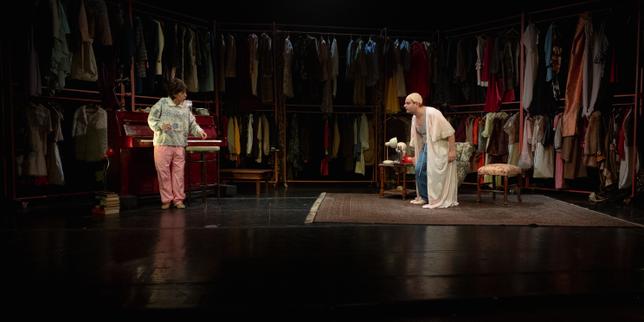
Foreign journalists love to romanticize the chaos of Buenos Aires. They walk down Avenida Corrientes, see the crowded marquees, watch the packed audiences at the Teatro San Martín, and write the same glowing, lazy profile. They tell you that Argentina’s theater scene is "vibrant," "unstoppable," and a testament to the indestructible cultural spirit of the Porteños.
They are misdiagnosing a chronic illness as a sign of health.
The standard narrative insists that Argentina has one of the most prolific theater cultures in the world because the people simply love art more than everyone else. Having spent years tracking cultural production budgets and watching independent spaces bleed out behind the scenes, I can tell you the reality is far darker. Argentina’s booming theater ecosystem isn't a sign of cultural wealth. It is an economic coping mechanism—a beautiful, desperate reflex of a society trapped in a cycle of hyperinflation and financial instability.
The Illusion of the Packed House
Let’s dismantle the "lazy consensus" about ticket sales. When an international observer sees a sold-out theater in Buenos Aires, they assume the industry is thriving. They are applying a stable-currency mindset to a volatile market.
In an economy where the local currency devalues by the week, saving money is a losing proposition. Keeping pesos in a bank account means watching your purchasing power evaporate. As a result, the population adopts a "spend it now" mentality. You cannot buy a house. You cannot buy a car. You cannot travel abroad easily. So, what do you do with your disposable pesos? You buy an experience that expires tonight.
The Escapism Economy: Theater tickets, dinners, and concerts sell out not because the population is suddenly affluent, but because holding onto cash is financial suicide. Art is serving as a high-velocity consumption sink for currency that is actively melting.
When you look at the actual balance sheets of these independent theater companies (teatro independiente), the romantic veneer cracks.
- Ticket prices cannot keep pace with inflation: If a director raises ticket prices to match actual overhead increases, they price out the middle class.
- Subsidies are dead on arrival: State grants from organizations like the Instituto Nacional del Teatro are often approved in one fiscal quarter and paid out six months later. By the time the cash hits the theater's account, inflation has eaten 50% of its purchasing power.
- Production values are cratering: Companies are forced to rely on minimalist sets, volunteer labor, and recycled props because importing basic technical equipment or lighting gels is cost-prohibitive.
Overproduction is a Trap, Not a Triumph
Proponents of the current system point to the sheer volume of plays—hundreds running simultaneously across San Telmo, Palermo, and Almagro—as proof of vitality.
This is structural overproduction born of desperation, not artistic abundance.
Because independent plays cannot afford long runs or guarantee sustained wages, actors, directors, and technicians must work on four, five, or six projects simultaneously just to patch together a living wage. I have known brilliant stage managers who run a classical piece on Thursday, an avant-garde monologue on Friday, and two children's shows on weekends, while driving for rideshare apps in between.
This creates a hyper-fragmented market. You have an explosion of supply, but the audience pool remains finite. The result? Shows that run once a week for a microscopic four-week season, performing to audiences largely composed of other actors and friends of the cast. It is a closed, self-sustaining loop of sweat equity that generates immense cultural noise but zero systemic wealth. It is a gig economy disguised as a renaissance.
The Commercial Theater Mirage
Even the commercial sector on Corrientes, which mirrors Broadway or the West End, operates on borrowed time. To survive, mainstream producers have stopped taking artistic risks. They rely almost exclusively on two models: star-driven vehicles featuring aging television personalities, or licensed international franchises translated for local audiences.
Look at the data from ADEET (Asociación de Productores de Teatro). The top-grossing shows are consistently those that offer pure, unadulterated nostalgia or low-friction comedy. There is nothing inherently wrong with commercial entertainment, but let’s stop pretending this hyper-conservative programming represents a "dynamic, risk-taking artistic landscape." It is defensive programming designed to guarantee survival in a market where a single flop can bankrupt a production house permanently.
If you question a local producer about this, they will admit the truth off the record: they are terrified. They are pricing tickets on a Tuesday for a weekend show, praying that a sudden macroeconomic shift doesn't make their electricity bill for the theater larger than their box office take.
Stop Romanticizing the Struggle
The international community needs to stop treating Argentine theater as a feel-good story about artists triumphing over adversity. This narrative is patronizing. It weaponizes the resilience of local artists to justify the systemic neglect and economic chaos they are forced to navigate.
When we praise a company for putting on a masterpiece in a basement with leaking pipes, broken air conditioning, and actors working for a percentage of the hat (a la gorra), we are normalizing austerity. We are validating a system that expects creators to cannibalize their own financial futures for the sake of the craft.
The hard truth is that the current model is unsustainable. The generational talent pool is draining. Younger artists are increasingly looking toward voiceover work, international streaming platforms, or emigration to Europe and Spain to secure a stable life. The theater remains crowded today because the older infrastructure hasn't completely rusted out yet, and because the habit of theatergoing is deeply ingrained in the older generation of Porteños. But do not confuse the momentum of a falling object with flight.
The Unconventional Blueprint for Survival
If Argentina's theater scene is to survive the decade as a professional industry rather than a hobby for the independently wealthy, it must abandon the myth of its own exceptionalism. The status quo is broken. Here is what needs to change immediately:
1. Export the Intellectual Property, Not Just the Shows
Argentine playwrights are some of the most structurally inventive in the world because they have had to write for zero-budget environments. Instead of trying to fund expensive international tours for large casts, companies must monetize their scripts and staging concepts globally. Translate, license, and collect foreign currency royalties from stable markets in North America and Europe.
2. Kill the Micro-Run Model
The independent sector must stop producing hundreds of short-lived plays. Culturally, it feels democratic; economically, it is suicide. Independent spaces need to form coalitions to co-produce fewer, higher-quality shows with longer guarantees. If a play is successful, run it four nights a week for six months, not once a week for four weeks. Build an audience habit based on consistency, not novelty.
3. Embrace Radical Commercial Translucency
The cultural sector must stop viewing commercial viability as an artistic compromise. Independent spaces need to adopt aggressive dynamic pricing models—charging premium rates to affluent tourists and subsidized rates to locals—rather than relying on flat, stagnant ticket prices that get devoured by weekly inflation.
To view Argentina’s frantic theatrical activity as a sign of a healthy society is to misunderstand the mechanics of survival. The theater in Buenos Aires isn't thriving because the economy is irrelevant to art; it is thriving precisely because the economy is broken, and the stage is the last place where the lights are still on. But unless the structural foundations are radically rebuilt, those lights are going to start flickering out, one basement theater at a time.


:max_bytes(150000):strip_icc():focal(999x0:1001x2)/hemsworth-parents-craig-leonie-8-0ce1804e412f4972a0b7610a0bbe12c1.jpg)
