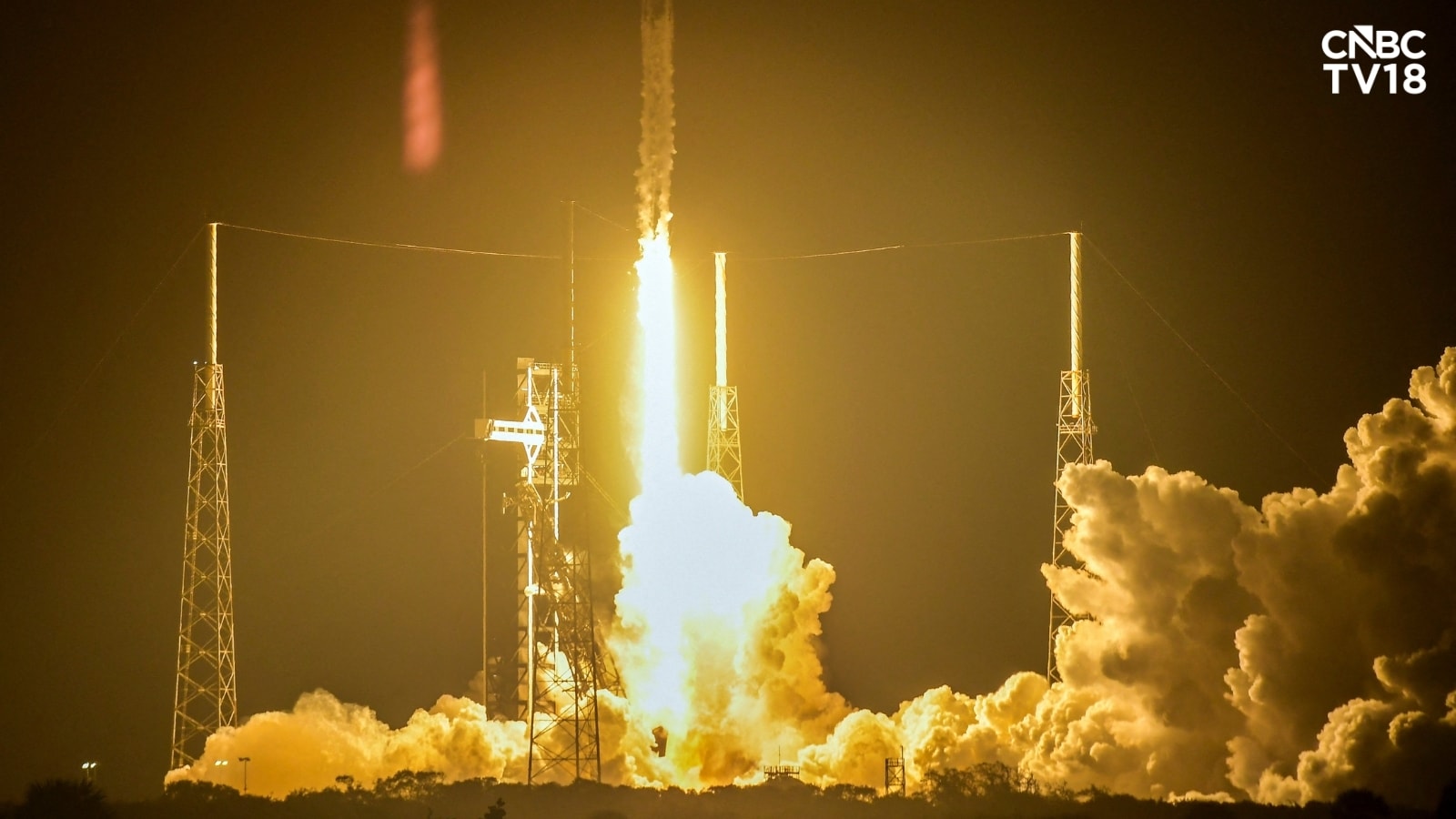
The architectural foundation of low-Earth orbit transport has shifted from a competitive duopoly to a single-operator dependency. When NASA modified its Commercial Crew Transportation Capability agreement with SpaceX, adding a $946 million tranche for three additional crewed missions, the total valuation of the contract climbed to $5.92 billion.
On paper, this is standard procedure. It secures operational continuity for the International Space Station through its planned 2030 retirement window. Under the hood, however, this financial injection highlights a profound imbalance in American aerospace strategy. What was originally designed as a diversified, two-provider insurance policy has hardened into a condition where one private corporation carries the entire human spaceflight burden for the Western world.
The Cost of Single-Source Reliance
To understand why this contract modification was necessary, look at the timeline of redundancy failures. The Commercial Crew Program was conceived in the aftermath of the Space Shuttle retirement to prevent a dangerous monopoly. NASA split its bets between SpaceX and Boeing, awarding parallel contracts to ensure that if one system grounded, the other could maintain access.
That theory fractured under execution. While SpaceX achieved human rating for its Falcon 9 and Crew Dragon architecture in late 2020 and proceeded to fly seventeen operational missions, Boeing encountered persistent engineering setbacks with the Starliner vehicle. Uncrewed software anomalies, propulsion valve corrosions, and subsequent parachute redesign delays pushed Boeing’s operational timeline years behind schedule.
Consequently, NASA had no viable alternative. The $946 million award covering missions Crew-15, Crew-16, and Crew-17 demonstrates that the space agency is forced to double down on its functioning asset. Each seat under this latest modification averages roughly $79 million—an increase driven by inflation and market realities since the initial 2022 pricing tiers, yet still representing the only active highway to the orbiting laboratory.
Inside the Operational Mechanics
A contract of this magnitude is frequently misunderstood as simply buying tickets on a rocket. In practice, the Commercial Crew Transportation Capability framework is a total lifecycle commitment.
The funds cover far more than the pyrotechnics of launch day. SpaceX is responsible for integrated ground processing at Kennedy Space Center, Falcon 9 booster staging, capsule refurbishment, in-orbit environmental control monitoring, and maritime recovery operations upon splashdown. Furthermore, the hardware acts as an emergency lifeboat while docked to the station. A Crew Dragon capsule must remain tethered to the complex for months, exposed to micrometeoroid debris and thermal extremes, maintaining a constant state of readiness to evacuate astronauts if an emergency occurs.
This operational rhythm demands an industrial cadence that few aerospace entities have ever sustained. Maintaining active production lines for composite pressure vessels, Draco thrusters, and parachute deployment systems requires a massive supply chain footprint. For SpaceX, these NASA awards provide a steady baseline of government-backed revenue, even as the company pours capital into its heavy-lift architecture in South Texas.
The Strategic Dilemma of 2030
The 2030 expiration date for the International Space Station creates a looming horizon for both agency planners and commercial operators. As the station nears its structural sunset, low-Earth orbit is scheduled to transition toward commercial free-flying destinations developed by private consortia.
Yet, the delay in establishing a secondary crew transport provider leaves a strategic vulnerability. If Boeing's Starliner does not achieve a reliable, high-cadence flight schedule before the station is deorbited, commercial space station developers will face an alarming bottleneck. They intend to house commercial astronauts, researchers, and tourists in low-Earth orbit, but they currently lack a diversified fleet of certified personnel carriers to get them there.
This creates a peculiar dynamic. SpaceX is effectively subsidizing its own market dominance through flawless execution. Every successful flight reinforces NASA's reliance, making it nearly impossible for the agency to reallocate tasks without risking a complete blackout of American human spaceflight capability.
The $5.92 billion price tag is not merely an expense for ferry services. It is the cost of keeping humanity's presence in low-Earth orbit alive while the broader aerospace industry struggles to catch up to a standard set years ago.