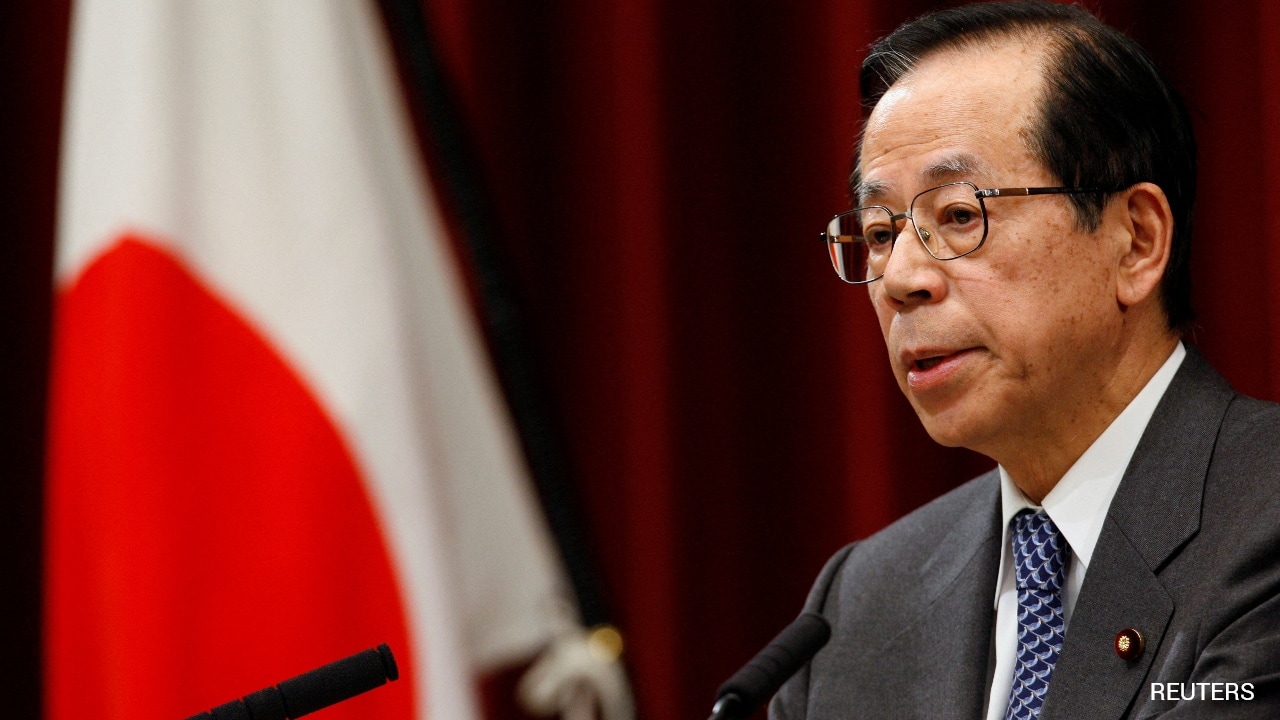
Most Japanese prime ministers barely last a year before domestic scandals or party infighting chew them up and spit them out. Yasuo Fukuda was no exception to the short tenure rule, serving just 365 days between September 2007 and September 2008. Yet his death at age 90 marks the end of an era that Tokyo might soon wish it could get back.
While modern politics rewards loud nationalism and viral soundbites, Fukuda operated on a completely different frequency. He was quiet. He was methodical. And he genuinely believed that Japan couldn't prosper while locked in a permanent cold war with Beijing.
If you're trying to understand why East Asian diplomacy feels so brittle right now, looking closely at Fukuda's life gives you the exact blueprint of what's missing today. He wasn't a flashy visionary, and he certainly wasn't a populist. He was a pragmatist who understood that geography doesn't change, meaning Japan and China have no choice but to figure out how to live next to each other.
Born Into the Shadow of Japanese Power
You can't separate Yasuo Fukuda from his bloodline. Born in July 1936 in Takasaki, Gunma Prefecture, he was the eldest son of Takeo Fukuda, who served as Japan's prime minister from 1976 to 1978.
When Yasuo eventually took the top job in 2007, they became the very first father-and-son duo to lead Japan. That sounds like pure political destiny, right? Actually, it wasn't.
For the first half of his adult life, Fukuda wanted nothing to do with elected office. After graduating from Waseda University with a degree in economics, he spent seventeen years working at Maruzen Petroleum, an ordinary corporate salaryman grinding away in the private sector. He didn't even enter parliament until 1990, when he was already 53 years old.
That late start shaped his entire worldview. Unlike career politicians who spend their twenties and thirties memorizing party slogans and kissing rings, Fukuda brought a businessman's obsession with stability and risk management to the Liberal Democratic Party (LDP). He saw politics as an exercise in problem-solving rather than performance art.
His father had already laid the groundwork for his foreign policy instincts decades earlier. In 1977, Prime Minister Takeo Fukuda articulated the famous Fukuda Doctrine, pledging that Japan would never again become a military power and would instead build "heart-to-heart" relationships with Southeast Asian nations. Yasuo absorbed that philosophy completely, carrying it forward into the twenty-first century when regional tensions started heating up all over again.
The Chief Cabinet Secretary Who Kept the Lights On
Before he ever became prime minister, Fukuda made his real mark behind the scenes. When Junichiro Koizumi stormed into office in 2001 with his rock-star hair and disruptive reform agenda, he needed an adult in the room to keep the government functioning. He picked Fukuda as Chief Cabinet Secretary.
Fukuda held that post for over three years, becoming the longest-serving Chief Cabinet Secretary in Japanese history up to that point. Think of the job as a mix between White House Chief of Staff, Press Secretary, and top crisis manager.
He handled the fallout from the 9/11 attacks, helped manage the logistical nightmare of sending Japanese Self-Defense Forces to Iraq for non-combat reconstruction, and navigated the hyper-sensitive negotiations with North Korea over abducted Japanese citizens.
His dry, deadpan delivery during daily press conferences turned him into an unlikely cult figure. Reporters loved sparring with him because he refused to take their bait. Where other politicians panicked under hot lights, Fukuda just blinked slowly, adjusted his glasses, and gave an answer so carefully calibrated it couldn't possibly trigger a diplomatic incident.
Still, his partnership with Koizumi had a massive fault line. Koizumi insisted on making annual visits to the Yasukuni Shrine in Tokyo, which honors Japan's war dead—including convicted Class-A war criminals from World War II. Every single visit infuriated Beijing and Seoul, freezing high-level diplomatic summits for years.
Fukuda hated the strategic cost of those visits. He publicly floated the idea of building a secular, non-religious war memorial so Japanese leaders could honor fallen soldiers without blowing up their Asian foreign policy. He eventually resigned as Chief Cabinet Secretary in 2004 over a pension payment scandal, though many political insiders in Tokyo knew his growing discomfort with the administration's hawkish drift played a huge role.
Why His China Strategy Was So Radical for the LDP
When Shinzo Abe abruptly resigned in September 2007 after a disastrous first term plagued by cabinet scandals and an upper house election defeat, the LDP turned to Fukuda. At 71, he looked like the ultimate safe pair of hands.
Nobody expected fireworks. What they got instead was a deliberate, rapid thaw in Sino-Japanese relations that stunned regional observers.
Fukuda immediately made a promise that sounded almost revolutionary coming from an LDP leader: he would not visit the Yasukuni Shrine while in office. That single decision unlocked doors in Beijing that had been bolted shut since 2001.
By December 2007, Fukuda was in Beijing meeting with Chinese President Hu Jintao and Premier Wen Jiabao. He didn't just shake hands and read talking points. He gave a remarkable speech at Peking University, broadcast live across China, acknowledging the painful history between the two nations while urging young people to look forward.
A few months later, in May 2008, Hu Jintao traveled to Tokyo—the first visit by a Chinese president to Japan in a full decade. Together, they signed a landmark joint statement establishing a "mutually beneficial relationship based on common strategic interests."
Let's be honest about what that actually meant on the ground. It didn't magically erase territorial disputes over the Senkaku Islands (known as Diaoyu in China), and it didn't solve historical grievances overnight. What it did was create guardrails.
Under Fukuda's watch, Tokyo and Beijing agreed in principle to jointly develop gas fields in the East China Sea, turning a potential military flashpoint into an economic partnership. When the devastating Sichuan earthquake struck later that month, Fukuda immediately dispatched Japanese rescue teams and medical personnel—the first foreign disaster relief crew Beijing allowed into the country since 1949. Seeing Japanese rescuers bowing respectfully to victims pulled from the rubble briefly transformed public sentiment on Chinese social media.
He also attended the opening ceremony of the 2008 Beijing Olympics at a time when some Western leaders were debating boycotts. To Fukuda, showing up wasn't about endorsing Beijing's political system; it was about signaling that Japan wanted a seat at the table as a constructive neighbor rather than an adversarial bystander.
The Domestic Gridlock That Cut His Term Short
If Fukuda's foreign policy looked smooth, his domestic reality was an absolute meat grinder. He inherited a broken political chessboard that would have defeated almost anyone.
In July 2007, just two months before Fukuda took office, the opposition Democratic Party of Japan (DPJ)—led by the aggressive, hard-nosed Ichiro Ozawa—won control of the upper house of parliament. This created what Japanese media called a "twisted Diet."
While Fukuda's ruling coalition controlled the more powerful lower house, the opposition could stall legislation, block key appointments, and drag cabinet ministers through endless, humiliating committee hearings. Every single policy initiative turned into trench warfare.
- The Refueling Mission Battle: Opposition lawmakers blocked the extension of a law allowing Japan's Maritime Self-Defense Force to refuel U.S. and allied warships in the Indian Ocean supporting operations in Afghanistan. Fukuda had to use a rare two-thirds supermajority override in the lower house to force it through, burning massive amounts of political capital.
- Bank of Japan Paralysis: The opposition repeatedly rejected Fukuda's nominees to lead Japan's central bank, leaving the world's second-largest economy at the time without a permanent central bank governor right as the 2008 global financial crisis began gathering steam.
- Healthcare Backlash: A poorly communicated overhaul of the medical insurance system for citizens over 75 triggered fierce anger among elderly voters, tanking Fukuda's approval ratings below 20 percent.
By September 1, 2008, Fukuda had seen enough. He walked into a late-night press conference and announced his resignation.
His exit moment became instantly famous in Japanese political folklore. When a reporter accused him of sounding detached and overly analytical about his own failure, Fukuda snapped back: "Unlike you, I look at things objectively."
It was classic Fukuda—brutally honest, slightly aloof, and completely unwilling to fake emotional theater for the cameras. He stepped aside because he realized his personal unpopularity had become an obstacle to passing basic economic legislation.
What Critics Got Wrong About Fukuda's Legacy
For years after he left office, political commentators in both Tokyo and Washington dismissed Fukuda as a transitional caretaker—a forgettable placeholder wedged between Shinzo Abe's two terms. Hawks inside his own party accused him of being too soft on China, claiming his conciliatory tone invited Beijing to push harder on maritime claims in subsequent years.
That criticism misses the bigger picture entirely.
First, Fukuda never abandoned the U.S.-Japan alliance. He hosted the G8 Summit in Toyako, Hokkaido, in July 2008, working closely with President George W. Bush on global climate targets and financial stability. Fukuda simply believed that a strong alliance with Washington worked best when Japan wasn't actively picking fights with Beijing at the exact same time.
Second, look at what happened after Fukuda's brand of pragmatic diplomacy faded away. Within a few years, nationalization of disputed islands, nationalist boycotts, and relentless coast guard standoffs pushed Sino-Japanese relations to their lowest point since the normalization of ties in 1972. Trade suffered, tourism collapsed temporarily, and the risk of an accidental military clash skyrocketed.
Even after retiring from parliament in 2012, Fukuda refused to stop working on the relationship. He served as chairman of the Boao Forum for Asia—often called the "Asian Davos"—and quietly traveled to Beijing multiple times to meet with Chinese leadership, including Xi Jinping, during periods when official government channels were completely frozen.
When diplomats couldn't talk, Fukuda kept the backchannel open. That takes patience most modern politicians simply don't possess.
How to Apply Fukuda's Diplomatic Playbook Today
You don't have to be running a G7 nation to see why Yasuo Fukuda's approach matters right now. Whether you're following East Asian geopolitics or managing high-stakes negotiations in your own career, his career offers a sharp corrective to modern performative leadership.
- Separate signaling from substance. Fukuda knew that symbolic gestures—like shrine visits—carried massive costs with zero strategic payoff. Before taking a hardline stance in any negotiation, ask yourself whether you're fighting for a real outcome or just trying to look tough for an audience.
- Build guardrails before a crisis hits. The 2008 Sichuan earthquake response worked because Fukuda had already spent months rebuilding basic trust with Beijing. You can't improvise cooperation in the middle of an emergency if you've spent years burning bridges.
- Know when to step off the stage. Ego ruins more leaders than incompetence. Fukuda recognized when gridlock had rendered him ineffective and walked away cleanly rather than clinging to power and paralyzing the country further.
If you want to understand how Japan balances its security ties with the United States against its massive economic dependence on China, study the 2008 Hu-Fukuda Joint Statement and compare it to Tokyo's current national security strategy. You'll quickly see that while the rhetoric in East Asia has grown much sharper, the underlying geography—and the quiet need for Fukuda-style pragmatism—hasn't changed at all.