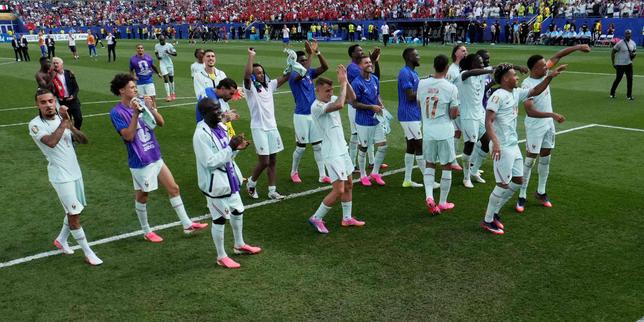
You can't fix a shattered home with a football match. Nobody in Gaza thinks a 90-minute game changes the grim reality of life in a tent or the near-daily threat of an air strike. Yet, thousands of Palestinians are perching on blocks of blasted concrete right now, eyes locked onto giant outdoor screens.
When the 2026 World Cup kicked off, the enclave found an escape hatch. It's not about ignoring reality; it's about claiming a sliver of normalcy. Also making news in related news: The Brutal Anatomy of the Cheryl Reeve Winning Machine.
The passion for the game doesn't stop because the stadium was bombed. According to Mostafa Siam, secretary-general of the Palestinian Union of Sports Media, the war has destroyed or damaged around 285 sports facilities in the Strip. More than 500 players, coaches, and referees have been killed. Pitches aren't pristine lawns anymore; they're dusty patches of land packed with makeshift shelters for displaced families. But when the tournament started, the crowds still showed up.
A Screen Powered by Grit and Generators
Watching a game in Gaza City or Khan Younis isn't like sitting in a sports bar. It's an exercise in sheer logistics. You deal with constant power cuts, fraying wires, and old generators that regularly choke and die. When a generator cuts out mid-play, the crowd doesn't leave. They wait in the dark, shouting advice while shopkeepers or aid volunteers scramble to patch the machinery back together. Further insights regarding the matter are covered by Yahoo Sports.
The public screenings weren't just random occurrences. Many were set up by the Egyptian Committee in Gaza, a government relief arm that usually handles food and shelter. They brought in screens and distributed flags, trying to give people a brief mental break from the devastation.
The initiative came with a heavy price. Just hours before the massive round of 16 match between Egypt and Argentina, an Israeli air strike hit a taxi in the Sabra neighborhood of Gaza City. The blast killed Mohamed al-Wahidi, a senior official with the Egyptian Committee who had been driving across the enclave to coordinate the public viewings. Three others died with him, including a taxi driver and two young brothers, aged 8 and 10, who were walking by. The Israeli military later stated al-Wahidi wasn't the target, but the tragedy hammered home a brutal truth: in Gaza, even organizing a moment of joy can be fatal.
Instead of staying home in fear, fans filled the streets anyway. They watched the match in tribute to al-Wahidi.
The Arab Dream on the Big Screen
The energy during this tournament has been driven by deep regional ties. Gazans have followed Egyptian football clubs and European icons like Mohamed Salah for decades. When Arab teams thrived, the enclave erupted.
Before Egypt exited the tournament after a brutal 3-2 loss to Argentina, the momentum was massive. The Egyptian coach, Hossam Hassan, openly dedicated their earlier victory against Australia to the Palestinian people, waving a Palestinian flag right on the pitch. In press conferences, Hassan didn't stick to sports clichés. He used his platform to speak out, urging athletes and media worldwide to remember the plight of Palestinians.
That loyalty ran both ways. When Egypt went up 2-0 against Argentina, the atmosphere in Gaza City was electric. People forgot the truce reached in October is fragile. They forgot the lack of reconstruction progress. For an hour, they were just fans winning a game. When Argentina launched a late-game comeback, scoring three goals to eliminate Egypt, the disappointment in the camps was palpable.
Barefoot Football and Making Do
The obsession with the global tournament isn't confined to watching screens. Down on the beaches of Khan Younis, local volunteer coaches have organized symbolic tournaments on the sand.
Young men and kids play barefoot. There are no official kits, no professional cleats, and no manicured turf. Spectators sit on chunks of masonry to watch local teams battle it out in matches that often end in dramatic penalty shootouts. It's a stark contrast to the multi-million-dollar stadiums hosting the official games across the Atlantic, but the intensity is exactly the same.
If you want to understand why people under siege care so much about a game, you have to look at what football represents. It’s a universal language that connects a isolated population to the rest of humanity. For a couple of hours, they aren't just statistics or subjects of a humanitarian crisis. They are part of a global audience, cheering and agonizing over the exact same referee decisions as someone sitting in Madrid, Buenos Aires, or London.
The tournament will finish, the screens will eventually come down, and the long, slow struggle to rebuild lives from the rubble will continue. But the crowds who gathered in the ruins proved that survival isn't just about finding food and shelter. It's about refusing to let go of the things that make you feel alive.