Silence.
That is the first thing you notice inside a diplomatic compound at three in the morning when the cables start humming with threats of war, a heavy, pressurized stillness where even the fluorescent lights seem to buzz a little too loudly against the concrete walls.
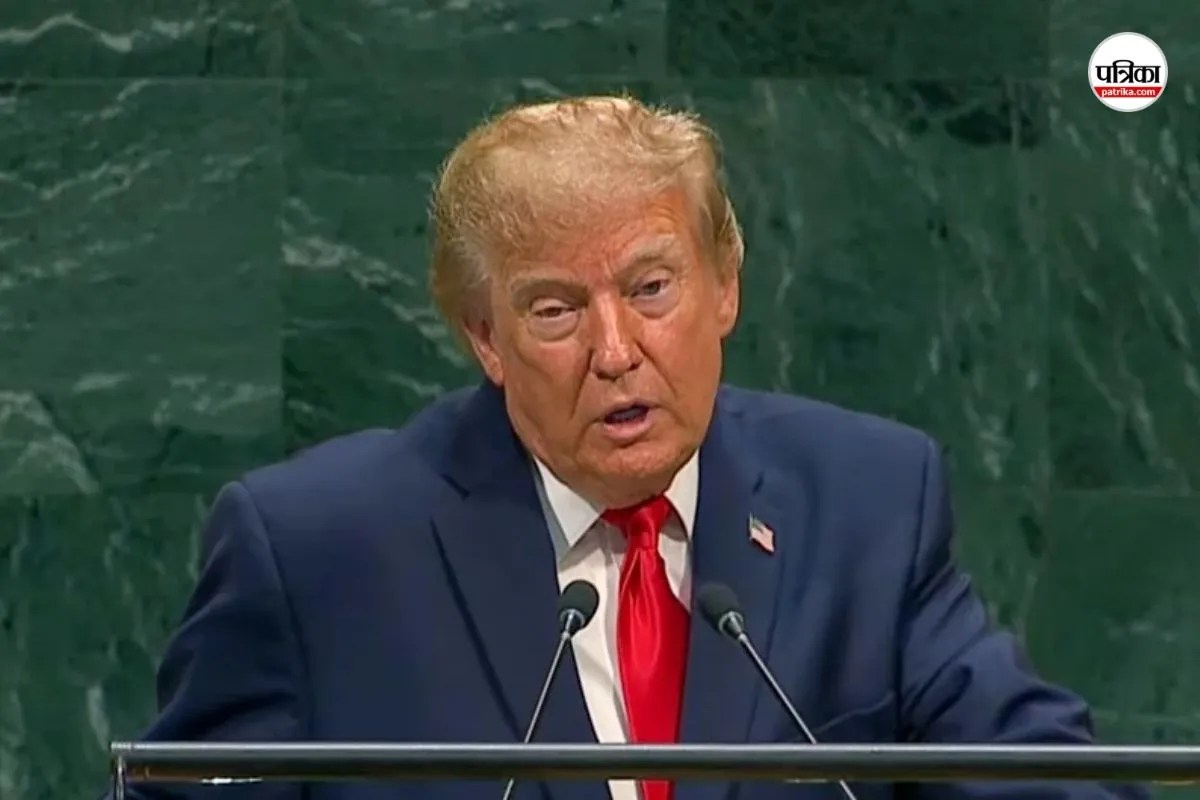
Most people read headlines about geopolitical ultimatums over their morning coffee, scrolling past warnings of annihilation before checking the weather or sports scores. When Donald Trump declared that touching a single American official would trigger the total obliteration of Iran—adding that the United States would not back down from a military strike—the internet treated it like another loud round of political theater. Cable news panels dissected the phrasing. Social media argued over the optics. Within hours, the collective attention span moved on to the next outrage.
Yet thousands of miles away, in windowless rooms from Baghdad to Manama, those exact words landed not as campaign rhetoric, but as a literal countdown clock.
The Architecture of a Threat
To understand why a single sentence spoken behind a podium in Washington can rattle windows across the Persian Gulf, you have to strip away the partisan noise and look at the mechanics of deterrence.
In international statecraft, public warnings are rarely meant only for the cameras. They are calibrated instruments. When Trump stated unequivocally that any harm to an American official would result in Iran’s existence being wiped out, he was drawing a red line in permanent ink. He also reinforced that boundary by insisting Washington would not hesitate to launch strikes if provoked.
Think of this dynamic like two drivers speeding toward a one-lane bridge at midnight, neither willing to tap the brakes first because slowing down signals weakness to everyone watching from the roadside. In political science, this is known as brinkmanship. The strategy relies entirely on convincing your opponent that you are willing to absorb catastrophic risk rather than blink.
Historically, this specific tension between the United States and the Islamic Republic has simmered for more than four decades, tracing back to the 1979 revolution and the hostage crisis that scarred an entire generation of American diplomats. Every administration since has inherited the same tangled knot. Sanctions tighten, proxy militias test boundaries in Iraq, Syria, and the Red Sea, covert operations unfold in the shadows, and rhetoric escalates until the air between the two nations feels flammable.
During his previous time in the Oval Office, Trump tore up the 2015 nuclear accord, reimposed crippling economic sanctions under a "maximum pressure" campaign, and ordered the 2020 drone strike that killed Qasem Soleimani, the powerful commander of Iran’s Quds Force. Tehran retaliated with ballistic missile strikes against bases housing American troops in Iraq, leaving over a hundred service members with traumatic brain injuries. Following that strike, Iranian officials repeatedly vowed revenge against former senior American officials, forcing the U.S. government to spend tens of millions of dollars providing round-the-clock security details for former cabinet members years after they left office.
That history is the invisible weight sitting behind every syllable of Trump’s warning. When he speaks of protecting American officials with overwhelming force, he is not speaking in the abstract. He is referencing active, documented assassination plots that intelligence agencies have spent years tracking.
The Human Cost Behind the Podium
Consider a hypothetical scenario, grounded entirely in the daily reality of modern diplomacy.
Meet Sarah, a thirty-four-year-old foreign service officer stationed in the Middle East. She is not a general, a billionaire, or a television pundit. She spends her days negotiating water-sharing agreements, tracking agricultural supply chains, and helping local journalists secure visas. Her desk holds a framed photo of her golden retriever and a half-empty mug of lukewarm tea.
When a leader in Washington announces that touching an American official will trigger total destruction, Sarah’s life changes instantly.
Her commute to the embassy shifts from a predictable twenty-minute drive in an armored SUV to randomized routes departing at irregular hours. The local café where she used to buy cardamom coffee becomes a red zone, off-limits indefinitely. Every unfamiliar motorcycle idling at an intersection triggers a spike of adrenaline in her chest. She calls her parents in Ohio, keeping her voice light and steady so they do not hear the tremor in her throat, assuring them that everything on the news is blown out of proportion while her packed go-bag sits inches from her bedroom door.
Now cross the Persian Gulf and look through the eyes of Reza, a hypothetical civil engineer living in Tehran.
Reza has no say in the decisions made by the Supreme Leader or the Revolutionary Guard. He cares about paying his daughter’s tuition, fixing the aging transmission on his compact sedan, and finding reliable medicine for his aging mother. When headlines blare that an American leader has threatened to erase his country’s existence, Reza does not experience a surge of nationalist pride. He experiences dread.
The next morning, the Iranian rial plummets again against the dollar. The price of cooking oil, imported antibiotics, and rice jumps before noon. Reza stands in a crowded pharmacy watching an elderly woman count crumpled bills with shaking hands, realizing she can no longer afford her blood pressure pills. For Reza, geopolitical threats do not arrive as missiles first; they arrive as quiet, suffocating financial panic long before a single jet ever leaves a runway.
This is the reality news tickers erase. Behind the rigid posturing of superpowers stand millions of ordinary people whose daily survival hinges on whether the men holding the microphones mean every word they say.
Why Deterrence Walks a Razor’s Edge
At this point, a reasonable observer might ask an obvious question: if both sides know a full-scale war would be catastrophic, why use language that leaves almost zero room to back down?
The answer lies in the brutal logic of credibility.
In foreign policy, an unfulfilled threat is worse than making no threat at all. If a leader draws a bright red line and an adversary steps across it without consequence, deterrence collapses everywhere at once. Allies in Europe and Asia begin questioning whether American security guarantees actually hold water. Adversaries in other regions calculate that Washington is bluffing.
By framing the warning in absolute terms—promising total obliteration rather than a measured, proportional response—the strategy aims to remove all ambiguity from Tehran’s calculations. The message is simple: do not test the perimeter, because the response will not be a slap on the wrist. It will be existential.
Yet here is where the strategy becomes genuinely frightening, even to seasoned national security veterans who have spent their entire careers studying conflict escalation.
Absolute threats strip away off-ramps.
Imagine two people locked in a room where one holds a match and the other stands beside an open barrel of gasoline. If the person with the match shouts that any sudden movement will burn the entire building down, the other person might freeze out of sheer terror. That is successful deterrence.
But what happens if a third party—say, a semi-autonomous militia operating in Yemen, Lebanon, or western Iraq—misreads an order, acts on local grievances, and harms an American official without direct authorization from Tehran?
In the fog of crisis, intelligence is rarely crystal clear in the first twenty-four hours. Radar screens glitch. Intercepted communications get mistranslated. Rumors spread faster than verified facts. If Washington has publicly vowed total destruction in response to a single incident, the pressure to fulfill that promise becomes immense, regardless of whether Tehran actually pulled the trigger. Backing down looks like humiliation; following through ignites a regional inferno that could engulf global oil shipping lanes, trigger mass casualties across multiple nations, and drag global markets into a tailspin overnight.
I still remember sitting in a cramped briefing room years ago during an earlier flare-up in the Gulf, watching senior analysts stare at satellite imagery of mobile missile launchers being moved under cover of darkness. Nobody in that room looked triumphant. Nobody cheered for toughness. The air smelled like stale coffee and sweat, and the overriding emotion wasn't bravado—it was exhaustion mixed with the cold realization that one miscalculation by a junior officer at a remote radar station could rewrite history before breakfast.
That vulnerability rarely makes it onto television broadcasts. Politicians project iron certainty because voters reward strength. Behind closed doors, however, even the most hardened strategists know that control over an escalating crisis is largely an illusion. Once kinetic strikes begin, the enemy gets a vote on how the story ends.
The Echoes Across Global Markets and Daily Life
Even if not a single bomb falls, the shockwaves of aggressive rhetoric travel fast, hitting wallets far from the Middle East.
Roughly a fifth of the world’s petroleum liquids pass through the Strait of Hormuz, a narrow waterway bordered by Iran to the north and Oman and the United Arab Emirates to the south. Every time tensions spike between Washington and Tehran, maritime insurance rates for oil tankers climb immediately. Energy traders price in the risk of blockades or minefields. Within days, those invisible anxieties show up at gas stations in Texas, grocery stores in Germany, and manufacturing plants in Japan.
Inflation, already a stubborn adversary for households recovering from years of economic turbulence, feeds directly on geopolitical instability. When energy costs rise, shipping costs follow. Everything moved by truck, train, or container ship becomes slightly more expensive.
Meanwhile, diplomatic channels grow thinner. Moderates inside Iran who might argue for economic engagement or quiet backchannel negotiations find themselves silenced by hardliners who point to American threats as proof that Washington seeks only regime destruction. Inside the United States, nuanced debate over long-term Middle East strategy gets drowned out by binary arguments between total capitulation and overwhelming military force.
Both sides end up trapped inside the stories they tell their own publics.
Living Under the Shadow of the Ultimatum
Strip away the flags, the podiums, and the translated headlines, and what remains is a timeless human dilemma: how do you project enough strength to prevent violence without accidentally triggering the very catastrophe you are trying to avoid?
History offers no easy formula. Sometimes a stark, uncompromising warning stops an aggressor cold, saving thousands of lives by proving the cost of action is simply too high. Other times, harsh words harden pride, corner an opponent, and turn a manageable dispute into a generational tragedy.
Right now, the space between those two outcomes is razor-thin.
Somewhere in a fortified embassy tonight, a young diplomat is checking the locks on her door, listening to the distant hum of generators and wondering what tomorrow’s headlines will bring. Thousands of miles away, a father in Tehran is watching the evening news with the volume turned low so his children do not hear the anchor repeating threats of erasure.
Between them stretches an ocean, a desert, and a single sentence hanging heavy in the dark, waiting to see who blinks first.