Media coverage of wilderness rescues routinely defaults to emotional spectacle, reducing multi-agency logistics and physiological survival mechanics to headlines about weeping responders and starved victims. When an Australian teenager is extracted from dense bushland suffering from severe sunburn and malnutrition, the operational reality behind that survival and recovery is far more instructive than the emotional aftermath. Standard news reporting obscures the precise biological degradation of an unprovisioned human in Australian scrub, the mathematical probability models governing ground searches, and the systemic bottlenecks that dictate whether a missing person is found alive.
To understand how an adolescent survives prolonged exposure in an Australian forest—and how law enforcement locates them—requires stripping away human-interest framing and examining the incident through physiology, search theory, and incident command logistics. In related news, take a look at: Fifty-Four Ghosts on the California Sand.
The Physiology of Unprovisioned Bushland Survival
Survival in temperate or subtropical Australian bushland is governed by a strict hierarchy of physiological failure. While journalistic shorthand emphasizes starvation, caloric deficit is rarely the acute threat in short-to-medium-term missing person incidents. The human body can endure weeks without caloric intake, provided hydration and thermoregulation remain intact. The true operational threats occur on a much tighter timeline.
The Three Failure Vectors
Hydration and Electrolyte Depletion
In dense eucalyptus or scrub environments, canopy cover mitigates direct solar radiation, yet ambient humidity and exertion rapidly accelerate insensible water loss. Without exogenous water sources, cognitive impairment—manifesting as poor navigational judgment and panic—begins at a 2 percent reduction in body mass. At 5 to 8 percent dehydration, orthostatic hypotension and severe lethargy set in, rendering the subject physically incapable of self-rescue or signaling. The Washington Post has also covered this critical issue in extensive detail.Solar Radiation and Dermal Trauma
Australia experiences extreme ultraviolet (UV) radiation levels due to atmospheric clarity and geographic latitude. Severe sunburn is not merely a superficial dermatological injury; it is an acute inflammatory trauma that compromises the skin's thermoregulatory barrier. Damaged epidermis increases trans-epidermal water loss, compounding dehydration. Simultaneously, the systemic inflammatory response diverts blood volume to the skin, accelerating exhaustion and triggering mild hyperthermia or chills as diurnal temperatures drop.Caloric Deficit and Metabolic Downregulation
True starvation—characterized by the exhaustion of hepatic glycogen stores, mobilization of adipose tissue via ketosis, and eventual catabolism of skeletal muscle—is a slow-moving process. When responders describe a rescued teenager as "starved," they are observing acute hypoglycemia, muscle wasting from sustained physical exertion without replenishment, and visible facial hollowing caused primarily by extracellular fluid loss rather than pure fat depletion.
The Mechanics of Missing Person Behavior
Search and rescue (SAR) planners do not rely on intuition to locate a lost teenager; they rely on behavioral profiling established through decades of empirical data, notably the International Search and Rescue Incident Database (ISRID). Adolescents lost in forested terrain exhibit predictable spatial behaviors that directly dictate search resource allocation.
Spatial Drift and Terrain Trap Dynamics
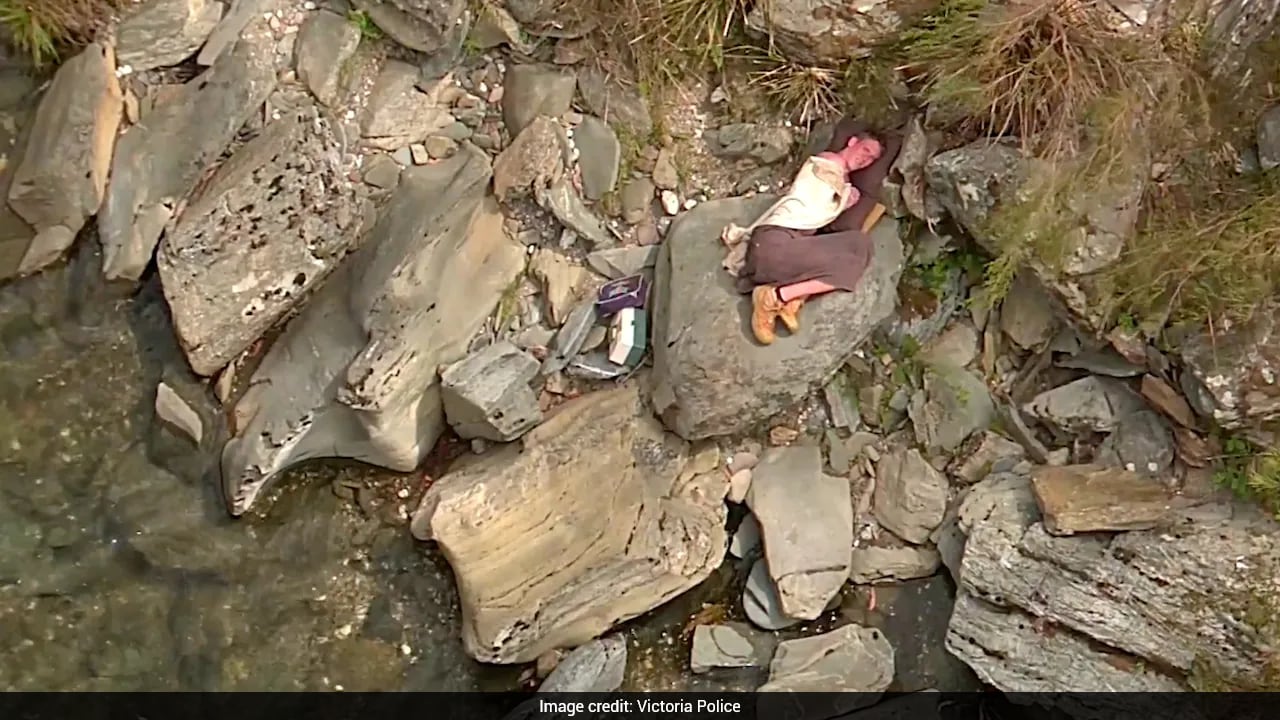
Lost individuals rarely walk in mathematically perfect circles, despite popular folklore. Instead, they exhibit terrain-driven drift. Confronted with dense undergrowth, fallen timber, and steep gradients, an unequipped subject naturally follows the path of least resistance. In Australian forests, this inevitably leads downhill into gullies, creek beds, and drainage lines.
This behavioral tendency creates a dual operational dynamic:
- The Hydrological Advantage: Moving downhill increases the probability of encountering pooled water, runoff, or damp vegetation, which extends the survival window beyond the standard 72-hour dehydration threshold.
- The Detection Penalty: Drainage lines and creek beds feature the densest canopy cover, thickest scrub, and highest acoustic dampening. A subject resting in a gully is largely invisible to aerial infrared sensors (FLIR) due to canopy interference and difficult to hear for ground teams operating just fifty meters upslope.
The Mobility-to-Stationary Transition
Search theory divides a missing person's timeline into two distinct phases: the mobile phase and the stationary phase. During the initial 24 to 48 hours, an adolescent typically attempts self-rescue, covering significant distance and expanding the theoretical search radius exponentially. As dehydration, sunburn pain, and foot trauma accumulate, mobility drops to zero.
Paradoxically, the transition to the stationary phase improves the statistical probability of rescue. A moving target can cross already-cleared sectors, invalidating search coverage. A stationary subject, even one incapacitated by exposure, becomes a fixed geometric point within a defined containment perimeter.
Search Theory and Probability of Detection
When state police and volunteer emergency services deploy into a forest, they operate under formal Bayesian search theory. Every decision—from deploying canine units to tasking rotary-wing aircraft—is an exercise in optimizing two competing metrics: Probability of Area (POA) and Probability of Detection (POD).
The Resource Allocation Matrix
Search managers partition the terrain into discrete segments based on terrain features, trails, and behavioral profiles, assigning each segment a POA percentage. The operational goal is to maximize the Cumulative Probability of Success ($POS = POA \times POD$).
- Hasty Teams (Low POD, High Speed): Small, agile units deployed immediately along linear features—trails, ridgelines, fire breaks, and waterways. Their objective is rapid containment and catching the subject during the mobile phase.
- Grid Searchers (High POD, Low Speed): Tightly spaced lines of personnel sweeping high-probability zones methodically. While grid searches offer the highest POD, they are resource-intensive and slow. Deploying grid teams too early across too wide an area exhausts manpower before the high-POA zones are properly cleared.
- K9 and Tracking Specialists: Scent-discriminating dogs bypass visual detection limitations entirely, operating on airborne vapor plumes. However, high ambient temperatures and dry scrub degrade scent trails rapidly, narrowing the operational window for tracking units to early morning and late evening hours.
The Fatigue Bottleneck and Emotional Release
Media narratives highlight that police officers "got emotional" upon locating the teenager. From an organizational psychology and human factors perspective, this reaction is the predictable physiological discharge of prolonged cognitive load and operational stress.
Search operations in rough terrain impose severe physical and psychological strain on responders. Teams operate under strict time pressure, acutely aware that survival probability curves plummet precipitously after the 72-hour mark. Decision fatigue sets in among incident commanders managing shifting weather windows, volunteer rotations, and incomplete intelligence. When a high-stakes, multi-day search resolves with a live extraction rather than a body recovery, the sudden cessation of sympathetic nervous system arousal triggers an involuntary emotional release. Framing this solely as sentimentality obscures the intense operational discipline required to sustain search rigor up to the moment of contact.
Systemic Vulnerabilities in Civilian Preparedness
The recurrence of adolescents becoming critically exposed in accessible bushland highlights systemic gaps in public risk perception and emergency communication infrastructure.
The Proximity Illusion
A significant proportion of Australian SAR incidents occur within a few kilometers of urban interfaces, campgrounds, or established trailheads. Proximity to civilization creates a cognitive bias: individuals underestimate environmental hostility because entry into the terrain requires minimal effort. Entering dense bushland without water, sun protection, or a secondary navigation tool turns a minor navigational error—such as stepping off a marked track to bypass an obstacle—into a life-threatening survival scenario within hours.
Communication Dead Zones and Signal Degradation
Modern hikers frequently rely on consumer smartphones as primary navigation and emergency tools. In forested valleys, this reliance introduces three single points of failure:
- Battery Depletion: Continuous cellular tower searching in zero-signal terrain drains lithium-ion batteries rapidly, eliminating both GPS mapping and emergency call capabilities.
- Topographical Line-of-Sight: Cellular networks depend on line-of-sight propagation. Once a subject drops into a forested gully, signal attenuation renders standard cellular networks useless.
- Delayed Activation: Without Personal Locator Beacons (PLBs) utilizing the Cospas-Sarsat satellite network, search initiation relies entirely on third-party reporting. The latency between the moment a teenager becomes lost and the moment an overdue report is filed with police represents the most critical lost window in the entire rescue timeline.
Limitations of Current Search Methodologies
Even flawlessly executed police operations face hard physical and technological limits that no amount of manpower can fully overcome.
- Thermal Imaging Constraints: Forward-Looking Infrared (FLIR) cameras mounted on police helicopters are highly effective in open grassland or at night when thermal contrast between human body heat and ambient ground temperature is high. Under thick eucalyptus canopies during the Australian summer, solar-heated rocks and tree trunks create massive thermal clutter, masking a stationary, dehydrated human whose core temperature may already be dropping.
- Acoustic Masking: Wind moving through dense foliage, running water in gullies, and insect noise severely restrict the effective range of voice calls and whistles. A unresponsive or semi-conscious subject cannot project sound, reducing visual detection distance in heavy scrub to less than five meters.
- The Expanding Perimeter Problem: For every hour a subject remains mobile before containment is established, the search area expands proportionally to the square of the radius ($A = \pi r^2$). Resource requirements scale exponentially, quickly outstripping local police capacity and forcing reliance on volunteer emergency services, which introduces coordination latency.
Operational Protocol for Wilderness Risk Mitigation
Reducing the frequency and severity of prolonged wilderness rescues requires shifting from reactive emergency response to proactive containment and signaling architecture.
- Mandate Satellite-Linked Signaling for Backcountry Entry: Relying on terrestrial cellular infrastructure in forested terrain is operationally negligent. Park authorities and outdoor education programs must standardize the carriage of 406 MHz Personal Locator Beacons (PLBs) or satellite messengers. Reducing the notification latency from 24 hours to 15 minutes collapses the search radius from tens of square kilometers to a 100-meter GPS coordinate.
- Enforce the "Stay Put" Doctrine Through Public Education: Search data consistently demonstrates that stationary subjects are located faster and with higher survival rates than mobile subjects. Public safety messaging must explicitly counter the psychological urge to "walk out" once disoriented, instructing individuals to halt immediately upon losing trail markers, seek shade to preserve dermal integrity and hydration, and establish visual markers in clearings.
- Deploy Automated Cellular Forensics Immediately Upon Report: When an overdue person is reported, incident commanders must bypass standard waiting periods and immediately execute carrier-level triangulation, last-known-tower handoff logs, and cloud-synced location history pulls. Establishing a high-confidence Point Last Seen (PLS) within the first two hours allows hasty teams to establish physical containment perimeters before the subject enters terrain traps.