The sound of a corporate empire twisting out of shape is not a clean, cinematic snap. It is a slow, metallic groan. It is the sound of thousands of tons of structural steel complaining about a burden they were never designed to carry.
On a damp morning in midtown Manhattan, just blocks away from the Chrysler Building, that sound came alive. Shortly before eight in the morning, on the 21st floor of 235 East 42nd Street, the old Pfizer world headquarters tried to reject its new identity.
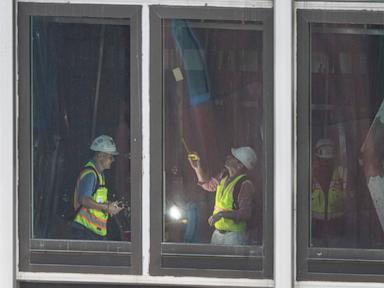
Two massive steel columns, buried deep within the skeleton of the tower, buckled. They bent visibly behind the glass facade. Floors between the 21st and 26th began to sag. Exterior bricks popped from their mortar and rained down onto the asphalt below. Within minutes, sirens tore through the midtown rush hour. The fire department rushed to establish a formal collapse zone. Seven neighboring buildings, a hotel, and a nearby school packed with four hundred children were evacuated into the wet morning air.
No one died. Every construction worker punched out safely. But as the city frozen-zoned five blocks of prime real estate, a cold realization settled over the crowd watching from behind the yellow police tape.
We have been looking at the millions of square feet of empty corporate office space across our cities as an abstract puzzle. A math problem. An economic inventory waiting for a simple conversion trick to turn white-collar cubicles into desperately needed housing. We forgot that these buildings are not just spreadsheets with windows. They are massive, physical entities bound by the rigid laws of physics, built for an era that no longer exists.
The Ghost of 1966
To understand why those columns groaned, you have to understand what an office building actually is.
When the newer of the two interconnected towers on 42nd Street was bolted together in the 1960s, it was engineered for a specific, predictable ritual. It was built for desks, filing cabinets, fluorescent light ballasts, and thousands of workers who arrived at nine and left at five. Its steel skeleton was optimized to hold that specific kind of weight—distributed evenly across vast, open, unbroken floors.
For decades, that engineering worked perfectly. Then the pandemic happened. The offices emptied out. Pfizer moved its headquarters to a shiny new complex near Penn Station, leaving behind a silent monument to the pre-Zoom era.
Enter the grand promise of adaptive reuse.
To the visionary developer or the housing advocate, an empty 37-story midtown office tower looks like an oasis in a desert of housing scarcity. The plan for the Pfizer site was breathtaking in scope: merge the 1960s tower with an adjacent 1909 building, create the largest office-to-residential conversion in New York City history, and carve out 1,600 apartments.
It sounds elegant. It sounds sustainable. It avoids the environmental crime of demolition, which structural engineers rightly point out accounts for a massive chunk of global carbon emissions. Why smash a building into dust when you can just rewrite its interior?
But consider what happens next. You cannot simply drop a bed and a refrigerator into an old cubicle layout and call it a home.
An office building is a shell with a massive core of elevators and restrooms in the center. Apartments need light. They need air. They need individual bathrooms and kitchens. To make the conversion work financially and structurally, the architects at Gensler designed a plan to widen the top fifteen floors of the building, essentially stacking a heavier, wider tower on top of the old one, while punching holes through the existing lower floor plates to let the daylight in.
Imagine a waiter carrying a tray perfectly balanced on his fingertips. Now, add five more heavy plates to the top of that tray, but shift them slightly to the left so they overhang the edge. Then, poke a few holes through the center of the tray for aesthetic lighting.
The waiter's fingers are those two steel columns on the 21st floor.
Surgery on a Behemoth
Nathan Berman, the veteran developer behind MetroLoft, admitted to reporters that the added weight from widening those top floors likely caused the structural failure. The two columns that buckled had simply not been reinforced well enough to handle the new reality of the building’s top-heavy geometry.
This is the hidden friction of the office-to-housing boom. It is surgical. It is volatile.
When you build a new apartment building from scratch, you start with a clean slate and a known set of variables. When you convert an old corporate titan, you are operating on a patient whose medical history is written in fading ink on blueprints from the Lyndon B. Johnson administration. You are betting that the original construction assumptions were correct, that no corner was cut sixty years ago, and that the steel inside the walls hasn’t tired.
There are currently dozens of these adaptive reuse projects underway or in the pipeline across New York City alone. Cities from Chicago to Calgary are dangling tax incentives to encourage developers to follow suit. They are trying to rescue dying downtown business districts, transforming them into 24/7 neighborhoods where people actually live, eat, and sleep.
It is the right vision. It is probably the only viable future for our urban centers.
But the scare on 42nd Street is a visceral reminder that the transition will not be seamless. It will be expensive, loud, and occasionally terrifying. The market forces driving the shift are fast and impatient; the structural realities of steel and concrete are slow, stubborn, and entirely indifferent to political will or housing targets.
As the sun went down over Manhattan on the day of the scare, engineers were using drones to peer through the cracked glass of the 21st floor, watching for any minute shift in the building's posture. Crews worked through the night to install emergency shoring—temporary steel splints designed to hold the tower’s weight while a permanent fix could be engineered.
The immediate danger of a localized collapse faded, and the streets slowly reopened. The city breathed a sigh of relief. But the silence that returned to the block was different now. It carried a warning.
We can rewrite the rules of how we work and where we live. We can reinvent our economies overnight. But as we try to turn the hollowed-out temples of twentieth-century commerce into the homes of the twenty-first, we are going to have to reckon with the heavy, unyielding remnants of the world we left behind.