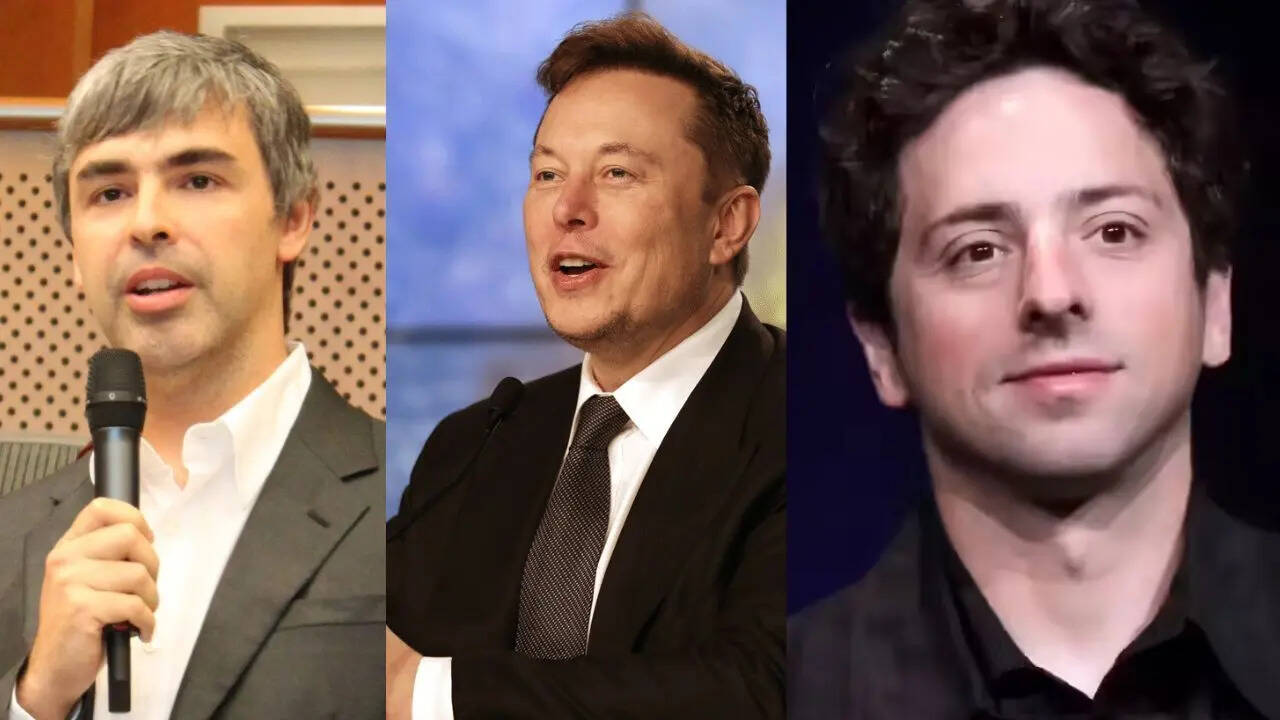
Mainstream media spends millions of dollars a year tracking the net worths of people who do not actually have that money.
We look at the daily updates of the global wealth tracker and watch the digits dance around the names of Elon Musk, Larry Page, and Jeff Bezos as if they are watching a real-time high-score screen at an arcade. It makes for fantastic headlines. It is a brilliant way to drive traffic.
It is also an absolute financial fiction.
The media operates under a lazy consensus that net worth equals cash in a bank account. They report on a $20 billion shift in wealth as if Jeff Bezos just withdrew a small mountain of dollar bills from an ATM to buy a superyacht. I have worked in corporate equity structuring for over fifteen years. I have structured liquidity events for founders and watched how the actual mechanics of ultra-high-net-worth capital operate. The idea that these individuals are "racing" against each other with actual liquid assets is a complete illusion.
The Liquid Cash Deception
When you read that Elon Musk’s net worth sits north of $700 billion or that Larry Page is hovering around $280 billion, you are not looking at money. You are looking at a highly volatile calculation of outstanding shares multiplied by the last marginal price paid for a single slice of stock on a public exchange.
It is a theoretical valuation. It is entirely dependent on market sentiment, equity liquidity, and the absence of any sudden panic.
If any of these top-tier billionaires decided to liquidate their entire holdings tomorrow morning to actually spend their supposed net worth, the price of their underlying asset would implode before they could execute even 10% of the trade. The market cannot absorb a sudden dumping of founder shares without assuming catastrophic internal failure. The very act of attempting to realize the wealth would vaporize the wealth itself.
To look at these rankings as a true measure of purchasing power is to misunderstand the fundamental plumbing of the global financial system. True wealth at this scale is not a pile of gold; it is a complex, fragile web of paper control.
The Math Behind the Phantom Billions
Consider a basic structural breakdown of how this phantom wealth functions compared to real-world cash availability.
| Billionaire Metric | Public Perception | Hard Reality |
|---|---|---|
| Net Worth Calculation | Asset value available for deployment. | Paper multiplier based on the last tick price of public stock. |
| Liquidation Capacity | Instant access to hundreds of billions. | Highly restricted, scheduled stock sales over years via 10b5-1 plans. |
| Tax Mechanics | Paying income tax on massive annual wealth gains. | Zero tax liability on unrealized gains; taxes trigger only upon a real sale. |
| Funding Strategy | Writing personal checks for multi-billion dollar buyouts. | Pledging inflated shares as collateral for debt financing from mega-banks. |
The Leverage Loophole Traditional Media Ignores
If these billionaires do not have liquid cash, how do they fund their hyper-luxurious lifestyles or acquire rival companies? They do not use money. They use debt.
The mechanism is simple, yet it completely dismantles the premise of standard wealth articles. A founder takes a massive block of their appreciated, unrealized stock and walks into the private banking arm of a major financial institution. They pledge those shares as collateral to secure a multi-billion dollar line of credit.
The interest rate on these massive institutional loans is incredibly low. The founder draws down on the loan to buy real estate, aircraft, or tech infrastructure. Because debt is not considered income by any tax authority on earth, the billionaire pays zero income tax on the money they are actively spending.
When the loan needs to be serviced, they do not sell shares and trigger a massive capital gains tax bill. They simply take out a new, larger loan against their further-appreciated stock to pay off the old loan. This is the "Buy, Borrow, Die" strategy.
[Unrealized Appreciated Stock]
         │
         ▼
[Pledge as Collateral to Bank]
         │
         ▼
[Receive Multi-Billion Dollar Loan] ──► (Spend Tax-Free Cash)
         │
         ▼
[Refinance with Larger Loan Later]
When you understand this loop, you realize that the fluctuations in daily net worth trackers are completely irrelevant to the billionaire's day-to-day operations. Whether Tesla or Alphabet drops 5% on a Tuesday afternoon does not change the founder's lifestyle or their line of credit. The bank only cares if the stock drops so low that it triggers a margin call, an event that is heavily mitigated by the massive structural buffers built into these loan agreements.
The Hidden Sovereign Fortunes
The biggest flaw in the common wealth race narrative is that the truly powerful pools of capital do not even make the list. The traditional billionaire indexes are constrained by transparency. They can only rank the people whose assets are explicitly tied to public corporate filings or easily traceable private companies.
Because of this limitation, public rankings completely ignore the real titans of global capital: sovereign wealth funds, royal families, and political autocrats.
Imagine evaluating global financial power while completely ignoring the Public Investment Fund of Saudi Arabia, which manages over $900 billion in assets, or the multi-trillion-dollar sovereign vehicles of oil-rich nations. The personal wealth of heads of state and royal dynastic families is seamlessly integrated into national treasuries. They do not file SEC paperwork. They do not issue press releases when they acquire massive real estate holdings across Europe and North America.
To claim that a public tech founder is the "richest person in the world" is to ignore the structural realities of global geopolitics. A tech CEO is subject to board votes, regulatory antitrust lawsuits, and market cycles. A sovereign monarch answers to no one and has direct control over the entire natural resource output of a nation. That is real wealth. The rest is just tech stock exuberance.
Stop Tracking Net Worth, Track Flow
If you want to understand who actually wields power in the modern economy, you must stop looking at the absolute net worth numbers and start analyzing capital flow and regulatory capture.
A high net worth means very little if it is locked in an equity structure that can never be sold without destroying the company. The real metric of influence is the ability to direct massive amounts of institutional capital toward specific societal and technological inflection points.
- Capital Allocation Power: Look at the size of the corporate balance sheets these individuals control, not their personal equity stakes. The true leverage lies in directing hundreds of billions of dollars in corporate research and development, data center infrastructure, and global supply chains.
- Infrastructure Monopolies: The real winners are those who own the foundational layers of the modern world. This includes cloud computing grids, satellite arrays, transport networks, and advanced chip manufacturing facilities.
- Regulatory Resilience: True financial dominance is defined by whether an individual or enterprise can survive aggressive state intervention, changing tax laws, and intense global scrutiny without losing their core operational leverage.
The daily fixation on who is leading the global wealth race is an entertaining parlor game designed for casual observers. It paints a picture of a meritocratic scoreboard where innovators compete for a crown. But the real game is being played entirely behind the scenes, away from the tracking indexes, through institutional leverage, sovereign debt, and structural tax avoidance that the public rarely ever sees.