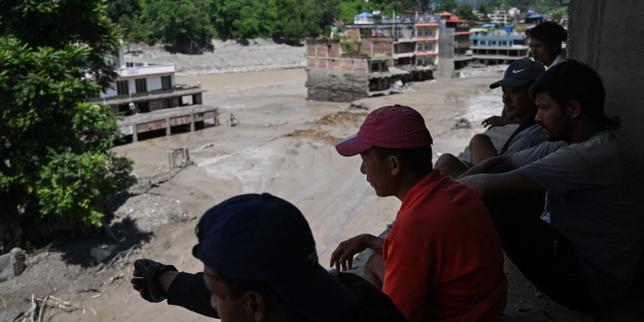
The morning began with the deceptive tranquility of high altitude. In the valleys cradling the roof of the world, the air was thin, cold, and smelled faintly of wet pine and distant smoke. People went about their routines. Doors creaked open. Tea kettles hissed over small stoves. No one heard the freight train coming because it was made of water, mud, and ancient stone, tearing down from the heights of the Himalayas with a fury that human memory struggled to categorize.
Water remembers its gravity. When sudden, torrential cloudbursts shatter seasonal norms over the high-altitude terrain of Tibet and cascade downward into the river basins of Nepal, physics takes over in a matter of minutes.
Consider what happens next. A river swells from a lazy, rocky stream into a churning wall of slate-gray destruction. Bridges that had stood for generations simply sighed and dissolved. Homes built of stone and timber vanished before the occupants could grab more than a handful of dust.
To understand the sheer terror of these flash floods, you have to imagine standing in a kitchen where the floor suddenly begins to shudder, not from an earthquake, but from the liquid weight of an entire mountainside collapsing into the gorge upstream. There is no time to gather heirlooms. There is only the frantic scramble upward, hands clawing at wet soil, breath burning in the lungs as the roar of the water swallows every other sound on earth.
Survivors later spoke of a profound, numbing shock. They stood on higher ledges, shivering in the mud, staring down at places where villages used to be. Where a bustling marketplace had traded in wool and spices just hours before, there was now only a flat, grey plain of silt and boulders.
This is not merely a regional tragedy. It is a symptom of a shifting sky.
For decades, the Himalayan river systems have operated on a delicate, predictable clock. Monsoons arrived, rivers rose, and communities adapted. But climate destabilization has rewritten the rules of engagement. The atmosphere now holds more moisture, releasing it in violent, concentrated bursts rather than steady, nourishing rains. When these cloudbursts strike fragile glacial lakes and steep mountain slopes, natural earthen dams fail. The result is a glacial lake outburst flood, an environmental shockwave that travels at terrifying speeds.
We often talk about climate change in the abstract. We discuss carbon parts per million and global temperature anomalies as if they were lines on a distant spreadsheet. But the reality on the ground in Nepal and Tibet looks like a grandfather staring blankly at a muddy void where his family's orchard stood for eighty years. It looks like children wrapped in foil blankets, waiting for relief that must navigate destroyed roads and blocked mountain passes.
The resilience of the people in these high valleys is legendary, forged by centuries of surviving harsh winters and rugged terrain. Yet, resilience has a breaking point. When the earth itself washes away, the traditional safety nets fail. Neighbors pull neighbors from the fringes of swollen torrents, but the sheer scale of the infrastructure collapse demands a response far beyond local heroism.
Roads cleaved in two. Power grids shattered. Communication lines silenced. The immediate aftermath is a cruel paradox: the survivors are isolated precisely when they need the rest of the world the most. Emergency workers face landslides that block rescue paths, turning every mission into a desperate race against time, infection, and hypothermia.
We must look past the initial headlines of disaster and reckon with the permanent baseline shift occurring across high-altitude Asia. These communities are the early warning system for a warming planet. What happens in the high valleys does not stay in the high valleys. The rivers that surge with destructive force today are the lifelines for millions downstream. When the source is destabilized, everything downstream holds its breath.
Night falls quickly in the mountains. Without electricity, the darkness is absolute, broken only by the beam of a single flashlight sweeping over the debris, searching for movement in the rubble, refusing to let go of the hope that beneath the mud, life still endures.



