The United States just escalated its long-running financial war against Tehran by laying out what Treasury officials labeled an economic D-Day. The core goal is blunt: severing every single economic lifeline keeping the Iranian government afloat.
If you look past the intense rhetoric coming out of Washington, you notice a calculated strategy shift. Instead of immediately crashing global markets with sudden blanket penalties on major foreign banks, the Treasury Department chose a path of heavy warnings coupled with targeted sector blacklists. But make no mistake, the pressure on international trade networks is real, and the stakes for anyone doing business in the region have never been higher.
Targeting the Five Pillars of Survival
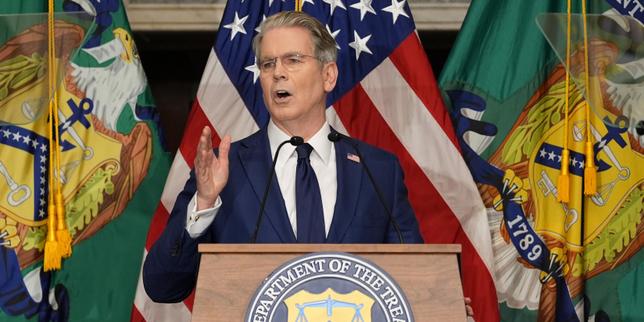
Treasury Secretary Scott Bessent unveiled determinations targeting five critical economic sectors that Tehran relies on to bypass traditional trade blocks:
- Digital assets and cryptocurrency utilized by insiders and military branches to move capital.
- Advanced technology and weapons-related procurement components.
- Gold reserves deployed heavily to stabilize a plummeting national currency.
- Aviation networks used for state logistics and transport.
- Shipping infrastructure carrying restricted cargo and oil.
Alongside these sector determinations, Washington sanctioned roughly 60 specific entities, individuals, and vessels. These moves are designed to plug the holes where front companies and clandestine maritime registries have historically slipped through Western enforcement nets.
The Reality Behind the Warning Shots
Financial specialists anticipated immediate, sweeping secondary sanctions against major international banks—particularly those in countries like China that continue buying Iranian crude. Yet, the Treasury pulled back from dropping that immediate hammer.
Why hold back? Simple economics. Slapping sudden, massive penalties on primary international financial institutions risks triggering a severe shock across the global financial system. Instead, the administration opted for a grace period of sorts, relying on private diplomatic pressure to convince foreign partners to back away from Tehran voluntarily.
Officials made it clear that patience is finite. Nations and private corporations operating in those gray zones of international trade are being told to choose sides. Those who refuse to wind down commercial ties risk getting completely locked out of the dollar-based financial architecture.
The Local Fallout Inside Iran
While geopolitical strategists debate the speed of these measures, the domestic impact inside Iran is brutal. Years of compounding pressure, combined with ongoing military friction and blocked shipping lanes through the Strait of Hormuz, have wreaked havoc on everyday commerce.
The Iranian rial recently plummeted to new historic lows on informal markets, trading near 2 million rials to the US dollar. Double-digit inflation has battered household savings, leaving leadership in Tehran facing immense domestic strain. Iranian officials have publicly dismissed the new threats as empty talk, arguing that established trade routes and network workarounds will endure. Yet, the sheer volume of restrictions leaves very little room for error.
Companies operating internationally must audit their compliance protocols immediately. Anyone maintaining indirect exposure to Iranian shipping, gold, or tech sectors faces an escalating threat profile. Check your supply chains, verify the ultimate beneficial ownership of your trading partners, and eliminate gray-market exposure before enforcement catches up.