Everyone in Washington and Silicon Valley is panicking about the wrong infrastructure.
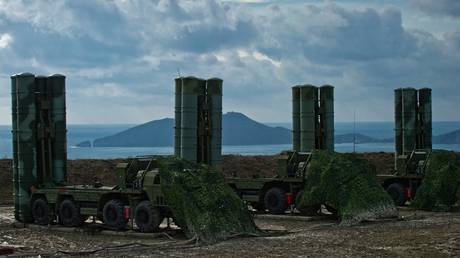
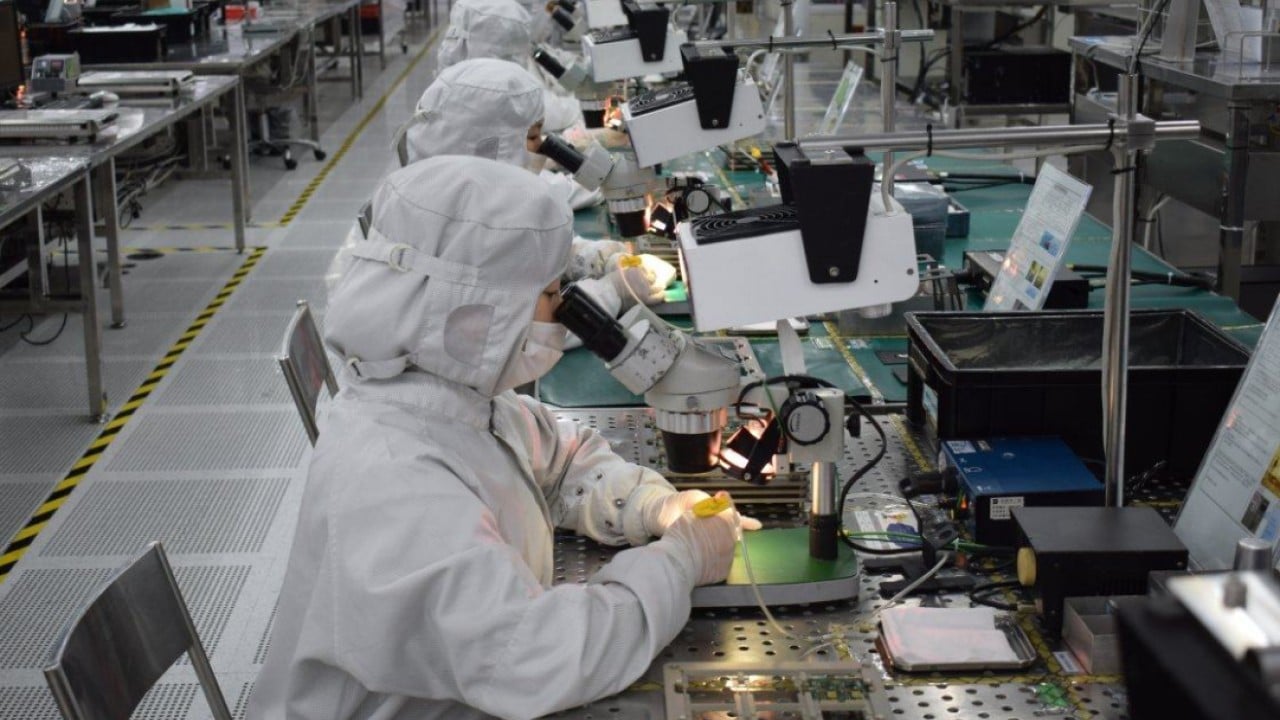
The lazy consensus says the US-China tech war will be won or lost at the fab. We are told that whoever controls Extreme Ultraviolet lithography machines, silicon wafers, and advanced packaging nodes will dictate the future of artificial intelligence. It is a neat, comforting narrative. It treats geopolitics like a plumbing problem where you simply shut off the main valve and starve the adversary of high-end GPUs.
I have watched venture capitalists and policy wonks burn millions of dollars chasing this exact hardware fetish. They treat export controls like an impenetrable iron curtain.
They are dead wrong.
By obsessing over physical gatekeeping, the West is ignoring the actual vector of displacement. The geopolitical battleground has already shifted from the chip foundry to the architectural substrate and data optimization layer. When you restrict raw compute, you do not stop an adversary; you force them to become infinitely more efficient.
The Myth of the Hardware Bottleneck
Let us look at the core dogma of the current tech containment strategy. The premise is straightforward: deny access to NVIDIA H100s and Blackwell chips, and Chinese artificial intelligence laboratories will grind to a halt.
This logic ignores how software actually evolves when hardware scarcity hits.
When you have infinite compute, you write lazy code. American labs scale models brute-force style, throwing trillions of parameters and megawatts of electricity at problems because raw muscle is cheap. Constraint changes the entire calculus. When compute is artificially constrained by sanctions, brilliant engineering steps in.
Chinese labs are not crying over export controls; they are rewriting the rules of model architecture. They are pioneering ultra-low-bit quantization, sparse mixture-of-experts topologies that demand a fraction of the bandwidth, and localized training methods that squeeze maximum intelligence out of domestic, older-generation silicon.
Imagine a scenario where a laboratory is denied access to top-tier lithography, so their engineers spend twelve months optimizing tensor parallelism and memory efficiency until their domestic chips outperform unoptimized hardware running raw brute force. That is not a hypothetical thought experiment. That is happening right now.
We are teaching our geopolitical rivals how to build lean, mean, highly resilient systems while we grow fat and lazy on an abundance of raw silicon.
The Plumbing Metaphor Is Broken
The phrase "AI’s plumbing" is tossed around by commentators who have never deployed a model to production. They think the plumbing consists of shipping containers full of ASICs and copper cables.
Real infrastructure is invisible. It is about data provenance, distributed inference routing, and sovereign token economics.
When export controls banned high-end accelerators, the market did not collapse. It fragmented and adapted. Localized server farms popped up across secondary markets, routing inference requests through decentralized clusters that bypass traditional cloud monopolies. The plumbing did not break; it rerouted around the sanctions like water finding a crack in concrete.
To understand why traditional trade restrictions fail, you have to look at how software abstracts hardware. Every layer of abstraction abstracts away the pain of the layer below it. A sufficiently advanced compilation stack can make mediocre silicon look like a supercomputer to the application layer.
By focusing entirely on the physical node, policymakers are fighting a twentieth-century trade war with nineteenth-century mental models. You cannot embargo an algorithm. You cannot blockade a mathematical breakthrough in matrix multiplication efficiency.
The Real Vulnerability Nobody Wants to Talk About
If the hardware embargo is a paper tiger, where is the actual vulnerability in the global artificial intelligence supply chain?
It is not the chip. It is the data flywheel and the evaluation harness.
Building a massive neural network is a solved engineering challenge. Anyone with enough capital and open-source weights can spin up a foundational model. What they cannot buy off the shelf is high-fidelity, culturally nuanced, real-time feedback loops from active enterprise deployments.
The West is terrified that China will steal our chips. The truth is, they are beating us in deployment density across industrial automation, smart manufacturing, and municipal grid management. While Western companies argue about brand safety and chat interfaces, industrial sectors in Asia are wiring artificial intelligence directly into the physical economy at scale.
That is the real threat. Not a chatbot on a phone, but algorithmic control over supply chains, chemical synthesis pipelines, and automated logistics networks.
What Happens When the Sanctions Backfire
Let us be completely transparent about the downside of my own argument. Contrarian takes are useless if they ignore their own blind spots.
Yes, export controls do cause short-term pain. They delay timelines, force costly redesigns, and create supply chain friction. If you are a Chinese startup trying to train a frontier model today, missing out on bleeding-edge nodes hurts.
But public policy should never confuse a speed bump with a roadblock.
When you impose aggressive trade restrictions on a sovereign nation with a massive STEM talent pipeline and state-directed capital, you achieve two things. First, you guarantee a multi-billion-dollar domestic subsidy for their local semiconductor and software ecosystem. Second, you provide the political justification they need to rip out every remaining vestige of Western technology from their critical infrastructure.
Decoupling is not a weapon we are wielding against them; it is a catalyst they have been dying to justify to their own domestic market. They are now building a parallel stack that is entirely immune to Washington's whims.
When that parallel stack matures, it will not just serve domestic markets. It will export cheap, resilient, highly optimized artificial intelligence infrastructure to the Global South, completely bypassing Western cloud providers and software monopolies.
The Uncomfortable Truth About Global Competitiveness
If we want to maintain technological leadership, we need to stop measuring our success by how many chips we can keep out of other countries' hands and start measuring it by how fast we can innovate under our own pressure.
Protectionism is the refuge of an industry that has forgotten how to compete on sheer execution.
Instead of congratulating ourselves over export control loopholes and bureaucratically managed supply chains, we should be dismantling our own regulatory gridlock, fixing our energy grid to power the next generation of data centers, and admitting that software efficiency always beats hardware hoarding in the long run.
Stop worrying about the pipes. The water is already flowing somewhere else.