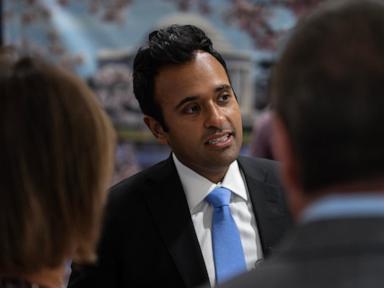
Vivek Ramaswamy is done with the "preseason." That’s the word from his campaign as they pivot away from a Republican primary that feels more like a formality than a fight. With $10 million already hitting the airwaves, the biotech billionaire isn't just looking to win a nomination; he’s trying to reshape the entire political map in Ohio.
If you’ve been following the 2026 governor’s race, you know the vibes have shifted. Ramaswamy is treating the May 5 primary as a rearview mirror event. His focus has moved almost entirely to a high-stakes, incredibly expensive fall showdown with Democrat Amy Acton. It’s a bold gamble that assumes Republican voters are already sold on his "anti-woke" brand and his ties to the Trump wing of the party.
The Ten Million Dollar Pivot
Most candidates wait until they've secured the party nod before emptying the war chest. Ramaswamy isn't most candidates. He’s already launched a $10 million ad blitz that effectively ignores his primary challenger, Casey Putsch, to take direct aim at the general election.
This isn't just about name recognition. Ramaswamy is sitting on a personal fortune and a donor network that raised a record $50 million. He’s using that muscle to define the narrative before the summer even starts. The ads don’t look like typical "vote for me" spots. Some don’t even feature him prominently, instead putting his family and wife, Apoorva, front and center to soften his image and counter the "outsider" tag.
He’s betting that by spending now, he can make the November race about his vision of "American identity" rather than the specific policy squabbles that usually dominate state primaries. It’s a national-style campaign being run in a state that has trended deep red but remains surprisingly competitive in recent polling.
Why This Race is Closer Than It Looks
On paper, Ohio is a Republican stronghold. Donald Trump won it handily, and the GOP holds every major lever of power in Columbus. But the data shows a tightening race. A recent BGSU/YouGov poll put Ramaswamy at 48% and Amy Acton at 47%. That’s a statistical tie, and it’s likely why the spending has started so early.
Acton isn't a typical Democrat. As the state’s former health director, she has high name recognition from the early pandemic days. While that makes her a villain to some on the far right, it gives her a platform with suburban moderates and women that most Democrats in Ohio haven’t had in a decade. Emerson College polling shows a massive gender gap, with women breaking for Acton by nearly 20 points.
Ramaswamy’s strategy to bridge this gap involves a mix of populist economics and aggressive cultural stances. He’s floating ideas like:
- Eliminating the state income tax.
- Consolidating the state’s university system.
- Ending summer vacation for public schools to help with childcare costs.
- Aggressively cutting property taxes, though he’s keeping the specifics of that plan close to his chest.
These aren't safe, "play-it-cool" policies. They’re designed to spark a reaction, and in a state where the cost of living is the number one issue for 44% of voters, his economic "shock therapy" might just find an audience.
Navigating the GOP Friction
It’s not all smooth sailing within the Republican ranks. While the state party has largely lined up behind him, there’s a segment of the base that isn't sold on a billionaire newcomer. Critics point to his proposal to raise the voting age to 25 as a sign he’s out of touch with younger voters.
Then there’s the ugly side of the race. Ramaswamy has had to deal with some pretty blatant ethnic and racial animosity from the fringes of the party. He’s been vocal about rejecting the "white nationalist" element, even writing an op-ed in The New York Times calling for a vision of the GOP based on shared ideals rather than race.
He even went as far as quitting social media platforms like X and Instagram back in January, claiming that "leaders who depend on social media to gauge public opinion are looking through a broken mirror." It’s a move that allows him to control his message through paid media and county-by-county rallies rather than getting bogged down in the digital mud.
The Strategy for the Home Stretch
If you’re looking for what happens next, watch the money and the ground game. Ramaswamy has visited all 88 Ohio counties, a grueling pace that mirrors his presidential run. He’s trying to prove he’s more than a "tech guy" from a wealthy suburb.
The real test comes after the May 5 primary. We’ll see if his $10 million head start was enough to dent Acton’s favorability or if he’s just heating up the race for a Democrat who has been quietly consolidating her own base.
Keep an eye on these indicators:
- Turnout in the suburbs: If Ramaswamy can’t win over the collar counties around Columbus and Cincinnati, his path gets much narrower.
- Property tax specifics: Voters are desperate for relief here, and whichever candidate offers a believable plan will likely win the middle.
- The Trump Factor: In 2026, Trump’s endorsement still carries weight in Ohio, but Ramaswamy is trying to build a brand that can stand on its own two feet without being a total proxy for the former president.
Get ready for an expensive, loud, and probably very personal fall campaign. The "preseason" might be over, but the real brawl is just beginning.