The Kinetic Threshold of Ebola Outbreaks
Effective management of an Ebola Virus Disease (EVD) outbreak depends entirely on the speed with which the effective reproduction number ($R_e$) is forced below the critical value of 1. While the basic reproduction number ($R_0$) for Ebola typically ranges between 1.5 and 2.5, this figure is an abstraction that ignores local population density, cultural funeral practices, and the latency of clinical intervention. Controlling an outbreak is not a matter of general "awareness" but a logistical exercise in reducing the contact rate between infectious bodily fluids and susceptible hosts.
The viral architecture of Orthoebolavirus zairense creates a specific pathology where the host becomes increasingly infectious as the disease progresses. Unlike respiratory viruses that peak in infectivity during the prodromal phase, Ebola’s viral load in blood and secretions reaches its zenith during the hemorrhagic and terminal stages. This creates a delayed-action risk profile: the primary threat is not the stranger on the street, but the caregiver in the home and the mourner at the grave. If you enjoyed this article, you might want to check out: this related article.
The Three Vectors of Transmission Failure
Current outbreaks persist because of specific failures within three distinct operational vectors. Each vector represents a point where the chain of transmission can be broken through rigorous mechanical intervention.
1. The Nosocomial Feedback Loop
Healthcare facilities often serve as amplification points rather than containment centers if Personal Protective Equipment (PPE) protocols lack a closed-loop system. When a clinic lacks sufficient triage logic, a single undiagnosed patient can convert a healthcare worker into a super-spreader. This is a failure of bio-containment engineering. The clinical requirement is a "cold-to-hot" zone transition that is physically impossible to bypass, ensuring that no staff member exits a high-risk area without monitored decontamination. For another angle on this event, refer to the recent update from Mayo Clinic.
2. Post-Mortem Viral Shedding
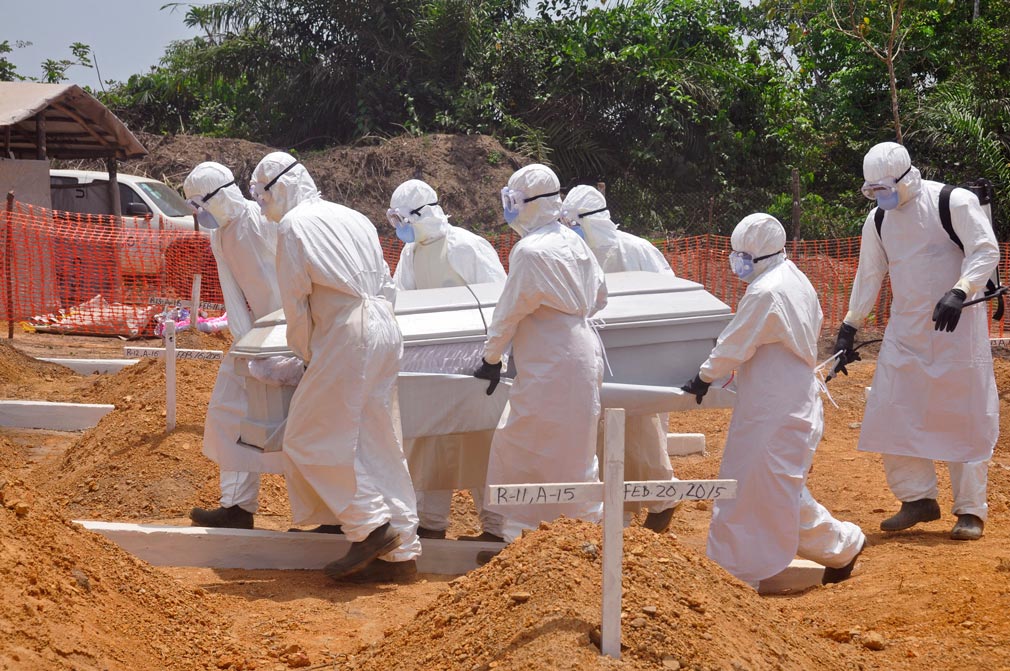
The biological reality of Ebola is that the deceased remain a primary source of infection. The ritual washing of bodies and large funeral gatherings provide a high-surface-area environment for the virus to find new hosts. Analysis of past outbreaks in West Africa and the Democratic Republic of Congo shows that a significant percentage of new cases can be traced back to a single "unsafe" burial. Containment strategies must prioritize the substitution of traditional practices with "Safe and Dignified Burials" (SDBs), which are essentially a specialized form of hazardous waste management.
3. Community Resistance and Information Asymmetry
Resistance is often categorized as "ignorance," but it is more accurately described as a rational response to a lack of institutional trust. When the arrival of a response team coincides with an increase in local deaths and the forceful removal of loved ones, the community perceives the intervention as the cause of the crisis. Reversing this requires the decentralization of care. Moving from massive, centralized Ebola Treatment Centers (ETCs) to smaller, community-integrated transit centers reduces the "black box" effect of the medical response.
Quantifying the Diagnostic Gap
The time between the onset of symptoms and laboratory confirmation—the diagnostic gap—is the most dangerous variable in the epidemiological equation. During this window, the patient is likely to remain in the community, potentially infecting multiple household members.
Reducing this gap involves two technical shifts:
- Point-of-Care Testing (POCT): Deploying Rapid Diagnostic Tests (RDTs) that prioritize sensitivity to screen out negatives quickly, followed by GeneXpert or PCR for definitive confirmation.
- Active Case Finding: Instead of waiting for patients to present at a clinic, surveillance teams must perform daily symptom checks on every known contact of every confirmed case for 21 days.
This 21-day period is the maximum observed incubation window. If a contact remains asymptomatic for 21 days, they can be statistically cleared. However, the surveillance must be absolute. Missing even 5% of contacts creates a "leaky" system that allows the virus to jump to new, untracked chains of transmission.
The Economics of Vaccination and Therapeutics
The landscape of EVD management changed fundamentally with the development of the rVSV-ZEBOV vaccine. However, the vaccine is not a panacea; it is a strategic tool used in "Ring Vaccination." This involves vaccinating the "ring" of contacts around a confirmed case, and then the "ring" around those contacts.
The Limitations of Ring Vaccination
- Cold Chain Logistics: The vaccine requires ultra-cold storage ($-60^\circ\text{C}$ to $-80^\circ\text{C}$), which is difficult to maintain in regions with unreliable power grids and limited road infrastructure.
- Sub-Strain Specificity: The current vaccines are primarily effective against the Zaire strain. If an outbreak is caused by the Sudan strain (Sudan ebolavirus), the Zaire vaccine provides no protection. This was a critical bottleneck during the 2022 Uganda outbreak.
- Waning Immunity: The duration of protection provided by a single dose is still being studied, meaning long-term community immunity cannot be assumed.
On the therapeutic side, monoclonal antibodies like mAb114 and REGN-EB3 have significantly reduced mortality rates when administered early. These treatments work by binding to the viral glycoprotein, preventing the virus from entering host cells. The transition of Ebola from a "death sentence" to a "treatable condition" is the most effective way to encourage community cooperation; when people see their neighbors return alive from treatment centers, the incentive to hide cases disappears.
The Persistence Problem: Viral Reservoirs
Ebola is a zoonotic disease, meaning it lives in animal reservoirs—most likely fruit bats—before spilling over into humans. This means Ebola cannot be "eradicated" like smallpox. It can only be "eliminated" from the human population temporarily.
Furthermore, the virus can persist in "immune-privileged" sites within the human body long after the blood is cleared. These sites include the eyes, the central nervous system, and the testes. This leads to the risk of sexual transmission months or even years after recovery. Post-recovery monitoring and "semen testing" programs are not just a health service for survivors; they are a critical component of preventing "flare-ups" that can reignite an entire outbreak cycle.
Strategic Operational Requirements
The current approach to Ebola must shift from a reactive crisis response to a permanent infrastructure of viral surveillance. The following actions are required to stabilize the current and future outbreaks:
- Standardize Border Screening: Implement non-contact infrared thermometry and health declaration protocols at all major crossing points. Fever is a non-specific symptom, but in an outbreak zone, it must be treated as EVD until proven otherwise.
- Modular Isolation Units: Abandon the construction of massive, permanent treatment centers in favor of rapidly deployable, modular units that can be moved to the epicenter of a new cluster within 48 hours.
- Local Production of PPE: Supply chain disruptions are a primary failure point. Regional manufacturing of basic bio-safety equipment reduces the lead time for restocking clinics.
- Genomic Surveillance: Real-time sequencing of viral samples allows responders to track the evolution of the virus and confirm whether new cases are part of an existing chain or represent a fresh spillover from the environment.
Success in viral containment is found in the meticulous execution of these mechanical protocols. The virus does not negotiate, and it does not respect borders; it simply follows the path of least resistance through human fluid exchange. Closing those paths requires a clinical, unsentimental application of bio-containment logic.