If you think federal law enforcement operations are always calculated, highly coordinated events, a viral video from Harry Reid International Airport will shatter that illusion.
When plainclothes ICE agents tackle a man at a Las Vegas airport and then run away because they realize they are being filmed, something is deeply broken. It is a scene that belongs in a chaotic spy thriller, not Terminal 3 on a busy Monday afternoon.
The incident, which took place on July 13, 2026, has triggered fierce public backlash, attracted harsh condemnation from United States senators, and raised massive questions about how federal agencies operate in public spaces.
The Day ICE Agents Tackle a Man at a Las Vegas Airport and Walk Away
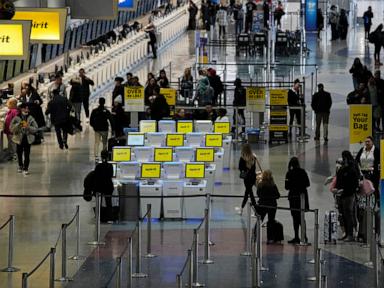
The details of the confrontation are bizarre. Phu Nguyen, a 57-year-old Australian citizen, was at Terminal 3 of Harry Reid International Airport when two plainclothes officers—a man and a masked woman—confronted him. Nguyen had overstayed his tourist visa.
Instead of a routine, quiet detention, the encounter escalated rapidly into a physical struggle. Bystanders grabbed their phones and started recording as Nguyen screamed and wept on the floor, struggling against the two unidentified individuals pinning him down.
What happened next is the most alarming part.
Once the two plainclothes agents noticed the crowd of travelers filming them, they stopped. They did not announce their badge numbers. They did not complete the arrest. Instead, they simply stood up and walked away, leaving Nguyen on the airport floor with a metal handcuff dangling from one of his wrists.
They left him there. Just walked out.
When Las Vegas Metropolitan Police officers arrived at the scene, they found Nguyen abandoned and handcuffed. Local police checked for active local warrants, found none, unlocked Nguyen’s wrist, and notified Immigration and Customs Enforcement. The federal agents who had just instigated a physical brawl in a crowded terminal were nowhere to be found.
The Department of Homeland Security later confirmed that ICE officers arrested Nguyen the very next day, July 14, 2026, at Los Angeles International Airport (LAX) as he prepared to board a departing flight.
A Masterclass in Tactical Failure
The LAX arrest proves one crucial point. The chaotic wrestling match in Las Vegas was entirely unnecessary.
ICE agents knew who Nguyen was, knew his travel plans, and had the ability to apprehend him quietly at his departure gate in Los Angeles. Why, then, did they choose to initiate a high-risk, plainclothes takedown in the middle of a bustling Las Vegas airport terminal?
Plainclothes operations in public transit hubs are inherently dangerous. Bystanders do not know who the aggressors are. To any average traveler walking by, the scene looked like an assault or a kidnapping. If a well-meaning bystander had stepped in to defend Nguyen, the situation could have turned tragic in seconds.
Even worse is the sheer lack of accountability shown by the agents. If the arrest was legal, necessary, and justified, there is absolutely no reason to abandon a suspect on the ground because a camera is pointed at you. Walking away and leaving a civilian partially handcuffed suggests the agents knew their behavior would not hold up to public scrutiny.
The Growing Backlash in Nevada
Nevada leaders are furious, and they have every right to be. The state relies heavily on tourism, and having federal agents initiate unidentifiable physical brawls in its primary airport is terrible for business.
Democratic Senator Jacky Rosen released a blistering statement following the incident, stating that ICE is continuing to act with "impunity". She pointed out that these actions instill fear in local communities and scare away tourists, actively damaging Nevada’s economy. Rosen demanded that ICE be held to the same basic, commonsense guardrails as other law enforcement agencies.
Local civil rights groups and state lawmakers are also demanding answers. Both the Nevada Latino Legislative Caucus and the Asian American Native Hawaiian Pacific Islander Caucus have demanded a thorough investigation. They are pushing Nevada Governor Joe Lombardo to demand transparency and establish clear rules for how federal law enforcement agencies operate inside the state.
Knowing Your Rights at the Airport
This incident serves as an intense reminder of the friction between federal agency overreach and civilian rights. If you find yourself witnessing a similar situation at an airport, you need to know what you can and cannot do.
- You have a right to film. You are legally allowed to record video and take photos of law enforcement officers operating in public spaces, including open areas of airports, as long as you do not physically interfere with their operations.
- Do not physically intervene. No matter how distressing a situation looks, physically stepping between an officer and a suspect can get you arrested or injured. Use your phone to document everything from a safe distance instead.
- Plainclothes agents must identify themselves. If someone claiming to be law enforcement attempts to detain you or someone else, you have the right to ask for credentials, a badge, and their agency name.
- Airport terminals are public-adjacent, but security zones are different. While you can film in public ticketing and baggage areas, TSA checkpoints and secure screening areas have strict rules against filming security monitors and equipment. Keep your recording to the general public terminal areas to stay on safe legal ground.
We deserve federal agencies that operate with professionalism and accountability. Running away from a camera is not professional. It is a sign of an agency that knows it crossed a line.