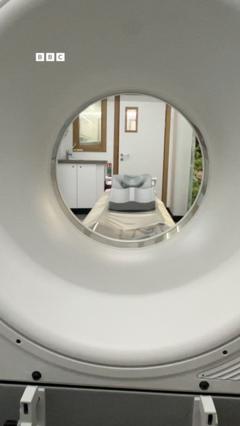
A white shipping container sits wedged between rows of sedans and family SUVs in a suburban supermarket parking lot. To the casual shopper pushing a cart of groceries, it looks like a temporary utility pod or a construction office. In reality, this mobile unit represents one of the most aggressive shifts in modern preventative medicine. By placing high-tech diagnostic imaging scanners next to retail stores, health authorities are attempting to solve a catastrophic failure in early cancer detection.
Lung cancer remains the leading cause of cancer death worldwide. For decades, the disease has operated with a brutal mathematical certainty, largely because it is discovered too late. By the time a patient develops a persistent cough or breathes with difficulty, the tumor has typically advanced beyond the reach of curative surgery. The deployment of mobile low-dose computed tomography (LDCT) scanners directly into working-class communities bypasses the traditional hospital bureaucracy. It aims to catch the disease while it is entirely asymptomatic.
Early data suggests this unorthodox approach works, but the logistical, financial, and psychological hurdles under the surface reveal a far more complex reality than simple feel-good headlines suggest.
The unexpected frontline of oncology
For generations, the path to a cancer diagnosis followed a rigid trajectory. A patient felt unwell, booked an appointment with a local physician, received a referral, and eventually navigated the cavernous corridors of a regional hospital. This system requires agency, time, and a baseline level of trust in medical institutions. It also systematically fails the exact demographic most vulnerable to lung cancer.
Statistically, long-term smokers from lower socioeconomic backgrounds are the least likely to proactively visit a doctor for preventative care. They face barriers ranging from hourly wage deductions for medical appointments to a deep-seated fear of what the doctor might find. Bringing the hospital to the supermarket parking lot dismantles these barriers in a single stroke.
The strategy turns traditional clinical philosophy upside down. Instead of demanding that at-risk individuals seek out healthcare, healthcare intrudes upon their daily routines. A person steps out to buy bread and milk and walks away with a detailed 3D map of their thoracic cavity.
This model relies on low-dose CT scans, which use up to 90 percent less radiation than a conventional CT scan while providing highly detailed images of the lungs. Unlike a standard chest X-ray, which frequently misses small, early-stage nodules hidden behind the ribs or heart, the low-dose scan catches abnormalities measured in millimeters.
The math of catching a killer early
To understand why this shift matters, one must look at the stark numbers governing survival rates. When lung cancer is diagnosed at stage one, the five-year survival rate sits comfortably above 60 percent. If discovery happens at stage four, that survival figure plummets to less than 10 percent. Historically, nearly half of all lung cancer cases are diagnosed at late stages, often during an emergency room visit for an unrelated crisis.
Mobile screening trucks alter these proportions dramatically. Clinical trials and real-world rollouts of these mobile units show that roughly 70 percent of the cancers detected through these parking-lot screenings are found at stages one or two. This flips the historical diagnostic curve completely.
Traditional Diagnosis:   Stage 1 & 2 (~30%)  --->  Stage 3 & 4 (~70%)
Mobile Screening Units:  Stage 1 & 2 (~70%)  --->  Stage 3 & 4 (~30%)
Catching a tumor at an early stage changes the entire therapeutic approach. Instead of entering palliative chemotherapy or systemic radiation regimes, a substantial portion of these patients can walk directly into an operating room. Surgeons can perform a localized resection, removing the tiny nodule before it has the opportunity to shed cells into the lymphatic system. In many cases, this constitutes an outright cure.
Yet, managing a fleet of mobile imaging centers introduces serious operational difficulties. A CT scanner is a delicate piece of machinery containing a rapidly spinning gantry that subjects internal components to immense gravitational forces. Moving these multi-ton units across city potholes and parking lot speed bumps requires precise calibration and constant maintenance. If a scanner falls out of alignment, the clarity of the images degrades, rendering the screening useless or, worse, leading to misdiagnoses.
The psychological wall of a stigmatized disease
The technical challenges of mobile scanning pale in comparison to the cultural friction of the target demographic. Lung cancer carries a heavy social stigma wrapped in layers of guilt, shame, and fatalism. Many chronic smokers avoid screening because they believe they have brought the condition upon themselves, or because they assume a diagnosis is an automatic death sentence.
Public health teams operating these mobile units quickly discovered that sending an invitation letter branded with hospital logos often triggered avoidant behavior. To counter this, the outreach strategy had to adapt. The communications are intentionally stripped of clinical jargon and clinical intimidation.
The physical location of the scanner plays a massive role in lowering psychological defenses. A supermarket parking lot is familiar ground. It lacks the sterile, anxiety-inducing atmosphere of a major medical campus. There are no expensive parking structures to navigate, no confusing signs, and no rows of sick patients to remind visitors of their own mortality. It normalizes a terrifying medical procedure by embedding it alongside the mundane chore of grocery shopping.
Even with these adjustments, convincing individuals to step inside the truck remains an uphill battle. Resistance often stems from a profound fear of bad news. Staff working inside the mobile units must act more like community organizers than clinical technicians, spending significant time counseling anxious patients before they ever lie down on the scanning bed.
The cold economics of the mobile scanner
While the clinical benefits of early detection are obvious, the financial reality of running a national or regional mobile screening network is intensely debated among health economists. Deploying these units is incredibly expensive. The upfront capital required to purchase a specialized medical trailer and equip it with a functional low-dose CT scanner runs into the hundreds of thousands of dollars, before factoring in staff salaries, fuel, maintenance, and data transmission costs.
To justify this expenditure, the program must target populations with surgical precision. Mass screening of the general population is both economically unviable and medically irresponsible due to the risks of overdiagnosis and radiation accumulation. Therefore, operators use strict algorithmic triage based on age and smoking history to identify high-risk candidates.
+-------------------------------------------------------------+
|               High-Risk Candidate Triage                    |
+-------------------------------------------------------------+
| - Age Range: Typically 55 to 74 or 75 years old            |
| - Smoking History: Significant pack-years (e.g., 30+ years) |
| - Current Status: Active smokers or those who quit recently |
+-------------------------------------------------------------+
When targeting works efficiently, the economic argument shifts in favor of screening. The cost of a localized surgical resection followed by brief monitoring is a fraction of the cost of long-term oncology care for advanced cancer. Late-stage patients often require years of expensive immunotherapy, targeted molecular drugs, repeated hospitalizations, and palliative support. By spending money upfront on parking-lot diagnostics, healthcare systems can avoid the crushing back-end costs of terminal cancer management.
However, this economic balance breaks down if the screening infrastructure generates too many false positives.
The shadow of the false positive
No diagnostic test is perfect. Low-dose CT scans are exceptionally sensitive, meaning they pick up tiny spots, scars, and benign nodules on the lungs that are completely harmless. These incidental findings present a significant dilemma for the medical community.
When a scan reveals an ambiguous shadow on a lung, the patient cannot simply ignore it. They enter a diagnostic pipeline that often involves follow-up scans months apart to check for growth, invasive biopsies, or even exploratory surgeries. For every patient whose life is saved by the early discovery of a malignant tumor, several others endure months of debilitating anxiety and unnecessary medical procedures for a nodule that would never have caused them harm.
This creates an immense burden on the wider healthcare infrastructure. Every ambiguous scan generated in a supermarket parking lot funnels a patient back into the mainstream hospital system, filling up radiology schedules, specialist consultation slots, and biopsy clinics. If a mobile screening initiative expands too rapidly without a corresponding expansion of hospital follow-up capacity, it risks bottlenecking the very system meant to deliver the cure.
The success of the program depends entirely on the sophistication of the triage software and the skill of the thoracic radiologists interpreting the scans. They must accurately separate the dangerous lesions requiring immediate intervention from the routine scarring that can safely be left alone.
Redefining the boundaries of the hospital
The mobile lung scanning unit is not an isolated experiment. It represents a broader movement toward decentralized healthcare that pushes diagnostic technology outward to the edges of society. We are seeing similar movements with mobile mammography units, community diagnostic centers in shopping malls, and pop-up clinics inside barbershops and places of worship.
This transition challenges the traditional assumption that the hospital is the only appropriate venue for complex medical imaging. As technology becomes more compact, energy-efficient, and automated, the physical walls of the medical center matter less than the reach of its network.
The true metric of success for these mobile units is not just the number of scans performed, but the number of individuals pulled from the margins of the healthcare system who would have otherwise slipped through the cracks. It turns out that saving lives from one of the world's deadliest diseases does not always require a brighter operating room or a newer pharmaceutical molecule. Sometimes, it just requires a better spot in the parking lot.