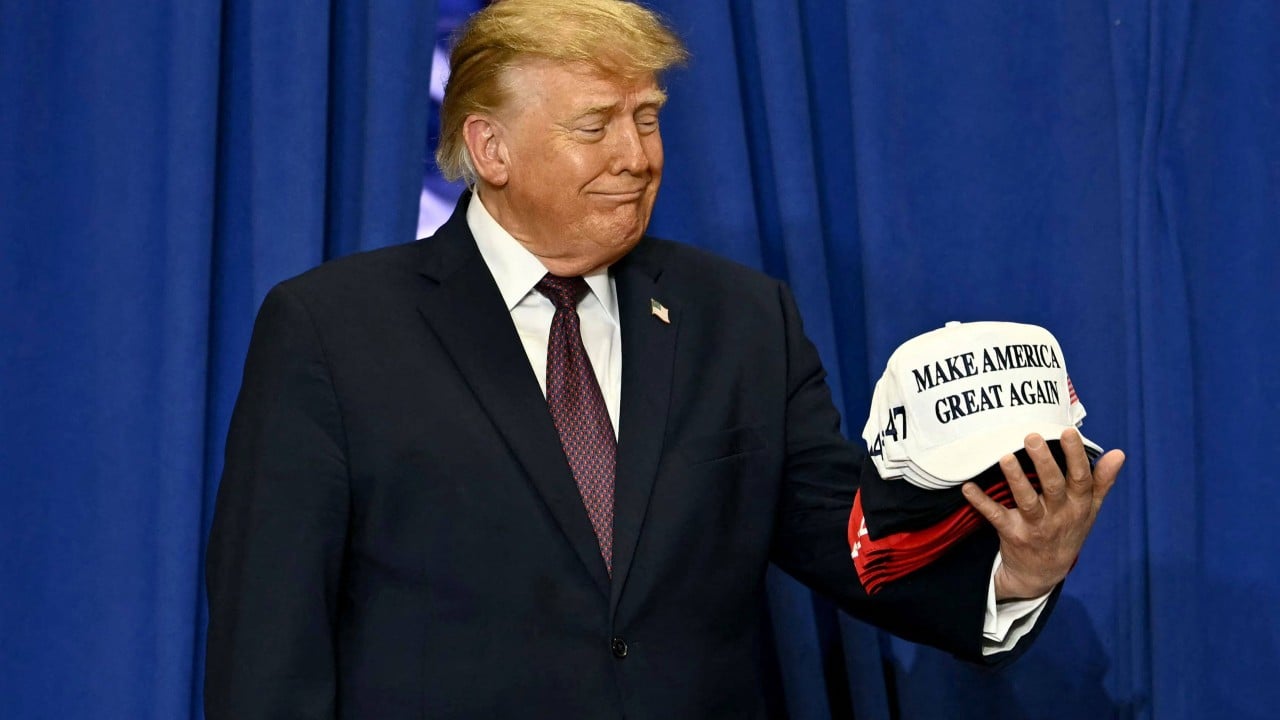
When a New Jersey Republican who built an entire campaign around undying support for Donald Trump officially conceded defeat, it was more than a local election result. It was a stress test on a specific political strategy in the Northeast. Running as an uncompromising MAGA loyalist in a historically blue state with an independent suburban streak carries massive structural risks, and this concession proves that national populist branding cannot automatically override local voter priorities, suburban demographic shifts, or the basic math of New Jersey's political geography.
The defeat highlights a persistent fault line inside the modern Republican Party. What wins a primary in conservative pockets of Ocean, Sussex, or Salem counties frequently becomes an anchor in a general election or a broader statewide contest. Voters in the Garden State have repeatedly demonstrated that while they are frustrated with high property taxes, inflation, and state-level Democratic policies, they remain deeply skeptical of candidates whose primary qualification is allegiance to a single national figure.
The Anatomy of a Failed Loyalty Playbook
For years, the dominant formula for Republican hopefuls across the country has been straightforward. Secure the base first, align completely with Donald Trump, and ride populist energy to victory. In deep-red districts, that math works reliably. In New Jersey, the equation falls apart quickly.
New Jersey's electorate is fundamentally pragmatic. Even when Garden State voters swing toward the GOP—as they nearly did in the 2021 gubernatorial race when Jack Ciattarelli came within three percentage points of unseating Phil Murphy—they do so because of pocketbook issues, not ideological purity tests. Ciattarelli famously walked a tightrope, trying to harness conservative enthusiasm without alienating moderate suburbanites in Bergen, Morris, and Somerset counties.
By contrast, pledging "undying support" removes any strategic flexibility. It locks a candidate into defending every national controversy, every legal battle, and every rhetorical flashpoint originating from Mar-a-Lago, leaving zero oxygen for local concerns like NJ Transit reliability, school funding formulas, or municipal tax caps.
The Primary Trap in the Garden State
The structural problem begins long before November. New Jersey's primary electorate is markedly older, more conservative, and far more aligned with national conservative media than the general electorate. To survive a Republican primary in the state, candidates often feel forced to outflank their opponents on the right.
- Rhetorical Escalation Candidates compete to prove who is the most loyal defender of Trump, adopting hardline stances on national cultural issues that have little resonance with New Jersey's moderate swing voters.
- The General Election Pivot Once the primary ends, the winning candidate faces an impossible pivot. In the age of permanent digital records, walking back pledges of "undying support" looks like rank opportunism to the base while failing to convince skeptical independents.
- Fundraising Dependency Small-dollar national donors reward firebrand rhetoric, creating a financial incentive for local candidates to act like national cable news pundits rather than state or district representatives.
This dynamic creates a recurring cycle. A candidate wins the nomination by appealing to the most vocal 20 percent of the party, only to hit a hard ceiling when the broader public tunes in during the final weeks of the race.
Suburban Realities and the Independent Firewall
To understand why this concession was predictable, you have to look at unaffiliated voters. In New Jersey, unaffiliated voters outnumber registered Republicans by a wide margin and rival registered Democrats as the largest voting bloc in the state.
These voters do not view politics through the lens of partisan loyalty. In towns across central and northern New Jersey, commuters and small business owners split their tickets regularly. They might vote for a Republican mayor who promises to hold the line on municipal spending, while simultaneously voting for a Democrat for Congress because they are uneasy with the chaos surrounding national GOP politics.
When a candidate leads with total fealty to Trump, they effectively tell unaffiliated voters that local governance is secondary. Suburban voters in counties like Middlesex, Burlington, and Passaic have shown an acute sensitivity to candidates who appear tethered to national grievance politics. They want to know how a representative will bring federal infrastructure dollars back to the Hudson River tunnel project or how they will address the cap on State and Local Tax (SALT) deductions—an issue where Trump's 2017 tax overhaul actually hurt upper-middle-class New Jersey homeowners.
The SALT Deduction Ghost
You cannot analyze New Jersey Republican politics without addressing the SALT deduction cap. For decades, New Jersey Republicans campaigned on fiscal conservatism and tax relief. When the 2017 Tax Cuts and Jobs Act capped the deductibility of state and local taxes at $10,000, it amounted to a direct tax hike on hundreds of thousands of suburban New Jersey families.
For any New Jersey Republican who pledges unconditional loyalty to Trump, the SALT cap is an inescapable contradiction. How do you campaign as a champion for overtaxed New Jersey residents while offering uncritical praise for the architect of a policy that raised their federal tax bills? Democratic opponents exploit this contradiction relentlessly, turning a candidate's own loyalty pledge into a weapon regarding household finances.
The Machinery of New Jersey Politics
Beyond ideology and national branding, winning in New Jersey requires mastering a uniquely unforgiving political machine. Historically, New Jersey elections have been shaped by powerful county party organizations, ballot design battles, and hyper-local ground games.
Even as the state's long-standing "county line" ballot system has faced major legal challenges and restructuring in recent election cycles, institutional muscle still matters. County committees, local municipal chairs, and established fundraising networks determine whether a campaign has the resources to run broadcast television ads in two of the most expensive media markets in the world: New York City and Philadelphia.
A campaign built primarily on viral clips and loyalty pledges often lacks this foundational infrastructure. Slogans do not knock on doors in Edison or Cherry Hill. National endorsements do not pay for mailers targeting high-propensity suburban voters in Westfield or Ridgewood. When the votes are counted, organizational discipline routinely outperforms ideological enthusiasm.
The Cost of the Media Market
New Jersey does not have its own major network television market. Reaching voters in North Jersey requires buying airtime in New York City; reaching South Jersey requires buying airtime in Philadelphia. Both markets are prohibitively expensive for down-ballot or underfunded candidates.
Because paid media is so costly, earned media—free coverage from local newspapers, regional websites, and broadcast news—becomes critical. When a candidate makes "undying support" for Trump their defining message, local journalists inevitably frame every story around that allegiance. Instead of coverage focusing on the candidate's plan for energy costs or healthcare, the headlines focus on Trump's latest national remarks. The candidate loses control of their own narrative before the campaign even hits its stride.
What History Tells Us About GOP Success in Blue States
If total alignment with Trump is a losing bet in New Jersey, what actually works? History provides clear, documented blueprints from Republicans who have successfully won and governed in heavily Democratic states.
Consider Larry Hogan in Maryland, Charlie Baker in Massachusetts, or Phil Scott in Vermont. All three won multiple terms in states with overwhelming Democratic registration advantages. None of them relied on pledges of personal loyalty to a national party leader. Instead, they built distinct local brands centered on fiscal restraint, competence, and independence from national partisan warfare.
Even closer to home, look at Chris Christie in 2009 and 2013, or Tom Kean Jr. in New Jersey's 7th Congressional District. When Kean won his congressional seat, he ran a disciplined, low-key campaign focused tightly on inflation, crime, and local economic concerns. He avoided inflammatory national rhetoric and kept the focus squarely on the incumbent's record.
| Political Approach | Primary Appeal | General Election Viability in NJ | Key Vulnerability |
|---|---|---|---|
| Unconditional MAGA Loyalty | High; energizes the conservative base | Low; alienates unaffiliated suburbanites | Tied to national controversies and SALT cap |
| Suburban Fiscal Pragmatism | Moderate; faces primary challengers from the right | High; appeals to ticket-splitting independents | Risk of depressed base turnout without Trump |
| Hyper-Local Populism | Moderate to High; focuses on parental rights and taxes | Moderate; competitive in swing districts | Vulnerable if national issues dominate news cycles |
The table illustrates the core dilemma facing every New Jersey Republican. Moving toward the center increases general election viability, while hugging the national populist wing secures the base at the expense of the broader electorate.
The Illusion of the Red Wave in the Northeast
Every election cycle brings predictions from partisan commentators that New Jersey is on the verge of flipping red. They point to shifting margins in working-class towns, frustration with Democratic leadership in Trenton, and pockets of vocal conservative activism along the Jersey Shore.
Those shifts are real, and Democrats ignore them at their peril. Working-class voters in counties like Passaic and Cumberland have shown greater willingness to listen to Republican arguments on the economy and public safety than they did a decade ago. However, shifting margins are not the same thing as a political realignment.
The math remains stubborn. Democrats hold a massive registration edge in New Jersey—roughly one million more registered Democrats than Republicans. To overcome a deficit of that magnitude, a Republican candidate cannot simply maximize base turnout. They must win a decisive majority of unaffiliated voters while peeling off a meaningful share of moderate Democrats.
A message of "undying support" for a polarizing national figure achieves the exact opposite. It consolidates Democratic turnout by giving left-leaning voters a familiar national foil to rally against, while pushing cautious independents away from the GOP column.
The Lesson for Future Challengers
Conceding defeat is never easy, particularly after a campaign built on total commitment to a movement. Yet the post-mortem on this race offers an unambiguous warning for the next wave of Republican candidates eyeing office in New Jersey and similar blue-leaning states.
Voters in the Garden State are transactional, not tribal. They hire politicians to solve tangible problems—lowering utility bills, fixing roads, keeping property taxes from spiraling out of control, and maintaining good public schools. They do not elect representatives to serve as cheerleaders for national political figures.
Until Republican candidates in New Jersey learn to separate their local policy agendas from unconditional national loyalty, they will continue to win the applause lines at party conventions while writing concession speeches on election night.