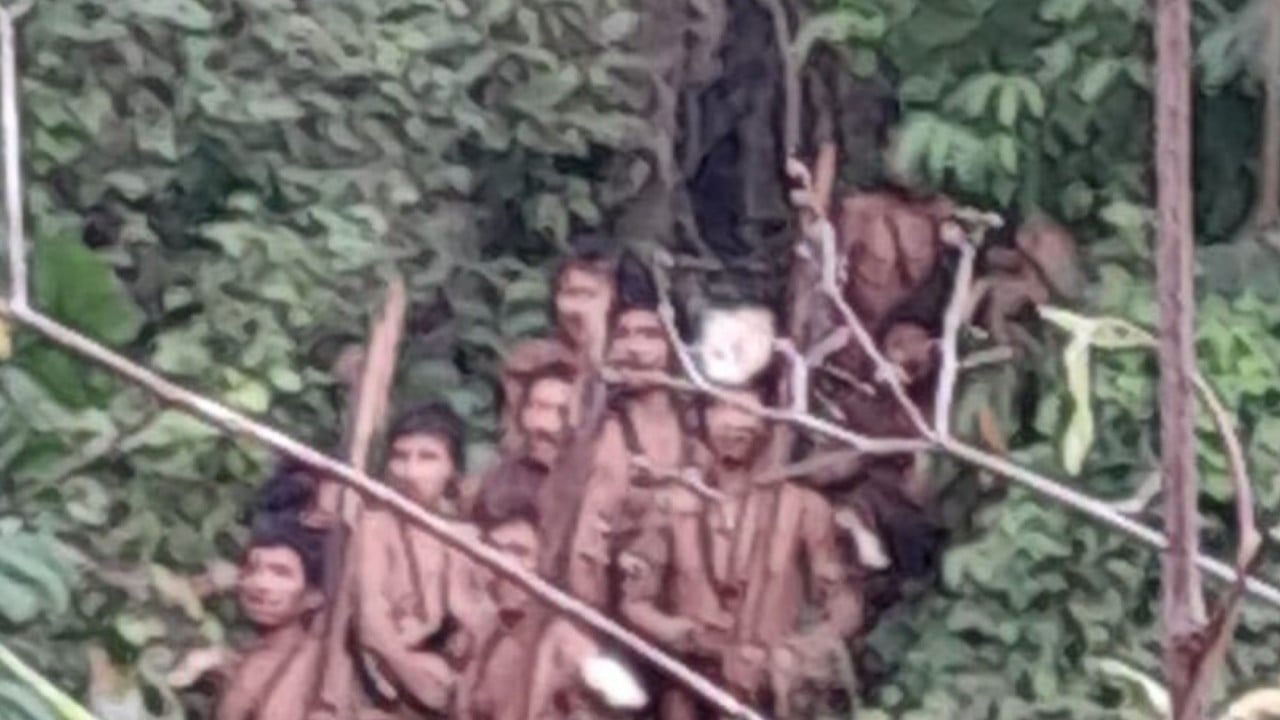
When members of an isolated Indigenous group step out of Brazil’s Amazon rainforest and initiate contact with settled communities, the headlines almost always frame the event as a triumph of anthropology or a heartwarming bridge across centuries. The reality on the ground is far grimmler. An uncontacted tribe emerging from the forest is rarely making a peaceful diplomatic overture; almost without exception, they are running for their lives from illegal loggers, gold miners, or drug traffickers who have systematically destroyed the buffer zones keeping them alive.
For decades, Brazil has operated under a strict no-contact policy enforced by Funai, the country’s federal Indigenous affairs agency. Established in 1987, this doctrine reversed centuries of catastrophic forced assimilation, recognizing that voluntary isolation is the only reliable shield protecting small forest populations from biological and cultural annihilation. Yet when external pressures shatter that isolation, the resulting collision exposes the severe structural failures of Amazonian border enforcement, public health readiness, and land protection.
The Anatomy of a Forced Emergence
People do not abandon the only world they know out of idle curiosity. Isolated groups in the Amazon—estimated by Funai to number over a hundred distinct communities across the basin—maintain an acute, generations-old awareness of the outside world. They hear the chainsaws. They see the contrails of low-flying aircraft used by wildcat miners, known locally as garimpeiros. They find the mercury-poisoned fish floating in tributaries that once sustained them.
When a group finally walks into a riverside village or approaches a Funai monitoring post, it is an act of desperate triage.
Consider the historical pattern across the Javari Valley, the Purus River basin, and the territories bordering Peru. In nearly every documented emergence over the past twenty years, survivors have exhibited signs of extreme stress, malnutrition, or recent violent trauma. Illegal resource extraction operates like a slow-motion siege. Loggers cut roads deep into protected territories to haul out high-value timber like mahogany and ipê. Behind the loggers come the land grabbers, clearing pasture to claim fraudulent titles. Simultaneously, transnational criminal networks use remote river corridors to move cocaine paste from Andean laboratories toward Atlantic ports. Caught in a shrinking pocket of intact canopy, an isolated band faces a brutal calculus: stay in the forest and face armed execution by intruders, or step out into the open and risk the invisible lethality of common pathogens.
The Biological Cliff Edge
The single greatest threat during any initial contact is not violence, though armed clashes remain common. It is the common cold.
Isolated Indigenous populations lack acquired immunity to viruses and bacteria that circulate routinely among settled populations. Influenza, measles, chickenpox, and even mild respiratory infections can sweep through a newly contacted group with mortality rates exceeding fifty percent within months. Because these communities typically consist of small, tightly knit extended families—sometimes numbering only a few dozen individuals—a single outbreak does not just cause illness. It wipes out the elders who hold agricultural knowledge, oral histories, and medicinal practices, effectively collapsing the social fabric overnight.
Medical teams deployed by Brazil’s Special Secretariat for Indigenous Health (Sesai) understand this biological vulnerability intimately. The standard protocol for an unexpected encounter requires immediate sanitary cordons. Personnel approaching the group must undergo strict quarantines, wear full personal protective equipment, and administer rapid vaccinations alongside targeted antivirals and antibiotics.
Yet theory rarely survives contact with the logistical nightmares of the deep Amazon. Monitoring posts are often days away by boat from the nearest regional hospital. Cold-chain storage for vaccines fails in extreme humidity when diesel generators break down. Furthermore, the moment an encounter occurs, word spreads rapidly through local river towns. Curiosity seekers, evangelical missionaries, and local politicians frequently attempt to reach the site before federal authorities can seal the perimeter, each visitor acting as a potential vector for fatal contagion.
Why Brazil’s No-Contact Doctrine Is Under Strain
To understand why these encounters keep happening, you have to look at the funding and staffing realities of Funai’s Ethno-Environmental Protection Fronts. These specialized field units are tasked with monitoring millions of hectares of remote territory, mapping the movements of isolated groups through satellite imagery and ground patrols, and preventing invasions before they trigger contact.
The mandate is massive. The resources are chronically inadequate.
Across successive administrations, political battles in Brasília have repeatedly gutted environmental enforcement budgets, leaving critical monitoring bases understaffed, under-armed, and reliant on aging river craft. In several remote sectors, a handful of unarmed civil servants are expected to hold the line against heavily armed mining syndicates financed by sophisticated money-laundering operations. When federal protection posts are abandoned or starved of fuel, invaders move in within weeks. The buffer zones vanish, and the isolated groups inside are pushed directly into the path of settled communities.
There is also a persistent ideological pushback against the no-contact policy itself. Powerful agribusiness lobbies, regional lawmakers, and certain missionary organizations argue that keeping Indigenous groups isolated denies them modern medicine, education, and economic opportunity. This framing deliberately obscures the core principle of Brazilian law: self-determination. The policy does not forbid Indigenous people from contacting the outside world; it forbids outsiders from forcing contact upon them. When a group chooses isolation, the state is legally obligated to defend their territory so that choice remains viable.
The Myth of the Clean Encounter
Media coverage of these events often relies on romanticized tropes—the "lost tribe" stepping out of the Stone Age into the modern era. This narrative is not just inaccurate; it is actively dangerous. It sanitizes the reality of environmental crime and shifts focus away from the state's failure to uphold constitutional land protections.
Even when an encounter is managed without immediate fatalities, the aftermath is rarely a clean transition. Once contact is established, it cannot be undone. The newly contacted group enters a precarious limbo. Their traditional hunting grounds are often too degraded or too dangerous to return to immediately, forcing them into temporary dependence on government food rations and medical supervision.
History offers sobering lessons on what follows. During the mid-twentieth century, rapid highway construction projects like the Trans-Amazonian Highway drove dozens of forced contacts across northern Brazil. Whole nations were decimated by disease and displacement, their survivors relegated to impoverished margins along dusty frontier roads. While modern protocols have dramatically reduced immediate death tolls compared to the 1970s, the long-term psychological and cultural toll remains immense. Young members of newly contacted groups frequently struggle to navigate cash economies, alcohol availability, and social discrimination in nearby towns, creating generational rifts that erode traditional governance.
Geopolitics on the Riverbank
The pressure driving isolated groups out of the forest is no longer purely domestic. Many of the most vulnerable uncontacted populations live along the transboundary corridors connecting Brazil, Peru, Colombia, and Venezuela.
An isolated group does not recognize national borders drawn on maps in distant capitals. They follow seasonal game migrations, fruiting cycles, and river levels across invisible jurisdictional lines. However, criminal syndicates exploit those exact borders with ruthless efficiency. When Peruvian authorities crack down on illegal logging or coca cultivation on one side of a watershed, operators simply cross into Brazilian territory, and vice versa.
Effective protection requires synchronized cross-border intelligence, joint satellite surveillance, and coordinated field operations between South American governments. In practice, diplomatic friction, differing legal frameworks, and uneven enforcement capacities create vast blind spots. In those blind spots, extractive industries operate with near-total impunity, compressing the remaining intact forest from multiple directions simultaneously.
What Real Protection Actually Requires
Preventing forced emergences does not require reinventing conservation strategy. The operational blueprint already exists, refined over decades by veteran Brazilian indigenists who spent their careers mapping forest corridors without ever speaking a word to the people living inside them.
First, physical interdiction must be continuous, not episodic. High-profile military raids that burn a few mining dredges for television cameras accomplish little if the miners return the following month. Protection requires permanent, well-funded base camps positioned at key river bottlenecks, staffed by trained Funai specialists backed by dedicated federal police units capable of arresting financiers, not just low-level laborers.
Second, supply chain traceability must cut off the financial oxygen feeding illegal incursions. Gold extracted from Indigenous lands enters global markets through fraudulent paperwork that launders its origin at regional trading posts. Timber cut illegally inside protected reserves is mixed with legal harvests at sawmills before export. Until international buyers and domestic regulators enforce strict, verifiable origin tracking for Amazonian commodities, the economic incentive to invade isolated territories will continue to outpace enforcement budgets.
Third, buffer zone integrity must be treated as non-negotiable. An isolated group cannot survive on a tiny island of trees surrounded by cattle ranches and soy fields. They require expansive, contiguous territories with intact watersheds to sustain shifting agriculture, hunting, and seasonal movement. Every road punched through a peripheral forest reserve acts as a artery for further encroachment.
When an uncontacted group steps out of the trees onto a muddy riverbank, holding hands up to strangers whose language they do not speak, it is not a moment for celebration. It is a distress signal flashing across the canopy, proof that the outer defenses of the Amazon have already been breached.