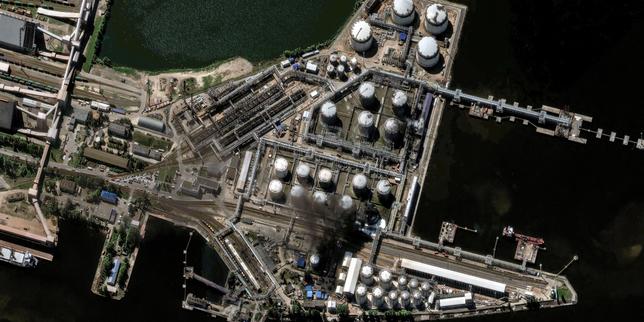
Ukraine has fundamentally altered the geography of its war with Russia by launching a sustained drone campaign against deep-theater targets like the Taneco refinery in Tatarstan, alongside strategic facilities in Bryansk and Samara. By striking complex infrastructure more than 1,200 kilometers from the border, Kyiv is shifting from a war of static trench lines to an asymmetric assault on Moscow's economic engine. This strategy aims to choke Russia’s frontline fuel supplies, dent its export revenues, and force the Kremlin to stretch its air defense umbrella thin. It is a calculated gamble that brings the physical and economic costs of the invasion directly to the Russian heartland.
For two years, the conflict remained largely contained within Ukraine’s borders or the immediate frontier. That containment has shattered. The expansion of Ukraine's domestic long-range drone program means that vast swaths of industrial Russia, once considered safe havens, are now active combat zones.
The Anatomy of an Economic Chokepoint
Targeting a refinery is not about destroying buildings. It is about exploiting highly specialized engineering vulnerabilities. Petroleum refining relies on massive distillation columns that separate crude oil into gasoline, diesel, and jet fuel. These towers are packed with complex internal trays and operate under extreme pressure and temperature. They cannot be easily replaced, nor can they be bought off the shelf.
When a Ukrainian strike drone hits a primary distillation unit, the entire facility often grinds to a halt. Russia possesses dozens of large-scale refineries, but a significant portion of its total refining capacity sits within reach of Kyiv’s new generation of airborne weapon systems.
This is a targeted decapitation of industrial capability. By knocking out these sophisticated components, Ukraine is forcing Russia into a logistical nightmare. The Kremlin cannot simply order a replacement tower from a local factory. Many of these facilities were built or modernized using European and American technology during the early 2000s. Under the current international sanctions regime, acquiring the specific metallurgical components and automated control systems required to rebuild these units is an incredibly slow, expensive, and circuitous process.
The math behind this strategy is brutal. A drone costing less than $100,000 can inflict tens of millions of dollars in direct structural damage. More importantly, it can cause hundreds of millions of dollars in lost production revenue. This massive asymmetry is the driving force behind Kyiv’s procurement choices.
Piercing the Tatarstan Bubble
The strike on the industrial zone in Yelabuga and the nearby Taneco refinery in Tatarstan marked a critical psychological and operational turning point. Tatarstan was previously viewed by the Russian leadership as an untouchable rear area, far beyond the reach of Ukrainian retaliation.
Because of this perceived safety, Moscow established major manufacturing hubs in the region, including facilities dedicated to assembling Iranian-designed Shahed loitering munitions. The reality on the ground has changed. Ukraine successfully modified light, civilian-style aircraft into autonomous, explosives-laden drones capable of flying low over Russian territory for hours without being detected by radar networks designed to spot high-altitude military jets.
This geographical expansion forces the Russian Ministry of Defense into a zero-sum game regarding air defense deployment. Russia has a finite number of advanced surface-to-air missile systems, such as the S-400 and Pantsir-S1.
- Option A: Keep these systems deployed along the front lines in Ukraine to protect troops and ammunition depots from tactical air strikes.
- Option B: Pull those batteries back into the deep interior to guard critical infrastructure like oil terminals, steel mills, and assembly plants.
Every missile system moved to Samara, Bryansk, or Tatarstan is a system missing from the Donbas. Ukraine is leveraging this dilemma to create vulnerabilities on the battlefield, exploiting the gaps that open up when Russian air defense assets are reshuffled.
Western Anxiety and the Global Market
While Kyiv views these strikes as a legitimate and necessary means of survival, the strategy has caused friction with its Western backers, particularly Washington. The United States has repeatedly expressed concerns that sustained disruption to Russian oil refining could spike global energy prices, leading to inflation.
This reveals a fundamental disconnect between Ukrainian survival and Western political calculation.
From the American perspective, a spike in global gasoline prices is a domestic political liability. From the Ukrainian perspective, allowing Russia to refine oil unhindered means giving Moscow the exact financial liquidity it needs to buy artillery shells, pay soldiers, and manufacture tanks. Kyiv has decided that its existential survival outweighs the economic comfort of its allies.
Furthermore, Ukraine’s leadership argues that the Western focus on crude oil prices misses the point. Kyiv is targeting refined products like diesel and gasoline, not the export pipelines carrying raw crude to global markets. By knocking out domestic refining, Ukraine forces Russia to export more unrefined crude oil, which actually depresses global crude prices while starving the domestic Russian market of the fuel required to run military transport trains and agricultural tractors.
The Limits of the Asymmetric Campaign
No strategy is a silver bullet. Drone warfare has limitations that are becoming apparent as the campaign matures. Russia is a massive country with a resilient, deeply entrenched industrial base that has spent generations preparing for total war.
Refinery Strike Vulnerability Matrix
+------------------------+-------------------------+------------------------+
| Target Component       | Repair Complexity       | Economic Impact        |
+------------------------+-------------------------+------------------------+
| Distillation Towers    | Extremely High (Months) | Immediate Halt         |
| Storage Tanks          | Low (Weeks)             | Short-term Disruption  |
| Pumping Stations       | Medium (Weeks)          | Localized Bottlenecks  |
+------------------------+-------------------------+------------------------+
Russia has already adapted by implementing electronic warfare counter-measures on a massive scale. GPS jamming and spoofing networks now blanket major industrial cities, forcing Ukrainian engineers to develop sophisticated optical guidance systems that allow drones to recognize targets using artificial intelligence and machine learning rather than relying on satellite signals.
Additionally, Russia can mitigate fuel shortages by importing refined products from neighboring Belarus or by restricting domestic consumption and stopping fuel exports entirely. The Kremlin has already implemented temporary gasoline export bans to stabilize domestic prices and ensure the military remains fully supplied. This means the immediate impact on the front lines is muted; the Russian army gets its fuel first, while the Russian civilian population and agricultural sectors bear the brunt of any shortages.
Shifting the Friction of War
The long-term success of Ukraine's deep-strike strategy depends entirely on the rate of destruction versus the rate of repair. If Ukraine can hit factories and refineries faster than Russia can fix them or install defensive netting, the cumulative friction will eventually drag down the Russian economy.
This is a war of attrition stripped of all romance. It is a calculated, technical battle between Ukrainian drone manufacturers working in hidden workshops and Russian repair crews working under the constant threat of the next air raid siren. By turning the sky over Russia into a contested battleground, Ukraine has ensured that the war is no longer a distant abstraction for the Russian population or the political elite in Moscow. It is an immediate, burning reality.