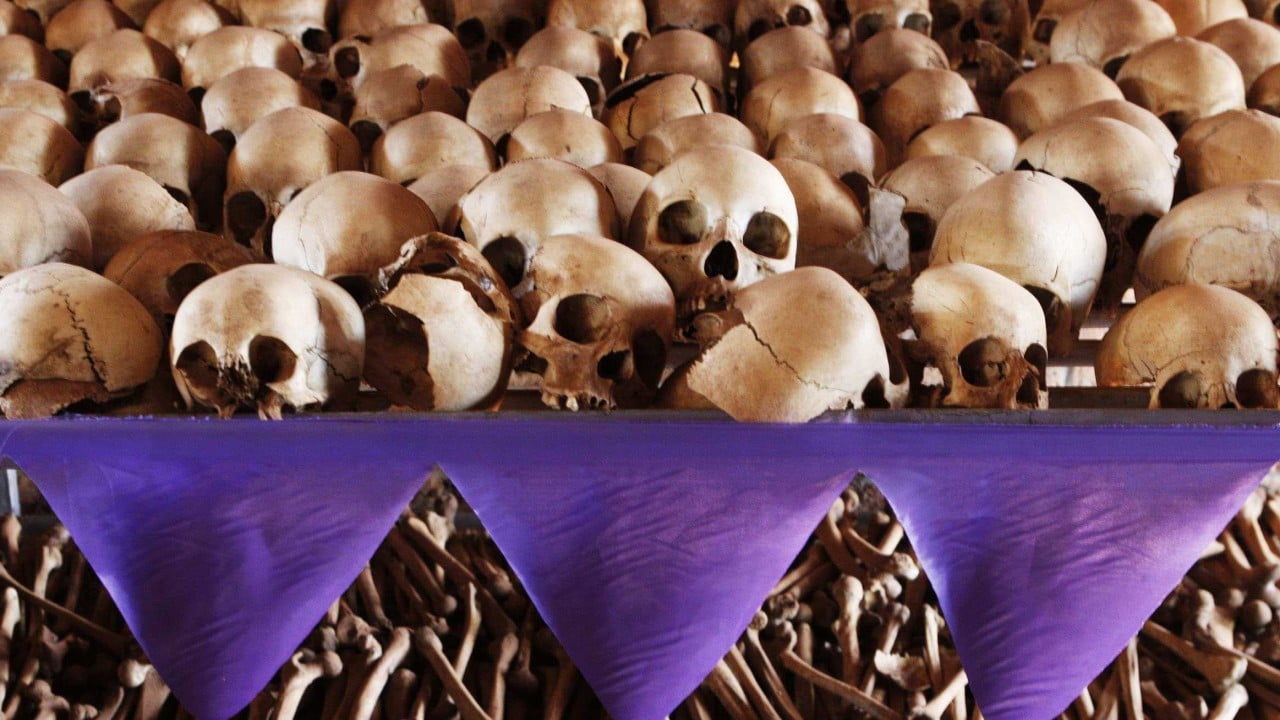
Thirty-two years after a hundred days of industrial-scale slaughter consumed Rwanda, London courts think they can play global magistrate. Westminster announced its first charges under universal jurisdiction statutes for atrocities committed in 1994. The mainstream press calls it a milestone for international human rights.
They are wrong. It is judicial cosplay.
When a domestic court thousands of miles away from the hills of Nyamata drags an aging suspect into a sterile courtroom three decades after the fact, we are not witnessing accountability. We are watching a bureaucratic machine justify its own budget by laundering historical amnesia through a show trial.
Let us look at the mechanics of universal jurisdiction. The theory sounds noble: atrocities against humanity belong to no single sovereign, so any civilized state can step in when local or international tribunals fall short. In practice, it is a lottery of geopolitical convenience and prosecutorial vanity. Why now? Why did these suspects live unmolested in British suburbs for twenty-five years while MI5 and local police forces filed paperwork into dusty cabinets?
The answer exposes the rot at the center of international criminal law. These cases are rarely pursued out of moral urgency. They are pursued when a legal system needs a high-profile scalp to prove its relevance on the world stage.
The Geography of Accountability Is Broken
Jurisdiction requires proximity, evidence, and institutional memory. A Metropolitan Police detective sitting in an air-conditioned office in London trying to reconstruct a massacre in a Rwandan commune in May 1994 is operating blind. Witnesses are dead, memory is degraded by time and trauma, and the political incentives of the modern Rwandan state heavily contaminate local testimony.
When foreign states parachute into complex historical conflicts they did nothing to prevent, they substitute performative prosecution for actual deterrence. If you want to stop mass atrocities, you stop them while the machetes are being sharpened. You do not wait a generation until the perpetrators are grandfathers collecting British pensions, only to stage a media-friendly perp walk.
Look at the precedent. European nations have spent decades holding occasional, highly publicized trials of Rwandan expats. What has it achieved? Has it healed the fractures in the Great Lakes region? Has it deterred a single modern warlord in Sudan, Myanmar, or Gaza? Of course not. It offers a cheap dopamine hit to legal professionals who confuse indictments with impact.
The Myth of Universal Jurisdiction
We are told that international law has a long memory. It actually has a very selective memory.
Universal jurisdiction operates on a double standard that invalidates its moral authority. Western capitals happily grant safe harbor to intelligence assets, financiers, and political operatives linked to messy conflicts when it suits their diplomatic playbook. But when public relations demand a demonstration of righteousness, the machinery grinds into motion against low-hanging fruit.
The suspects charged in the UK are not masterminds operating from executive suites; they are aging individuals who settled into quiet, ordinary obscurity decades ago. Dragging them through a British court at this late hour does nothing to restore the dead or reconstruct the shattered civil fabric of a nation that had to pull itself out of the abyss without British or American military intervention in 1994.
While Western diplomats wrung their hands and blocked UN intervention during the actual slaughter, refusing even to use the word "genocide" until it was politically convenient, London stood by. Now, London wants to star in the epilogue. It is sickening audacity.
Real Justice Cannot Be Outsourced
If Britain genuinely cared about the legacy of 1994, it would look inward at its own historical complicity, its weaponized arms sales, and its cynical diplomatic maneuvers during the UN Security Council votes that abandoned Rwanda to its fate. Instead, we get a courtroom drama designed for the evening news.
True justice for mass violence requires proximity to the victims, integration with local reconciliation mechanisms like the Gacaca courts, and an unglamorous commitment to preventing modern atrocities before they metastasize. Shifting historical reckoning to a courtroom in the Old Bailey is not internationalism. It is colonial paternalism dressed up in a barrister's wig.
Stop pretending this is about human rights. It is about an aging empire trying to convince itself it still holds the moral compass of the world.
It does not. And no amount of delayed paperwork will change that.