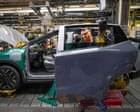
A 10% border tax is barreling toward the British and European auto industries on January 1, 2027, and nobody on either side of the English Channel is ready for it.
Brussels knows there's a problem. European officials recently floated a technical compromise to push those post-Brexit electric vehicle tariffs back by roughly a year. The UK car industry's response? Not good enough. Automakers are demanding at least a two-year reprieve, warning that anything shorter just kicks a multibillion-euro crisis down the road to next winter. Recently making headlines recently: The Quiet Architecture of Silicon Valley Whispers.
If you're trying to figure out why a trade deal signed on Christmas Eve 2020 is suddenly threatening to jack up EV prices, the answer comes down to one component: the battery.
The Battery Bottleneck Nobody Solved in Time
When the UK and EU inked their post-Brexit Trade and Cooperation Agreement, negotiators wrote in strict "rules of origin" for electric vehicles. To qualify for tariff-free trade across the Channel, an EV couldn't just be bolted together in Sunderland or Wolfsburg. Its battery pack—the single most expensive part of the vehicle—had to be built in the UK or EU using locally sourced materials. Fail that test, and the car gets slapped with a 10% duty. More details into this topic are covered by Bloomberg.
The logic sounded great on paper. Politicians wanted to force automakers to build a domestic battery supply chain instead of relying on Asian imports.
Reality didn't cooperate. The original deadline was January 1, 2024. By late 2023, several flagship European battery ventures had collapsed or stalled, forcing London and Brussels to agree to a three-year extension. That grace period expires at the end of December 2026.
New gigafactories have stepped in to replace those failed projects, including AESC's plant in Sunderland. Yet almost none of them are churning out cells at the scale European assembly lines actually need. Right now, carmakers in Britain and on the continent still depend heavily on battery cells imported from China, Japan, and South Korea. Even Tesla's own cell facility at Grünheide near Berlin isn't slated to hit full production until mid-2027—months after the tariff cliff hits.
Why Brussels' One-Year Offer Falls Short
The European Commission's latest draft isn't a sweeping political treaty. Instead, Brussels circulated a set of technical tweaks—adjusting customs procedures and origin-calculation formulas—that effectively buy manufacturers one extra year of breathing room. Another option on the table would let carmakers offset non-compliant EVs exported across the Channel against compliant models sold in their home markets over a two-year window.
Auto executives aren't buying it.
You don't re-engineer a global battery supply chain in twelve months. Mining, refining cathode materials, validating cell chemistry, and scaling gigafactory output take years of capital investment. As one UK auto executive put it bluntly, anything less than a two-year delay means the industry will be stuck having the exact same panic-stricken conversation next autumn.
The numbers explain why boardrooms are sweating:
- 82% of EU EV exports at risk: According to the European Automobile Manufacturers Association (ACEA), roughly 82% of the 520,000 electric cars and vans the EU expects to ship to Britain in 2027 would fail the local-content rules as currently written.
- A €1.47 billion tax hit: ACEA estimates those tariffs would slap a €1.47 billion bill on EU-to-UK vehicle trade in 2027 alone.
- British exporters face the same wall: The UK's Society of Motor Manufacturers and Traders (SMMT) previously warned that British plants face £1.4 billion in tariff exposure without a fix, threatening an €80 billion annual automotive trade relationship.
Notice who actually loses most if talks fail. Because the UK is a massive net importer of European-built EVs—from German-made Volkswagens and BMWs to Berlin-built Tesla Model Ys—European factories actually absorb the bulk of the immediate tariff pain. That's why Germany's automotive association, the VDA, and continental giants like Stellantis, Renault, and Mercedes-Benz have lined up right alongside British manufacturers to demand relief.
The Hidden Catch Inside EU Battery Lobbying
If carmakers in both the UK and the EU agree on a longer delay, why hasn't Brussels simply signed off on it?
Follow the money inside Europe's supply chain. While vehicle assemblers want cheap, abundant cells today, European chemical companies and emerging battery material producers have poured millions of euros into building local cathode plants. Those suppliers have lobbied the European Commission hard against extending the deadline. If automakers get another multi-year free pass to import cheaper Asian battery components, domestic European cathode factories lose their guaranteed customers before they even get off the ground.
Brussels is caught in a classic industrial policy trap. Protect the carmakers, and you starve the fledgling battery supply chain. Protect the battery makers, and you make European EVs 10% more expensive right when Chinese brands are surging past a 15% market share in the UK.
Three Trade Battles Tangled Together
The battery tariff fight isn't happening in a vacuum. It's tangled up with two other high-stakes disputes between Prime Minister Andy Burnham's government and Brussels.
First, there's the EU's upcoming "Made in Europe" law—officially the Industrial Accelerator Act—which aims to shield European manufacturing by tying public subsidies and government fleet contracts to locally built vehicles. If Britain gets locked out of that definition, UK-assembled cars like the Oxford-built Mini and Sunderland-built Nissan models could lose vital continental fleet buyers. Fortunately, Ireland, holding the rotating EU presidency, recently floated a compromise granting the UK "partner" status for car assembly ahead of a December 3 EU ministers' meeting.
Second, Brussels has pressured London on whether the UK will mirror EU tariffs on Chinese-made electric vehicle imports. Downing Street has kept its options open rather than automatically copying Brussels' tariff wall, though the Irish compromise suggests Britain might secure "Made in Europe" assembly recognition without having to align completely on Chinese trade duties.
SMMT chief executive Mike Hawes has stressed that rules of origin and "Made in Europe" access have to be solved together. Fixing one while leaving British plants exposed to the other still leaves UK manufacturing on a cliff edge.
What Car Buyers and Fleet Managers Should Do Right Now
If you're shopping for an electric car or managing a corporate fleet for 2027 deliveries, don't assume prices are dropping anytime soon—and don't panic-buy based on headlines either.
Until London and Brussels formally ratify a text, any tariff postponement remains a proposal, not law. Here is how to protect your budget while negotiators haggle:
- Lock in written price protection on 2027 orders. If you're ordering a factory-built EV for Q1 or Q2 2027 delivery, ask the dealer or leasing company explicitly whether the quote assumes zero tariffs and check the fine print for "force majeure" or tax-change clauses that let them pass a 10% surcharge onto you at delivery.
- Check where your specific model is built. Tariffs only hit vehicles crossing the UK-EU border that fail battery origin thresholds. Models built in Asia or the US already operate under separate tariff schedules, while certain European models with locally sourced packs won't be affected at all.
- Watch the December EU council calendar. Following the November 20 UK-EU summit, formal technical negotiations and the December 3 EU competition ministers' meeting will determine whether automakers get a clean two-year runway or a messy stopgap.
Automakers on both sides of the Channel have made their bottom line clear: give the supply chain until at least 2029 to catch up, or watch a self-inflicted 10% tax stall Europe's electric transition right when it can least afford it.