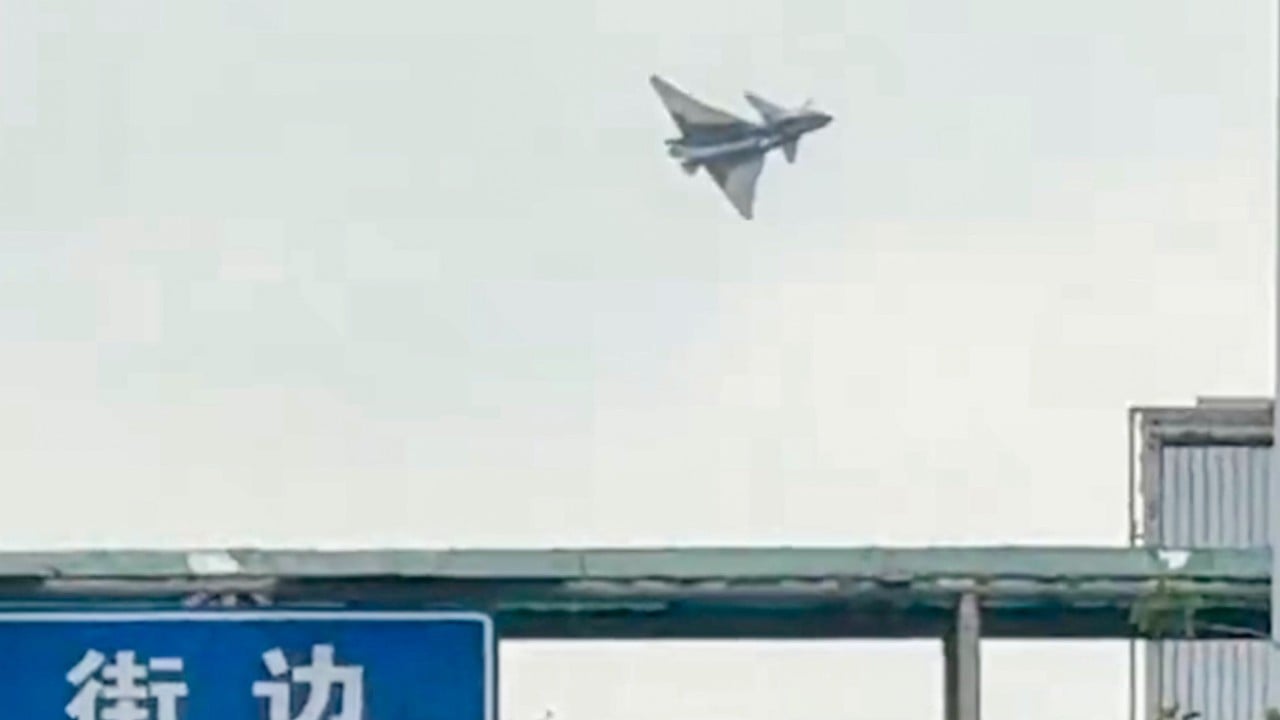
The introduction of the T-19A Kestrel represents a fundamental structural shift in how the United States Air Force manages aviation training pipelines, fleet sustainment, and capital allocation. Rather than serving as a routine fleet replacement, the T-19A functions as a corrective mechanism for a decade-long pilot production bottleneck driven by aging airframes, spiraling maintenance man-hours, and a widening technological gap between legacy training platforms and fifth- and sixth-generation operational cockpits.
To understand the operational impact of the T-19A Kestrel, analysts must look past standard press-release metrics—such as maximum airspeed or service ceiling—and evaluate the platform through three operational frameworks: the Pipeline Throughput Equation, the Avionics Parity Model, and the Sustainment Cost Function. For another view, check out: this related article.
The Pipeline Throughput Equation
The Air Force’s persistent pilot deficit is not primarily a recruitment failure; it is a production capacity failure. Pilot production operates as a sequential assembly line governed by Little’s Law, where total output is constrained by the slowest, least reliable stage in the training pipeline.
Historically, legacy trainers such as the T-38 Talon and the T-1A Jayhawk have acted as severe physical bottlenecks. As airframes exceed their original structural design lives, three compounding failures occur: Related insight on this matter has been provided by The New York Times.
- Unscheduled Maintenance Spikes: Fatigue cracking and obsolete component failures force aircraft out of the daily flying schedule without warning, breaking student training continuity.
- Cannibalization Loops: When original equipment manufacturers cease production of legacy parts, maintenance crews strip functioning components from grounded aircraft to keep others flying, artificially depressing total fleet availability.
- Syllabus Attrition: Weather delays combined with low aircraft availability rates force students into "casual status"—periods of non-flying waiting time that degrade previously acquired motor skills and require costly remedial sorties.
The T-19A Kestrel directly alters the variables of this equation. By introducing a newly manufactured airframe built on modern commercial-off-the-shelf (COTS) structural standards and modular, line-replaceable units (LRUs), the Air Force reduces mean time between failures (MTBF) and compresses turnaround times on the flight line. Higher aircraft availability directly increases daily sortie generation rates. When sortie generation stabilizes, the training syllabus compresses, allowing Undergraduate Pilot Training (UPT) bases to push more student pilots through the pipeline per fiscal year without expanding base infrastructure or instructor headcount.
The Avionics Parity Model
Legacy training platforms force student pilots to learn outdated cockpit workflows that must be actively unlearned upon arrival at Formal Training Units (FTUs) for operational aircraft like the F-35 Lightning II, KC-46 Pegasus, or B-21 Raider. This negative transfer of training increases operational transition costs and extends the timeline required to achieve combat-mission-ready (CMR) status.
The T-19A Kestrel bridges this divide by shifting the primary training emphasis from mechanical stick-and-rudder aircraft management to cognitive sensor and systems management. In modern military aviation, the pilot acts less as a manual flight-control operator and more as an information manager synthesizing inputs from multiple data links.
The Kestrel achieves avionics parity through three distinct mechanisms:
- Open Mission Systems (OMS) Architecture: Unlike closed, proprietary legacy avionics that require expensive hardware overhauls for minor updates, OMS separates flight-critical software from mission-training software. Instructors can upload new simulated radar threats, electronic warfare environments, or navigation protocols via software patches rather than physical cockpit modifications.
- Large-Area Display (LAD) Ergonomics: By replacing fragmented analog gauges and small monochrome cathode-ray screens with configurable, high-resolution touchscreen displays, the T-19A familiarizes students with the exact visual scanning patterns and menu hierarchies used in front-line operational cockpits.
- Live, Virtual, and Constructive (LVC) Integration: The T-19A is engineered to link directly into synthetic training networks while airborne. A student flying a physical Kestrel can engage virtual adversary aircraft, interact with simulated surface-to-air missile threats, and coordinate with ground-based simulator pilots in real time.
This LVC capability eliminates the geographic and financial constraints of traditional live-fly exercises. The Air Force no longer needs to launch expensive, multi-aircraft "red air" adversary squadrons to give student pilots complex tactical scenarios; the T-19A projects those threats directly onto the student’s cockpit displays.
The Sustainment Cost Function
Defense acquisition programs frequently fail not because of unit procurement price, but because of operations and support (O&S) expenses, which typically account for roughly 70 percent of a weapon system’s total lifecycle cost. Legacy trainers exhibit an exponential sustainment cost curve: every additional flight hour requires disproportionately more maintenance labor and custom-machined replacement parts.
The T-19A Kestrel flattens this cost curve by applying commercial aviation reliability standards to military training operations. Propulsion systems derived from high-cycle commercial turbofans offer significantly lower specific fuel consumption and longer intervals between hot-section inspections compared to older military-unique engines.
Digital twin modeling further alters the maintenance workflow. By embedding prognostic health management (PHM) sensors throughout the airframe and propulsion system, the T-19A transmits component stress data to ground crews upon landing. Maintenance shifts from a reactive model—fixing parts after they break—or a rigid calendar-based model—replacing parts regardless of actual wear—to a condition-based maintenance (CBM) model. Technicians replace actuators, pumps, and bearings immediately prior to predicted failure, maximizing component lifespan while preventing in-flight emergencies.
Operational Friction and Strategic Limitations
While the T-19A Kestrel resolves hardware and avionics deficits, treating the aircraft as a complete solution to the Air Force’s pilot shortage ignores systemic human-capital constraints. Three operational limitations remain unresolved by the introduction of a new airframe:
The Instructor Pilot Bottleneck
An aircraft cannot generate sorties without a qualified instructor pilot (IP) in the cockpit or at the ground control station. The Air Force continues to lose experienced mid-career aviators to commercial airlines, creating an acute shortage of seasoned IPs. Introducing the T-19A requires pulling existing instructors off the flight line to undergo transition training themselves, creating a temporary dip in student production capacity during the initial fielding phase.
Software Certification Latency
While Open Mission Systems allow rapid software updates in theory, Department of Defense cybersecurity and airworthiness certification processes remain slow and bureaucratic. If the Air Force cannot streamline its Authority to Operate (ATO) accreditation timelines for training software patches, the T-19A’s reconfigurable cockpit will stagnate, replicating the exact obsolescence cycle it was designed to prevent.
Synthetic Training Over-Reliance
LVC integration allows the Air Force to substitute simulator hours and virtual airborne threats for live-fly sorties. However, synthetic environments cannot fully replicate the physiological stressors of high-G maneuvering, spatial disorientation, or the psychological pressure of real-world emergencies. Over-indexing on virtual training to save fuel and airframe hours risks producing pilots who excel at button-pushing in benign environments but struggle when primary flight displays fail in degraded conditions.
Strategic Execution for Force Modernization
To extract maximum return on investment from the T-19A Kestrel, Air Education and Training Command (AETC) must pair hardware fielding with structural reforms to its training syllabus and personnel management.
First, AETC must decouple instructor pilot retention from operational flying assignments by expanding the dedicated trainer career track and utilizing civilian contractor instructors for foundational flight phases. Keeping experienced military aviators in the cockpit requires offering stable geographic assignments and competitive retention bonuses that offset commercial airline compensation packages.
Second, acquisition leadership must establish a continuous-delivery DevSecOps pipeline specifically for the T-19A’s mission software, isolating flight-critical avionics from training-layer applications so instructional scenarios can be updated weekly without triggering full airworthiness recertification.
Finally, training commanders must enforce strict guardrails on the ratio of live-fly sorties to synthetic LVC events, ensuring that every student pilot masters raw-data instrument flying and degraded-mode aircraft recovery before advancing to complex multi-ship tactical scenarios. The T-19A Kestrel provides the mechanical reliability and digital architecture required to modernize pilot production, but its ultimate effectiveness depends entirely on whether the Air Force reforms the human and bureaucratic systems surrounding the aircraft.