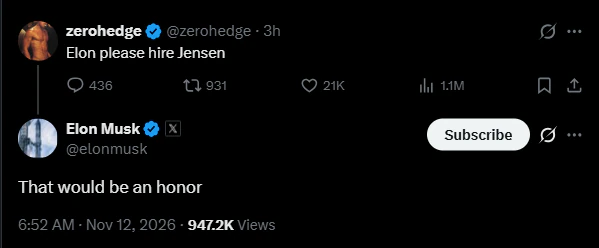
Four words.
That is all it took to send a quiet tremor through the glass towers of Silicon Valley, across the trading floors of Wall Street, and straight into the server farms humming beneath the Nevada desert.
"That would be an honour."
When Elon Musk typed those four words onto X in response to a half-joking suggestion that he should hire Nvidia CEO Jensen Huang, the internet did what it always does. It laughed. It made memes. It treated a fleeting social media interaction between two of the richest, most powerful men on Earth like celebrity gossip—a harmless bit of billionaire banter over morning coffee.
Look closer, though. Behind that polite digital nod lies the defining tension of our era.
We are living through a gold rush where only one man owns the shovels, and the biggest prospector in town just tipped his hat to him. To understand why Musk—a man notorious for firing executives on a whim, demanding hardcore obedience, and insisting on building everything from rocket engines to humanoid robots in-house—would publicly declare it an honor to employ Jensen Huang, you have to strip away the headlines. You have to look at the heat radiating off a graphics processing unit at three in the morning.
The Denny’s Booth and the Mars Dream
Imagine, for a moment, a hypothetical dinner at a dimly lit Denny’s off Highway 101 in San Jose. Let’s call this a thought experiment, though it mirrors reality closer than you might think.
In one corner of the vinyl booth sits Jensen Huang. It is 1993. He is thirty years old, wiping coffee rings off a laminate table, sketching out a business plan for a company that doesn't even have a name yet. Around him, the clatter of cheap plates and the hiss of a frying grill fill the air. At that time, graphics chips were an afterthought—tiny pieces of silicon meant to make video game explosions look slightly less blocky for teenagers in suburban basements. Nobody in that diner could have guessed that the architecture Huang was scribbling on a napkin would one day become the foundational brainpower for modern artificial intelligence.
Now, picture a twenty-something Elon Musk a few miles up the road in Palo Alto, sleeping under his desk at Zip2, showering at the local YMCA, obsessed with the idea that humanity needed to become multi-planetary before a stray asteroid or a self-inflicted catastrophe wiped us out.
Decades later, their paths didn't just cross; they fused.
I remember the first time I walked into a mid-sized data center—not even one of Musk’s colossal superclusters, just a regional facility housing a few thousand GPUs. You don't see intelligence there. You feel it as an oppressive, dry heat that immediately parches your throat, accompanied by a deafening, high-pitched whine of cooling fans that vibrates in your molars. Walking down those aisles, flanked by black metal racks blinking with thousands of tiny amber and green lights, you realize something terrifying. Intelligence is no longer an abstract philosophical concept. It is electricity, copper, liquid cooling, and silicon. And right now, Jensen Huang holds the keys to the foundry.
Why the World’s Richest Man Needs a Boss
To grasp the weight of Musk’s reply, you have to understand his pathology as a builder.
Musk hates middlemen. When aerospace suppliers quoted him astronomical prices for rocket parts in the early days of SpaceX, he didn't negotiate; he bought raw aluminum and taught himself orbital mechanics to build the rockets himself. When battery costs threatened to strangle Tesla in its crib, he built a Gigafactory in the middle of nowhere to control the supply chain from the lithium mine to the showroom floor. Vertical integration isn't just a business strategy for Musk. It is a religion.
Yet, when it comes to artificial intelligence—whether it is training the neural networks that keep a Tesla from veering into oncoming traffic, teaching Optimus robots how to fold a shirt without crushing it, or feeding massive datasets into xAI’s Grok—Musk hit a wall he couldn't brute-force his way through.
He needed compute. Unfathomable amounts of it.
You can think of AI training like trying to boil an ocean using millions of tiny kettles simultaneously. A traditional computer processor—a CPU—is like a brilliant professor. It can solve extraordinarily complex math problems one at a time, sequentially, with precision. A graphics processing unit—Nvidia’s specialty—is like an army of ten thousand grade-schoolers doing basic arithmetic all at the exact same second. It turns out that teaching a machine to recognize a stop sign or write a legal brief doesn't require one professor. It requires the army.
Huang saw this coming over a decade before anyone else. While competitors chased short-term smartphone contracts, Huang bet his entire company on parallel computing and a software layer called CUDA. He didn't just sell the hardware; he built the language that researchers used to talk to the hardware. By the time the rest of the tech world woke up to the generative AI boom, Nvidia wasn't just leading the race. It had built the stadium, paved the track, and owned the stopwatch.
So when a user on X tagged Musk and floated the idea of hiring Huang, the joke carried a sharp, uncomfortable edge. You don't hire Jensen Huang. Not when Nvidia’s market valuation sits in the trillions, eclipsing the GDP of entire nations. Not when Huang has been at the helm of the same company for over thirty years—an eternity in Silicon Valley, where CEOs are swapped out like smartphone batteries.
Musk’s response—"That would be an honour"—was a rare moment of public deference from a man who routinely spars with presidents, regulators, and rival tech titans. It was an admission of reality. Even the man trying to colonize Mars has to wait in line for Nvidia’s H100 and Blackwell chips.
The Architecture of Obscession
What makes these two men mirror images of each other, despite their wildly different public personas?
Look past the leather jacket and the flame-throwers. Beneath the theatrics lies an almost identical, punishing work ethic that borders on the monastic.
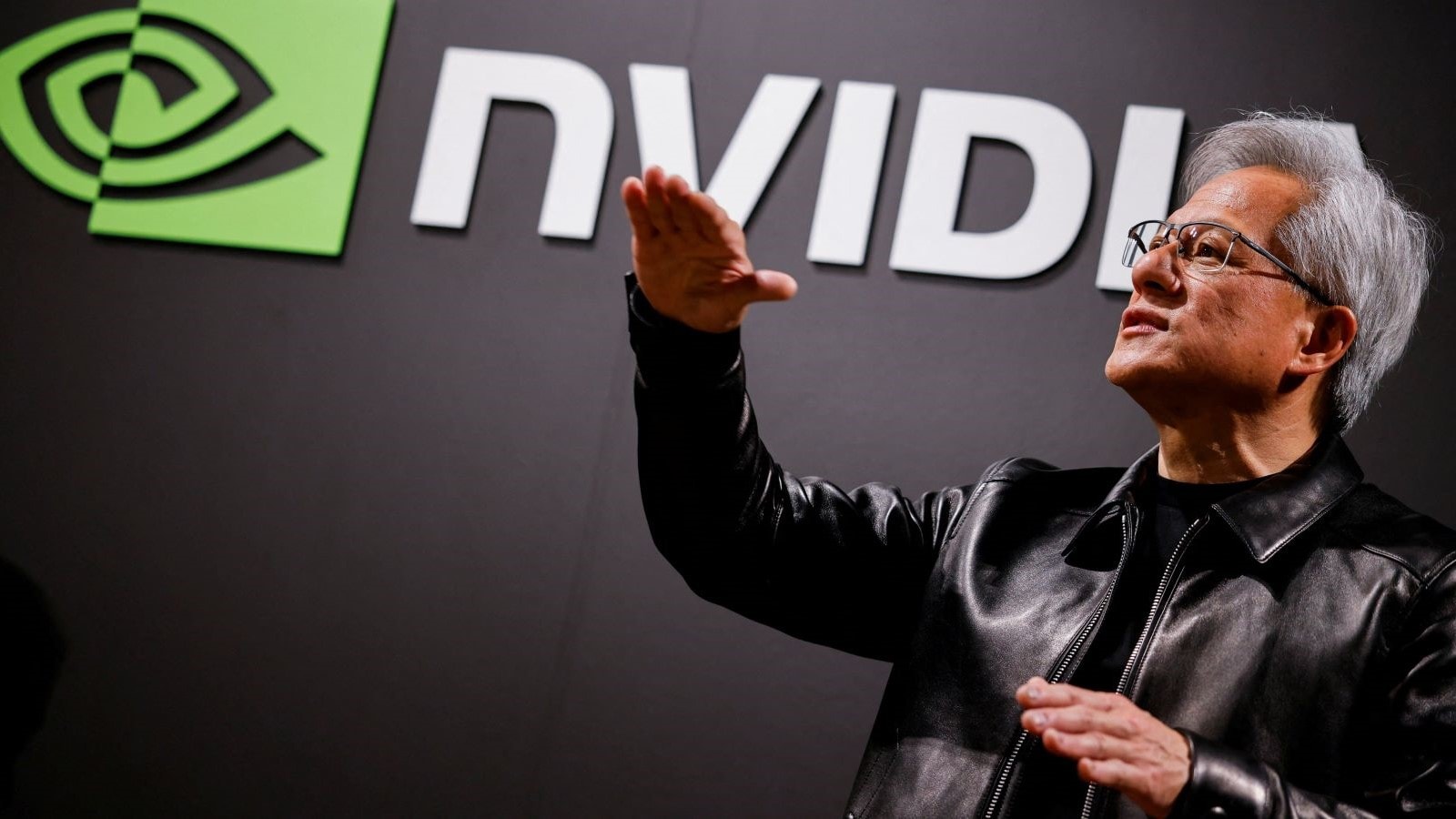
Huang does not have an office. He wanders the floors of Nvidia’s Santa Clara headquarters—a sprawling, triangular glass edifice designed to look like a spaceship—holding spontaneous meetings, eating in the cafeteria with junior engineers, and emailing staff at two in the morning with cryptic, three-word directives. He has famously spoken about operating in a constant state of paranoia, convinced that the company is always thirty days away from going out of business, even when its stock chart looks like a vertical rocket launch.
Sound familiar?
It is the exact same existential dread that drove Musk to sleep on the factory floor in Fremont during Tesla’s "production hell" in 2018, fixing assembly line bottlenecks at three in the morning while short-sellers circled like vultures.
Both men view engineering not as a nine-to-five profession, but as a contact sport where hesitation equals death. Consider what happened when Musk decided xAI needed to catch up to OpenAI and Google. Traditional tech timelines dictated it would take years to procure the hardware, wire the networking, and bring a massive supercomputer online. Musk assembled the Colossus cluster in Memphis—100,000 Nvidia H100 GPUs—in a matter of months.
Huang himself was stunned. In an interview following the buildout, the Nvidia chief called Musk’s execution "superhuman," noting that a project of that scale normally takes three years of planning before a single server is even plugged in. Musk did it in nineteen days of intensive hardware installation.
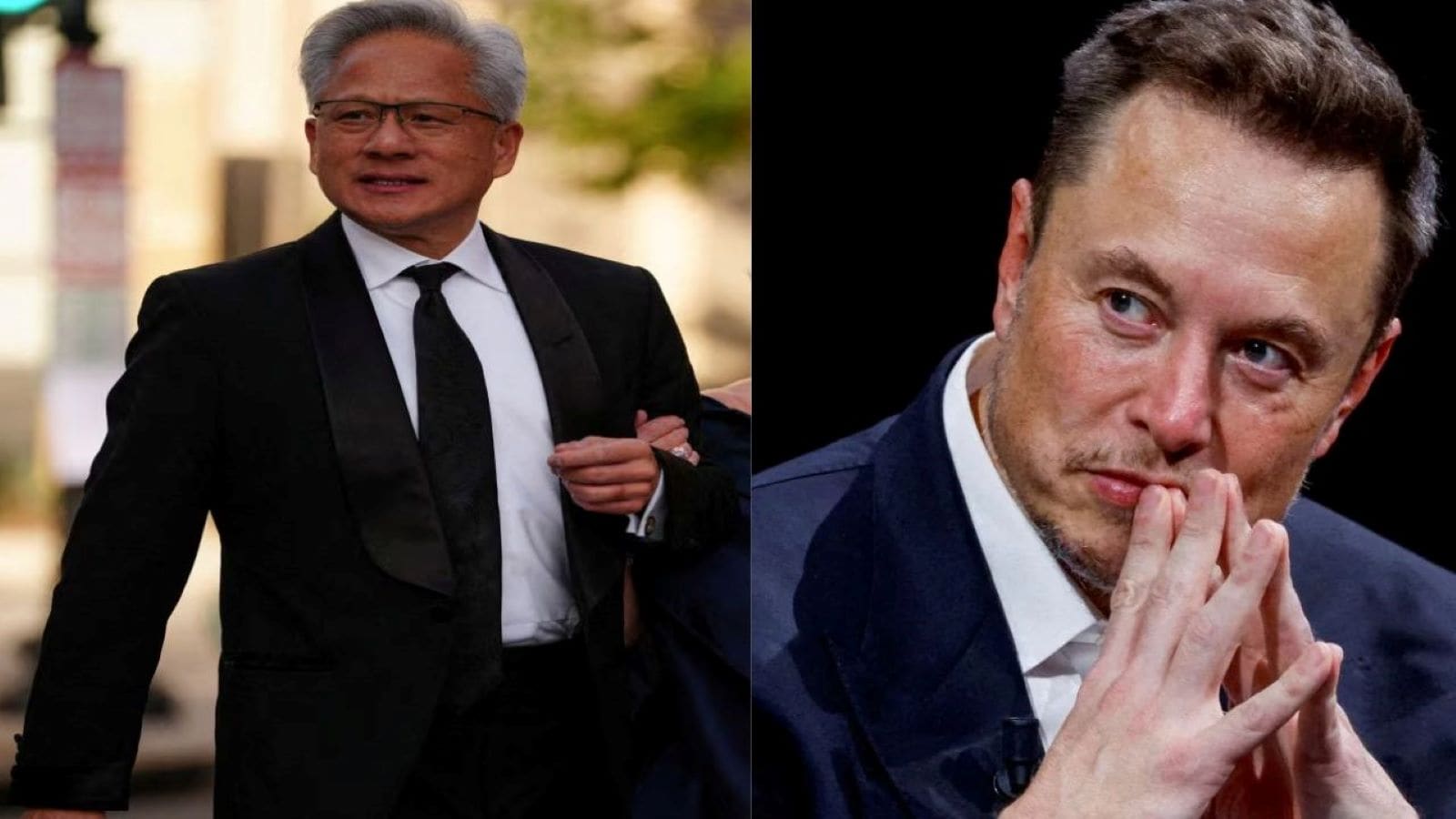
Read that again. One titan calling another "superhuman." The other replying that it would be an "honour" to hire him.
This isn't a rivalry. It is a mutual recognition between two people who understand the terrifying physics of moving at that speed—a velocity that breaks normal organizations and burns out ordinary mortals.
The Invisible Stakes for the Rest of Us
It is easy to treat this mutual admiration society as pure spectacle, a clash—or an alliance—of egos playing out in the stratosphere far above our daily lives. After all, whether Musk buys fifty thousand more GPUs or Huang sells them to someone else doesn't change the price of groceries on Tuesday morning.
Except it does. Just not in the way you might expect.
Let’s trace the invisible thread connecting that four-word tweet to your living room.
Right now, the entire global economy is reorganizing itself around a single bottleneck: compute capacity. Every major breakthrough in drug discovery, climate modeling, autonomous transit, and software automation requires massive clusters of Nvidia silicon. Because those chips are scarce and staggeringly expensive, only a handful of entities on Earth can afford to buy them at scale.
Musk is one of them. Microsoft, Google, Meta, and Amazon are the others.
When Musk and Huang praise each other publicly, they are signaling the consolidation of technological power into the hands of a tiny, hyper-focused priesthood. Think about what happens when the supplier of the most critical resource of the twenty-first century shares an almost telepathic alignment with one of its biggest buyers.
I’ll admit, there is something deeply unsettling about watching this unfold. On one hand, as a technologist, you cannot help but marvel at the sheer audacity of what they are building. When you see a Tesla navigate a chaotic, unmarked construction zone in the pouring rain using pure vision-based neural nets trained on Nvidia clusters, it feels like magic. When you realize that the same underlying architecture is helping biologists fold proteins to cure rare diseases, the optimism is intoxicating.
On the other hand, you have to ask a hard question. What happens to the startups, the university labs, the independent researchers, and the smaller nations who cannot afford a seat at that table?
If compute is the new oil, we are watching Standard Oil and the largest railroad baron in history politely tip their hats to one another at the station. The barriers to entry aren't just rising; they are becoming vertical cliffs. A brilliant twenty-two-year-old in a garage can still write clever code, yes. Yet without access to tens of millions of dollars’ worth of Nvidia silicon, that code remains a toy. The heavy lifting—the training of foundational models that will govern how we work, communicate, and diagnose illnesses—belongs exclusively to those who can write nine-figure checks to Santa Clara.
The Hypothetical Merger That Never Needs to Happen
People love to fantasize about what would happen if Jensen Huang actually walked away from Nvidia and took a desk at X, Tesla, or SpaceX. Let’s entertain that hypothetical scenario for a second, just to see why it would actually be a disaster for both men.
Suppose Huang accepted the imaginary job offer. Musk gets the greatest semiconductor executive in human history under his roof. Suddenly, Tesla’s Dojo supercomputer project—Musk’s internal effort to design custom AI training chips so he doesn't have to rely entirely on Nvidia—gets supercharged with Huang’s institutional knowledge.
What happens next?
Within six months, the friction would tear the building apart. You cannot put two apex predators in the same cage and expect them to share the hunting grounds. Musk’s leadership style relies on tearing down established processes and questioning every requirement, even the ones handed down by smart people. Huang’s genius lies in painstakingly cultivating an ecosystem over decades, maintaining ironclad discipline across thousands of hardware and software engineers who move in lockstep.
More importantly, Huang doesn't need Musk’s paycheck, and Musk doesn't actually want Huang on his payroll.
Why? Because the current arrangement is far more lucrative for both of them.
By remaining independent, Huang gets to sell his shovels to everyone in the gold rush—to Musk, to Sam Altman, to Mark Zuckerberg, to Sundar Pichai. He stays neutral, collecting a toll on the entire AI revolution regardless of which company eventually builds the winning model. Meanwhile, Musk gets to focus his relentless energy on the physical world—rockets, cars, robots, satellites—while outsourcing the bleeding edge of semiconductor physics to a man whose obsession matches his own.
Musk’s tweet wasn't a recruitment pitch. It was a salute across the trenches.
The Glow in the Dark
Late at night, if you drive past the industrial parks of Memphis, or the scrublands outside Austin, or the corporate campuses of Santa Clara, you won't see fireworks. You won't see press conferences or viral tweets.
You will just see concrete walls, thick bundles of high-voltage power lines stepping down electricity from the regional grid, and vast banks of industrial chillers venting steam into the cool night air. Inside, millions of microscopic transistors—etched at scales smaller than a virus—are flipping on and off billions of times a second, translating human knowledge, physical motion, and raw mathematics into liquid probability.
Two men, starting from a roadside diner and a cramped Silicon Valley office thirty years ago, willed this infrastructure into existence while the rest of us were still arguing about dial-up modems and flip phones.
They don't need to share a payroll to shape the next century. A four-word nod in the dark is more than enough.