The sea is a heavy, bruised purple at four in the morning. Somewhere in the dark, thirty miles off the coast of Oman, a merchant sailor named Elias grips a cold steel railing. He is watching the horizon, not for the sunrise, but for the silhouette of a fast-attack craft. He knows that he is currently floating atop a geographic juggernaut.
Twenty-one miles.
That is the width of the Strait of Hormuz at its narrowest point. It is a thin, fragile throat through which the lifeblood of the global economy is pumped every single day. If you want to understand why a sudden announcement of a U.S. naval "blockade" feels like a tectonic shift, you have to stop looking at the maps and start looking at the pressure.
The Geography of Anxiety
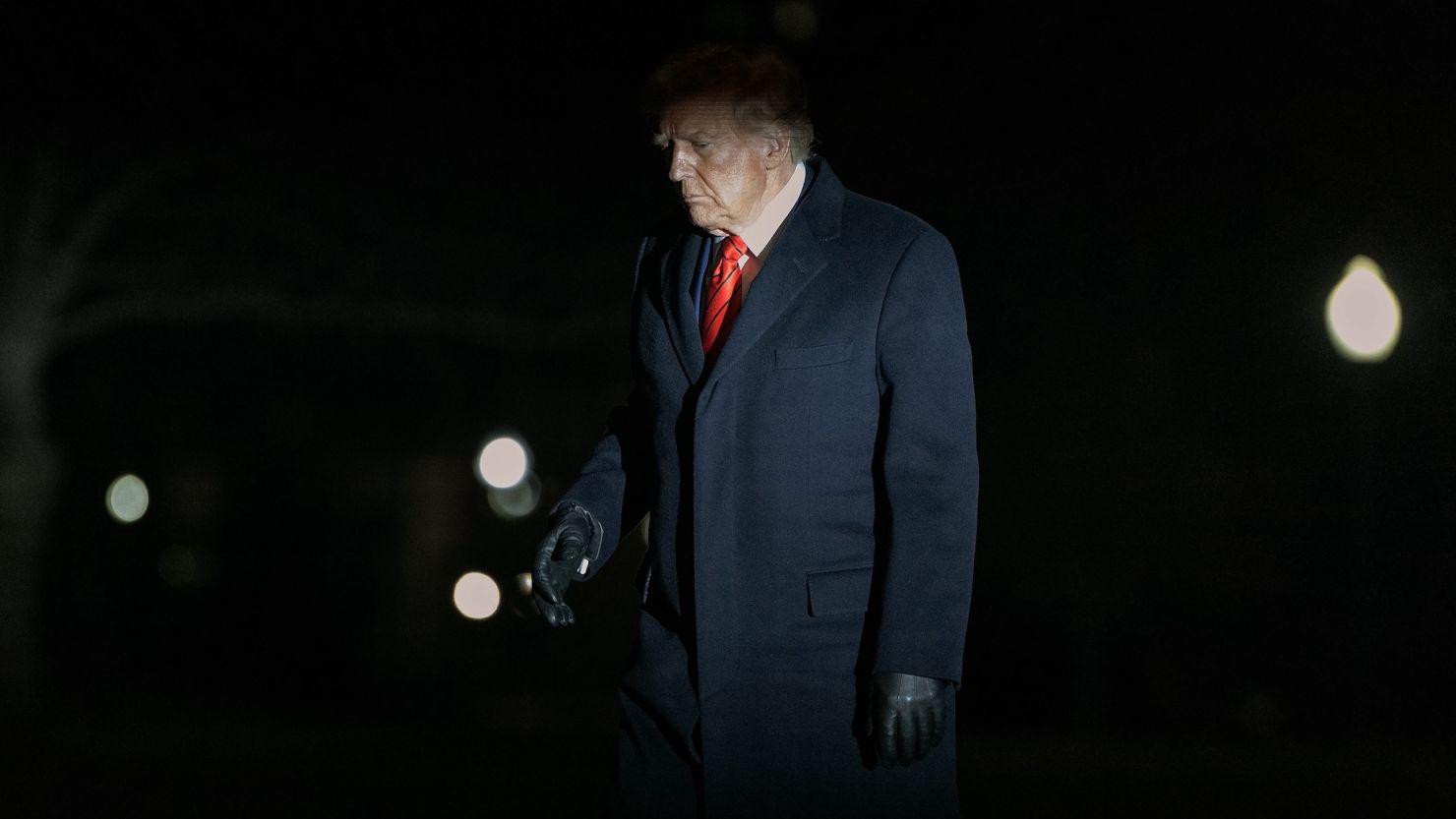
Donald Trump’s recent declaration that the United States will move to blockade this specific stretch of water isn't just a military maneuver. It is a gamble with the very concept of modern stability. To the average person, "blockade" sounds like a term from a history book, something involving wooden ships and iron cannons. In the 21st century, it is a digital and physical strangulation.
Think of the global energy supply as a single, massive highway. Now imagine that every car on that highway must pass through a single one-room toll booth. If that booth closes, the traffic doesn't just slow down. It backs up across continents. It reaches into the gas stations of Ohio, the factories of Guangdong, and the heating units of Berlin.
Roughly one-fifth of the world’s total oil consumption passes through this needle’s eye. We are talking about 21 million barrels of oil a day. This isn't just "news." It is the difference between a functional civilization and a chaotic scramble for resources.
The Ghost in the Machine
When a President speaks of blockading the Strait, they are essentially threatening to put a hand around the neck of the global market. The goal is clear: choke off the revenue of adversaries, specifically Iran. But the hands doing the choking are made of steel, radar, and carrier strike groups.
Elias, our hypothetical sailor, represents thousands of crew members who suddenly find themselves in a "High Risk Area." For them, the blockade isn't a policy paper. It’s an increase in insurance premiums that makes their voyage barely profitable. It’s the constant ping of active sonar. It’s the knowledge that a single mistake—a misidentified fishing boat or a stray drone—could ignite a regional conflagration.
The U.S. Navy is the most sophisticated force to ever sail, but the Strait of Hormuz is a tactical nightmare. It is shallow. It is crowded. It is lined with jagged coastlines that hide mobile missile launchers. A blockade here is not a static wall; it is a high-stakes game of chicken played with billion-dollar destroyers and swarm-capable motorboats.
The Invisible Tax on Everything
We often talk about "oil prices" as if they are abstract numbers on a screen. They aren't. They are the cost of the plastic in your toothbrush. They are the price of the strawberry that was flown to your grocery store in the middle of winter.
If the U.S. successfully implements a blockade to stop Iranian exports, the immediate reaction of the market is fear. Fear is expensive. Even before a single ship is actually turned back, the "war risk premium" spikes.
Consider the math of a modern supertanker. These vessels are longer than the Eiffel Tower is tall. They carry two million barrels of crude. If the cost to insure that single trip jumps by 10% because of the threat of military action, that cost doesn't vanish. It is passed down the line. You pay for the blockade at the pump, at the checkout counter, and in your utility bill.
The strategy behind the blockade is maximum pressure. By cutting off the ability for Iran to move its product, the U.S. aims to drain the coffers of a government it deems a global threat. But the Strait is international water. To block it is to challenge a century of maritime law. It is a declaration that the rules of the sea are secondary to the requirements of national security.
A Collision of Realities
There is a fundamental tension at the heart of this policy. On one side, you have the geopolitical necessity of containing a hostile power. On the other, you have the terrifying fragility of a globalized world.
For decades, the U.S. has acted as the guarantor of "freedom of navigation." The irony of the current moment is that the protector is now the one threatening to close the gates. This creates a paradox for allies. Nations like Japan and South Korea, which rely almost entirely on the Middle East for their energy, now have to watch their closest ally potentially disrupt their primary supply line.
It is a move that demands total commitment. You cannot half-blockade the Strait of Hormuz. You either control the flow or you don't. And if you attempt to control it, you must be prepared for the counter-move. Iran has spent forty years preparing for exactly this scenario. They have developed an "asymmetric" toolkit: naval mines that cost a few thousand dollars but can disable a billion-dollar ship, and swarms of fast boats designed to overwhelm a ship’s defenses.
The Human Toll of Strategy
Behind the bravado of the podium, there is the reality of the people who live on the edges of this conflict. In the coastal towns of the UAE and Oman, the horizon is usually dotted with the lights of tankers, looking like a floating city. Under a blockade, that city becomes a graveyard of idle steel.
The sailors on these ships come from everywhere—the Philippines, India, Ukraine, Greece. They are the invisible laborers of our modern life. When a blockade is announced, they are the ones who have to explain to their families why they are sailing into a zone that might become a vacuum of fire at any moment.
We tend to view these events through the lens of partisan politics. We argue about whether the move is "strong" or "reckless." But the ocean doesn't care about rhetoric. The ocean only understands physics and presence. To hold the Strait is to hold a tiger by the tail. You are safe as long as you don't let go, and as long as the tiger doesn't find a way to twist around and bite.
The Echo in the Market
Investors are currently staring at their monitors, trying to price in the "unthinkable." A total closure of the Strait is often referred to as the "nuclear option" of economics. Analysts suggest that oil could rocket past $150 or even $200 a barrel if the blockade leads to a hot war.
This isn't just about gas prices. A shock of that magnitude would likely trigger a global recession. Central banks, already struggling with the ghost of inflation, would have no tools left to fight a supply-side collapse. The blockade is a lever. It is being pulled to force a change in Iranian behavior, but the lever is connected to the foundation of the house we all live in.
The U.S. gamble is that the threat alone will be enough. That the display of naval might will force a negotiation before the first shot is fired. It is a strategy of brinkmanship that relies on the opponent being more afraid of the consequences than you are.
The Weight of the Water
Back on the deck of his ship, Elias watches a grey shape emerge from the haze. It is a U.S. destroyer, cutting through the swells with predatory grace. It is a symbol of protection for some and a symbol of provocation for others.
The water in the Strait is remarkably shallow, sometimes less than 100 feet deep in the shipping channels. There is very little room to maneuver. There is very little room for error.
We are entering a period where the "invisible" infrastructure of our lives—the shipping lanes, the underwater cables, the narrow straits—is becoming visible again. We are realizing that the comfort of the modern world is predicated on the quiet movement of ships through 21 miles of water.
If those miles are closed, the world doesn't just change. It breaks. The blockade is more than a headline; it is a test of whether the global order can survive a return to the era of raw power. Every time you turn a key in an ignition or flip a light switch, you are participating in the outcome of this gamble. We are all passengers on Elias’s ship now, waiting to see if the passage remains open, or if the throat of the world is about to tighten.
The sun begins to rise, turning the purple water into a blinding gold. For now, the ships are still moving. For now, the lifeblood is still pumping. But the shadow of the blockade remains, a silent weight resting on the surface of the sea, waiting for the wind to change.