Cold.
It is not merely a temperature in Southeast Alaska; it is a physical weight that settles into the marrow of your bones by November and refuses to budge until the ferry schedules finally expand in May. If you stand on the docks in Sitka when the winter rain turns to sleet, watching the mist swallow the spruce trees on Mount Edgecumbe, you learn quickly that geography is destiny. You learn that distance is measured not in miles, but in fuel surcharges, canceled flights, and the quiet, gnawing anxiety of wondering whether the state government in Juneau actually remembers that people live at the end of the water.
For twenty-eight years, that cold had a political counterpart.
Since Tony Knowles left the governor’s mansion in 2002—the tail end of an era initiated when he first took the oath in 1994—the executive branch of the Last Frontier belonged entirely to Republicans and a singular, turbulent independent interlude. Generations of Alaskans grew up, started fishing businesses, watched glaciers retreat, and buried their elders without ever seeing a Democrat hold the highest office in the state. It became an article of faith among political pundits in the Lower 48: Alaska was red, rugged, and permanently immune to the tides shifting the rest of the Pacific Northwest.
Then came the election of Jonathan Kreiss-Tomkins.
To understand how a thirty-something former state representative from Sitka broke a nearly three-decade streak, you cannot look at national party platforms or cable news shouting matches. Those things freeze to death the moment they cross the Canadian border. You have to look instead at a kitchen table in Ketchikan, a diesel generator humming through a brownout in Nome, and a ferry system that slowly rusted into memory while politicians argued over oil tax credits.
The Myth of the Monolith
Consider a hypothetical composite of the voter who decided this race—let us call her Clara, a third-generation gillnetter living in Petersburg. Clara does not care about ideological purity. She owns three rifles, votes regularly, and views federal regulators with the same healthy suspicion she reserves for sudden barometric drops in the Gulf of Alaska. On paper, every polling model in Washington D.C. would mark Clara down as a reliable conservative vote.
Yet, over the last decade, Clara watched her community’s lifeline—the Alaska Marine Highway System—dismantle piece by piece. When budget cuts sidelined aging vessels, her daughter’s high school basketball team could no longer afford to travel for regional tournaments. When medical appointments in Juneau required expensive commercial flights instead of a walk-on ferry ticket, her aging father began skipping checkups. Meanwhile, the state’s schools bled funding, forcing districts to consolidate classrooms and lay off teachers who had spent twenty years learning the names of every child on the island.
Political scientists love to map states in stark reds and blues, as if millions of lives can be reduced to primary colors on an electoral spreadsheet. In reality, Alaska has always operated more like a series of fiercely independent island republics—some surrounded by saltwater, others by hundreds of miles of roadless tundra. People here do not want a savior from Washington, nor do they want an ideological crusader in Juneau. They want the boat to run on time. They want the lights to stay on. And they want to know that the wealth pulled from beneath their feet is building a future their grandchildren will actually want to inhabit.
For nearly thirty years, the governing philosophy in Juneau rested on a fragile bargain: keep taxes near zero, protect the Permanent Fund Dividend at all costs, and hope the price of North Slope crude stayed high enough to paper over the cracks in the foundation.
It worked until it didn't.
When oil prices slumped and production matured, the cracks turned into chasms. You could see them in the potholes swallowing the Parks Highway every spring. You could feel them in the brain drain, as young Alaskans packed their bags for Seattle, Anchorage, or Denver, convinced that the state’s best days were trapped in amber somewhere back in the 1980s.
The Man from Sitka
Enter Jonathan Kreiss-Tomkins.
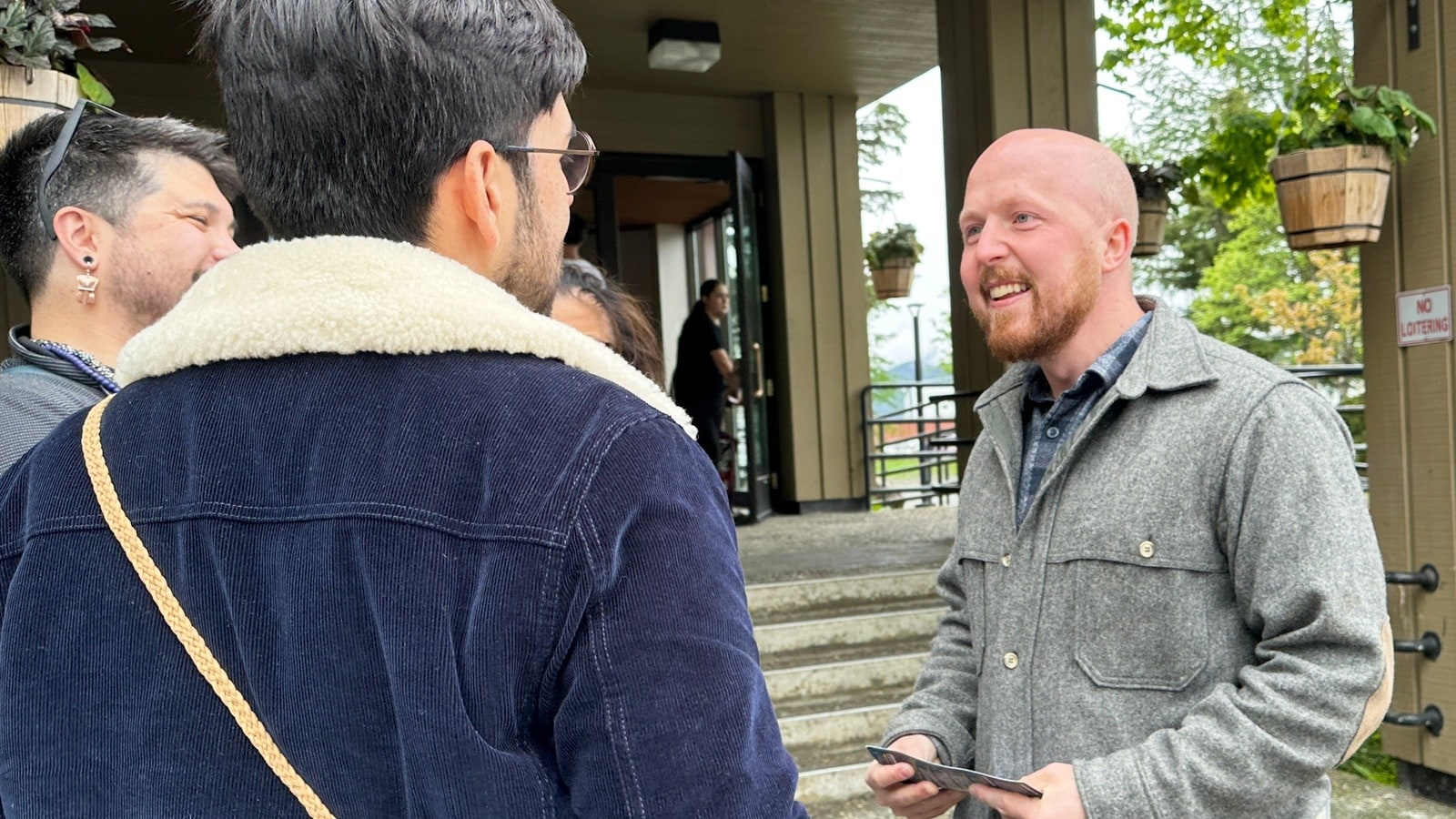
To understand Kreiss-Tomkins, you have to understand the specific political ecosystem that raised him. Born and raised in Sitka, a town accessible only by plane or boat, he first won a seat in the Alaska House of Representatives in 2012 at the age of twenty-three. While many young politicians arrive in state capitols eager to perform for cameras, Kreiss-Tomkins developed a reputation for something far less glamorous and infinitely more effective: relentless, granular persistence.
He was the guy who actually read the hundred-page budget appendices at two in the morning. He spent a decade representing a sprawling coastal district where ignoring a single village meant losing an election, learning to speak the fluent, unpretentious language of commercial fishermen, tribal leaders, small-business owners, and loggers. He earned national attention—and plenty of local scrutiny—for championing the protection of indigenous languages in state law, insisting that the linguistic heritage of Alaska’s First Peoples was not a museum artifact, but a living pillar of the state’s identity.
Critics, naturally, tried to paint him as a coastal progressive out of step with the interior’s resource-driven economy. They questioned his youth. They questioned whether a Democrat—any Democrat—could be trusted with the stewardship of an oil-and-gas state navigating a volatile global energy market.
And honestly? Those doubts were not irrational. Even among voters exhausted by decades of fiscal gridlock, handing the keys of the governor’s office to a Democrat felt like stepping onto thin ice in April. You know the water underneath is freezing, and you have no guarantee the surface will hold your weight.
But Kreiss-Tomkins did not run away from Alaska’s resource economy; he ran toward its reality. Instead of promising a painless utopia, he framed the campaign around competence, long-term math, and the radical notion that a state blessed with extraordinary natural wealth ought to be able to afford functioning ferries, competitive public schools, and reliable rural infrastructure.
The Invisible Shift
Think of Alaska’s political history over the past thirty years like a massive tidewater glacier. From the shore, a glacier looks eternal, motionless, an immovable wall of blue ice carved into the landscape. For twenty-eight years, that wall held. Even when Alaska adopted ranked-choice voting—a structural earthquake that eliminated closed party primaries and forced candidates to appeal beyond their ideological bases—the top executive office remained out of reach for Democrats.
Yet beneath the surface of any glacier, meltwater is constantly carving channels, eroding the base, changing the center of gravity inch by unseen inch.
The election of Mary Peltola to the U.S. House in 2022 was the first thunderous crack—a warning shot proving that a pragmatic, coalition-building Democrat who respected rural traditions could win statewide. Still, winning a congressional seat in a special election is one thing; claiming the governor’s mansion, with all its budgetary authority and executive power, is another beast entirely.
Throughout the campaign, Kreiss-Tomkins leaned heavily into the mechanics of ranked-choice voting, treating the ballot not as a winner-take-all bloodsport, but as a consensus engine. He didn't ask conservative voters in the Mat-Su Valley or Fairbanks to abandon their core beliefs. He simply asked to be their second choice—the steady, pragmatic alternative when the partisan extremes failed to deliver basic governance.
Consider what happens next when a campaign stops yelling at voters and starts listening to their grocery bills.
In town halls from Bethel to Kodiak, the conversations shifted away from culture-war talking points toward stubborn, practical questions. How do we lower energy costs in rural hubs where heating oil eats half a family’s winter paycheck? How do we recruit nurses and teachers to communities where housing is scarce and pension systems no longer compete with the Lower 48? How do we rebuild the marine highway so coastal towns aren't treated like afterthoughts?
By the time ballots were counted, the coalition that carried Kreiss-Tomkins across the finish line looked less like a traditional Democratic machine and more like a map of Alaska itself: urban educators in Anchorage, union tradespeople in Fairbanks, Alaska Native communities across the Yukon-Kuskokwim Delta, and weary independents in Southeast who simply wanted their boats back.
The Weight of the Keys
Victory, of course, solves nothing on its own. In fact, winning after a twenty-eight-year drought brings a terrifying clarity.
The ledger waiting on the governor’s desk in Juneau has not magically balanced itself overnight. Alaska still faces the brutal arithmetic of an economy tethered to global oil prices, an aging infrastructure network battered by permafrost thaw, and a legislature deeply divided over how to fund state services without gutting the Permanent Fund Dividend that thousands of low-income families rely on to survive the winter.
If Kreiss-Tomkins governs solely from the left, the coalition that elected him will fracture before his first legislative session adjourns. If he moves too timidly, he risks disappointing the very voters who braved the political unknown to give him a chance. Governing Alaska is less like steering a sleek yacht and more like piloting a heavy barge through a narrow channel in crosswinds—every correction takes miles to register, and oversteering puts you hard aground.
Yet something fundamental has broken open in the northernmost state.
For nearly three decades, political fatalism had settled over Alaska like winter fog. One side assumed victory was an inherited birthright; the other assumed defeat was an inescapable law of nature. Both assumptions bred complacency, and complacency bred stagnation.
Now, the ice has finally shifted.
Down on the docks in Sitka, the rain still falls sideways in November, and the mountains still disappear into the low gray clouds. The ferry still has to fight the swells of Chatham Strait, and the diesel generators in the bush still hum against the dark. Nothing about the harsh, indifferent beauty of the place has gotten any easier.
Except that, for the first time in a generation, the people standing on the shore are looking toward Juneau with a strange, unfamiliar sensation—not the certainty that everything will be fixed tomorrow, but the quiet, stubborn suspicion that tomorrow does not have to look exactly like yesterday.