Twelve miles.
On a Tuesday afternoon in Los Angeles, when the 405 South slows to a crawl of brake lights and exhaust fumes, twelve miles between Westwood and Exposition Park feels less like a commute and more like an existential border crossing. On one side sits the Rose Bowl, nestled in the Arroyo Seco, where the late autumn sun hits the San Gabriel Mountains like bruised gold. On the other sits the Los Angeles Memorial Coliseum, concrete and monolithic, haunted by the ghosts of Heisman trophies, Olympic torches, and dynasties that demanded perfection as a birthright. Meanwhile, you can explore other developments here: The Anatomy of a One-Goal Survival When Anaheim Refused to Blink Against Vancouver.
For decades, the arithmetic of those twelve miles was simple, brutal, and undisputed. One side collected banners. The other collected moral victories and excuses.
Then came a Tuesday night in November, a television broadcast out of Grapevine, Texas, and two numbers on a glowing graphic that turned the entire basin upside down. To see the complete picture, check out the excellent article by ESPN.
Eight. Twenty.
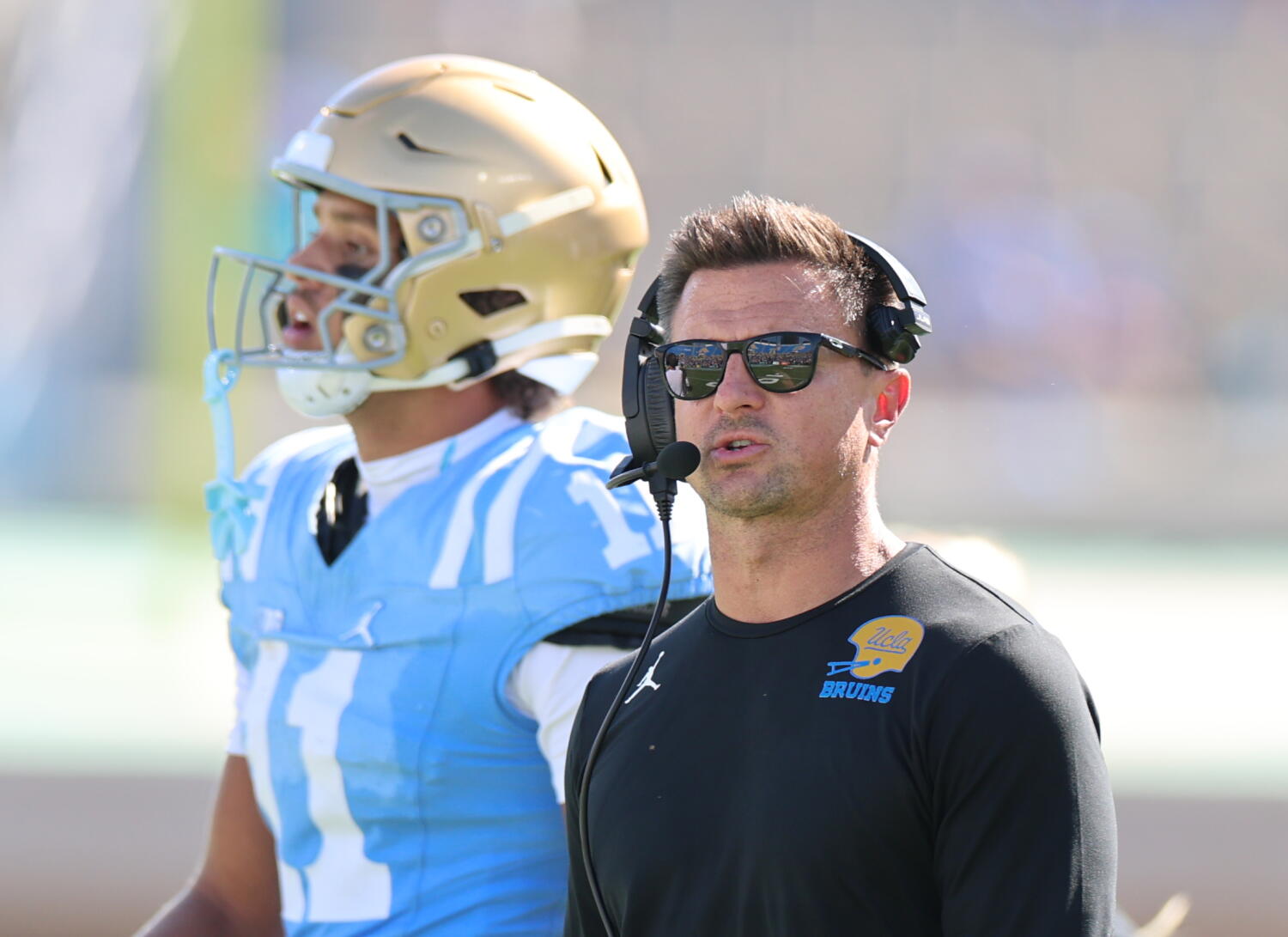
UCLA sat at No. 8 in the first College Football Playoff rankings of the season. USC—the blueblood, the Hollywood juggernaut, the program built on swagger and five-star recruits—sat twelve spots lower, clinging to the bottom edge of relevance at No. 20.
If you only read the wire reports, those two numbers look like a dry administrative update. A committee of athletic directors and former coaches met in a hotel conference room, ate catered lunches, argued over strength of schedule, and spat out a list of twenty-five teams. Nothing more.
They lied to you. Numbers in college football are never just numbers. They are oxygen, and they are arsenic.
The Architecture of a Ranking
To understand what happened when that graphic flashed across living rooms from Santa Monica to Pasadena, you have to understand how the College Football Playoff selection committee actually thinks—and why their first ranking of the year is the most psychological weapon in American sports.
Think of the first CFP ranking not as a final verdict, but as an X-ray taken mid-marathon. The committee isn't rewarding potential. They aren't reading recruiting star ratings from three years ago, and they certainly aren't swayed by brand logos stitched onto satin jackets. They are looking at two cold, unforgiving metrics: who you beat, and how badly you broke when tested.
Imagine a hypothetical senior offensive lineman sitting in a film room in Westwood—let’s call him Marcus. For three years, Marcus has heard the same joke at Thanksgiving dinner. He has watched recruits commit to the school across town because of private jets, NIL collectives dripping with entertainment money, and the promise of bright lights. Marcus spent three autumns blocking in front of half-empty sections at the Rose Bowl, listening to visiting fans out-cheer his own student section, wondering if the grind in the dark at 5:30 a.m. would ever translate into national respect.
When No. 8 appears next to his school's name, the film room doesn't erupt like a movie scene. It goes dead silent. Because Marcus knows what No. 8 actually means. It isn't a trophy. It is a target painted directly onto his chest.
In the architecture of the playoff, being ranked eighth in early November puts you inside the bubble—close enough to smell the semifinal turf, yet precarious enough that a single sloppy third quarter on a Friday night in the desert will vaporize everything you built. You are no longer the hunter sneaking up on the conference elite. You are the mark.
Now walk twelve miles south. Put yourself in the cleats of a hypothetical junior defensive back at USC—let's name him Devon. Devon didn't come to Los Angeles to be ranked twentieth. Nobody puts on cardinal and gold to celebrate squeaking into the top twenty-five. At USC, anything outside the top five feels like an insult, a public accusation that the standards have rotted from the inside out.
For Devon, seeing No. 20 isn't motivating. It is suffocating. Every missed tackle from September suddenly replays in high definition. Every fourth-quarter collapse, every opposing receiver running free across the middle of the field, every press conference where coaches promised adjustments that never materialized—all of it gets distilled into a single, humiliating numeral.
Twenty.
Why Los Angeles Never Learns How to Handle Success
I have spent enough autumns watching football in Southern California to know that this city has a peculiar, almost allergic reaction to sustained sports tension. New York feeds on misery. Tuscaloosa treats a single loss like a funeral. Columbus views every Saturday as a referendum on civic morality.
Los Angeles is different. Los Angeles has the beach, the canyons, a dozen premieres, and three other major sports franchises fighting for column inches. When a college football team in L.A. is mediocre, the city simply shrugs and goes to brunch. The apathy is polite, sunlit, and lethal.
That is why the juxtaposition of UCLA at No. 8 and USC at No. 20 matters so violently right now.
For years, the narrative around Westwood was one of terminal softness. Critics said you couldn't win at the highest level there—not with the stadium twenty-six miles from campus, not with academic admissions hurdles that narrowed the transfer portal, not with an administration that historically viewed football as a noisy inconvenience rather than an economic engine. Even when UCLA put together solid seasons, there was always an asterisk, a sense that they were fattening up on weak schedules before folding the moment a physical roster stepped off the bus.
This ranking strips away that easy cynicism. The committee doesn't hand out a top-eight spot out of charity. To land there in the inaugural poll of the season, a team has to survive the trench warfare of conference play, win away from home when the rhythm of the offense stalls, and prove that its defense can hold up when the fourth quarter turns into a street fight.
Meanwhile, across town, USC is experiencing the exact inverse of that journey.
There is a specific kind of hubris that infects programs built on offensive fireworks. You score forty points, the highlights dominate social media before midnight, your quarterback becomes a household name, and you start believing that defense is optional—a quaint relic from another era of the sport. It works until November. It works until you run into teams that don't care about your highlight reel, teams that lean on your defensive front for sixty minutes until your linebackers are gasping for air with their hands on their hips.
A No. 20 ranking is the committee's polite way of saying: We see the talent, we love the fireworks, and we do not trust you to stop a nosebleed when it counts.
The Invisible Economy of November
People talk about rankings as if they only affect fans arguing on message boards. That is naive. In modern college athletics, a twelve-spot gap in the first CFP rankings triggers an invisible economic and psychological earthquake that reshapes rosters for the next half-decade.
Consider what happens next in living rooms across California, Texas, and Florida.
A five-star edge rusher—a seventeen-year-old kid trying to decide where to entrust his body and his NFL draft stock—is watching that broadcast with his parents. For the last eight months, USC's pitch to him has been effortless: Come to the epicenter. Come where the legends live. Look at our trajectory.
Suddenly, the kid looks at the screen. The trajectory isn't pointing up. The team wearing powder blue and gold—the team his friends told him was the "little brother" in town—is sitting at No. 8, staring straight at a major bowl game or a playoff berth, while the powerhouse he was leaning toward is buried at No. 20, fighting just to stay relevant in its own division.
Recruiting isn't built on loyalty. It is built on momentum, and momentum is a fickle, merciless landlord.
And it doesn't stop with high school seniors. The transfer portal—that chaotic, free-agency bazaar that opens the moment the regular season ends—runs entirely on perceived proximity to a championship. Players with one year of eligibility left aren't looking for a five-year rebuild. They want a stage. They want national television windows in November where scouts are glued to every snap. Right now, Westwood is selling a proven contender. Exposition Park is selling a reclamation project.
I used to think rankings were harmless theater, a clever invention by television executives to manufacture drama during a slow Tuesday night in autumn. I was wrong. I didn't account for the human weight those numbers carry inside a locker room. When you tell twenty-year-old men that they are eighth in the country, they walk through the tunnel differently. Their pads pop louder in Tuesday practice. The backup running back studies his blitz pickups ten minutes longer because he realizes his snap count might decide a New Year's Six bowl bid.
Conversely, when you tell a roster that entered the season with national championship aspirations that they are twentieth, doubt creeps into the huddle like cold fog off the Pacific. Players start pressing. A quarterback holds the ball half a second too long, trying to force a deep shot to erase a deficit in one play instead of taking the checkdown. A safety cheats up on a play-action fake, desperate to make a splash play, and gives up a sixty-yard touchdown over the top.
Twenty doesn't just reflect failure. Twenty manufactures it.
The Illusion of Safety
Here is the trap, though—and anyone who has watched college football long enough knows how viciously it snaps shut.
The first College Football Playoff ranking is a mirage.
History is littered with teams that sat inside the top eight in early November, popped champagne in their heads, and ended up playing in a mid-tier bowl game in El Paso by Christmas. Look back at the archives of the playoff era: the committee's initial poll is notoriously volatile because November is designed to destroy contenders.
In September, you play non-conference tune-ups against overmatched rosters. In October, you find your rhythm. In November, everybody is hurt.
Your starting left tackle is playing with a torn labrum taped down so tight he can barely lift his arm above his shoulder. Your middle linebacker is taking painkillers just to get through warmups. The weather turns, the scouting reports are exhaustive—opposing coordinators have nine games of film on every tendency, every cadence, every blitz package you run—and every opponent left on your schedule would love nothing more than to ruin your season.
For UCLA, sitting at No. 8 means the margin for error has shrunk to the width of a razor blade. They do not have the blueblood cushion. If Alabama or Ohio State loses a tight road game in November, the committee tends to squint, talk about "quality losses," and keep them in the conversation. If UCLA stumbles, the skepticism that lingered over the program for decades will rush back in like water through a cracked hull. Critics will immediately nod their heads and say, See? We knew it wouldn't last.
And what about USC at No. 20?
Being counted out early has a strange, liberating chemistry of its own. When the pressure of perfection evaporates, teams sometimes remember how to play loose. Nobody expects the twentieth-ranked team in the country to crash the playoff. The national pundits move on to arguing about the SEC and the Big Ten. The cameras leave town. In that sudden quiet, a proud program with elite athletes has a binary choice: fracture into finger-pointing and transfer announcements, or turn November into a scorched-earth revenge tour.
If USC wins out—if they tear through the back half of their schedule and knock off the very rivals ranked ahead of them—that No. 20 becomes a footnote, an early-season embarrassment erased by late-season violence.
What Happens When They Collide
You cannot talk about these two rankings in isolation, because in Los Angeles, everything eventually collapses inward toward a single Saturday.
The Crosstown Showdown.
For most of the last twenty years, that game has been an asymmetric war. Even when UCLA pulled off an upset—like the famous 13-9 stunner in 2006 that ripped the national title game right out of USC's hands—it felt like an insurgency, a scrappy underdog ambushing an empire.
Not this time.
Think about what the stadium will feel like when an eighth-ranked UCLA squad steps onto the grass against a twentieth-ranked USC team fighting for its dignity. The usual script is inverted. The pressure—the suffocating, stomach-churning weight of expectations—sits squarely on the shoulders of the Bruins. Every possession carries playoff implications. Every third-down conversion echoes across the national landscape.
Meanwhile, USC gets to play the role it has historically despised: the spoiler. The team with nothing left to protect except pride, looking across the line of scrimmage at a rival wearing the crown they believe belongs in their own trophy case.
I think back to a conversation I once had with a former Pac-10 linebacker who played in four of those rivalry games in the late nineties. I asked him what the difference was between playing USC when they were ranked top five versus playing them when they were down. He laughed—a short, humorless sound—and shook his head.
"When they're top five," he told me, "they expect you to quit by halftime. If you hit them in the mouth in the third quarter, they get confused. When they're ranked twenty? They're angry. They're embarrassed. And an embarrassed five-star athlete is the most dangerous animal on a football field."
The Mirror on the 405
Strip away the television graphics, the committee's talking points, and the endless debate shows screaming about strength of schedule, and what you are left with is a story about identity.
Los Angeles is a city obsessed with status. It measures worth in box office openings, zip codes, velvet ropes, and relevance. College football in this town has always mirrored that obsession. For generations, USC was the A-list star who never had to audition, and UCLA was the talented character actor waiting patiently in the lobby for someone to notice the work.
That Tuesday night ranking didn't just rearrange a top-twenty-five list. It held up a mirror to both programs and forced them to confront who they actually are when the hype is stripped away.
Westwood earned its seat at the adult table not through flash, not through press clippings, and not through nostalgia, but through discipline, physicality, and winning the ugly games nobody wants to watch on Sunday morning. Exposition Park got a cold, undeniable bill for years of assuming that talent alone would always bail them out when the fourth quarter got heavy.
Somewhere right now, in a weight room just off Sunset Boulevard, a linemen's sled is slamming against turf with a little extra violence because eight feels too close to four to let up now. Twelve miles south, under the shadows of the Coliseum peristyle, a defensive unit is staring at film of its worst mistakes, trying to figure out how to wash the taste of twenty out of their mouths before Saturday arrives.
The 405 is still gridlocked. The distance between the two campuses hasn't shrunk by a single inch. Yet for the first time in a generation, the power in Los Angeles no longer flows downhill toward the Coliseum—it climbs the hill into Westwood, carried on the backs of a team that finally stopped waiting for permission to matter.