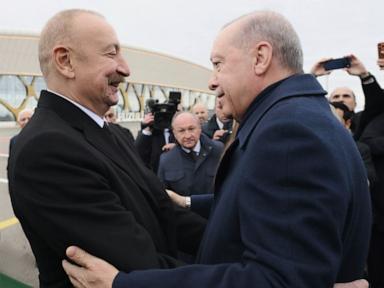
The geopolitical commentariat loves a good breakup rumor. Every time Ankara and Baku disagree on a transit tariff, a diplomatic appointment, or the pacing of normalization talks with Yerevan, Western analysts sprint to their keyboards to declare the death of "One Nation, Two States."
They are reading the tea leaves backward.
When Turkey and Azerbaijan publicly deny rumors of a fraying relationship, the lazy consensus in foreign policy circles is to nod knowingly and whisper, "Where there is smoke, there is fire." The assumption is that official denials are merely band-aids slapped over a bleeding, fractured alliance.
That read is fundamentally broken. It confuses tactical friction with strategic divergence. In reality, the friction we see between Recep Tayyip Erdoğan and Ilham Aliyev is not a sign of an alliance falling apart; it is the inevitable byproduct of an alliance that has become so deeply integrated, so structurally locked in, that the two countries no longer need to fake polite diplomatic consensus.
Brothers fight over who drives the car. Strangers politely agree on the route while planning to rob each other at the next rest stop.
The Myth of the Monolith
To understand why the "fraying alliance" narrative is pure clickbait, you first have to dismantle the premise that allies are supposed to agree on everything. Mainstream reporting treats the Turkey-Azerbaijan relationship like a fragile glass ornament. If a crack appears—say, over Azerbaijan’s deepening ties with Israel while Ankara escalates its rhetoric against Tel Aviv, or Baku’s frustration with Turkey’s backchannel diplomacy with Armenia—analysts treat it as an existential crisis.
I have spent years watching diplomatic corps and energy conglomerates misprice geopolitical risk in the South Caucasus because they rely on press-release sentiment rather than infrastructure reality. They look at diverging rhetoric on Gaza and assume the Baku-Tbilisi-Ceyhan pipeline is suddenly at risk.
Let’s be brutally clear about the mechanics of statecraft. Rhetoric is cheap. Steel, concrete, and fiber-optic cables are expensive.
When two states share a military command structure, integrate their defense industries, and rely on the exact same energy corridors to fund their national budgets, they do not break up over a difference of opinion in foreign policy. They compartmentalize.
Where the Friction Actually Comes From
If the alliance isn't dying, why do the rumors keep surfacing? Because the power dynamic between Ankara and Baku has permanently shifted, and neither the media nor the old-guard diplomats have updated their mental models.
For three decades after the collapse of the Soviet Union, Turkey was the undisputed big brother. Ankara had the NATO membership, the massive economy, the regional clout, and the military hardware. Azerbaijan was the junior partner, heavily dependent on Turkish diplomatic cover while trying to manage its frozen conflict in Nagorno-Karabakh.
The 2020 Second Karabakh War and the decisive 2023 offensive shattered that hierarchy.
Today, Azerbaijan is no longer a supplicant asking for favors. Baku sits on massive sovereign wealth, controls the critical transit arteries of the Middle Corridor connecting China to Europe, and holds absolute leverage over the geopolitical future of the South Caucasus. Meanwhile, Turkey has spent the last several years battling punishing inflation, currency devaluation, and severe capital flight.
Suddenly, SOCAR—Azerbaijan’s state oil company—is one of the largest foreign direct investors in Turkey. The STAR Refinery in Izmir, built by SOCAR, is a critical pillar of Turkey’s energy security.
When the junior partner becomes the banker, the tone of the conversation changes. Baku now pushes back when Ankara moves too fast on opening the Turkish-Armenian border without securing Baku's maximalist demands on the Zangezur corridor. Ankara pushes back when Baku demands transit terms that squeeze Turkish logistics firms.
This is not a divorce. It is a corporate merger where two alpha executives are arguing over equity splits while locking out every competitor in the market.
The Realpolitik of "Compartmentalization"
Look at the most cited "wedge issue" between the two nations: Israel.
Western pundits love pointing out the glaring contradiction. Turkey has severed trade ties with Israel, recalled its ambassador, and positioned itself as the loudest state-level critic of Israeli military operations. Simultaneously, Azerbaijan maintains a thriving strategic partnership with Israel, supplying roughly forty percent of Israel's crude oil imports while purchasing advanced Israeli drones, missile defense systems, and intelligence tech.
On paper, this looks like an irreconcilable split. In practice, it is a masterclass in geopolitical hedging.
Imagine a scenario where Azerbaijan bowed to Turkish public pressure and cut ties with Israel. Baku would immediately lose its primary supplier of high-end military hardware, alienate a key diplomatic backer in Washington, and hand Iran—Azerbaijan's hostile southern neighbor—a massive strategic victory.
Ankara knows this. Turkish intelligence and military planners are not naive. They understand that a militarily strong, Israeli-armed Azerbaijan acts as a direct counterweight to Iranian influence on Turkey’s eastern flank. Turkey gets to play the ideological champion of the Muslim world for its domestic base, while its closest ally maintains a backchannel to Tel Aviv and Washington that Ankara can quietly utilize when necessary.
If you think Erdoğan and Aliyev haven't coordinated the boundaries of this divergence behind closed doors, you are failing Geopolitics 101.
The Questions You Should Actually Be Asking
When analysts ask, "Are Turkey and Azerbaijan drifting apart?" they are asking the wrong question. The answer is an obvious no, proven by the Shusha Declaration of 2021—a formal treaty that elevated their relationship to an official military alliance, committing each to come to the other's defense in the event of third-party aggression. You do not sign a mutual defense pact if you are planning an exit strategy.
Here are the questions that actually matter for anyone tracking Eurasia, energy markets, or regional security:
1. Who sets the pace for Armenian normalization?
This is the real point of friction. Turkey wants the Armenian border open to boost trade in its impoverished eastern provinces and to score diplomatic points with Washington and Brussels. Azerbaijan views the closed Turkish-Armenian border as its single strongest piece of leverage to force Yerevan into signing a permanent peace treaty on Baku's terms. The tension here is real, and Baku currently holds the veto power. Ankara will not sacrifice its strategic depth in the Caspian for a photo-op in Yerevan.
2. How will they divide the spoils of the Middle Corridor?
With Russian transit routes sanctioned and Red Sea shipping lanes vulnerable, the Trans-Caspian International Transport Route—the Middle Corridor—is the hottest real estate in global logistics. Both Turkey and Azerbaijan want to be the primary tollbooth between Asia and Europe. They are currently haggling over customs harmonization, rail tariffs, and port capacities. Expect fierce bureaucratic infighting, followed by joint ventures that shut out Russian and Iranian alternatives.
3. What happens when the current leaders leave the stage?
This is the genuine vulnerability of the alliance, and the one area where the contrarian thesis faces real risk. The modern Ankara-Baku axis is heavily personalized. It runs through the direct, transactional chemistry between Erdoğan and Aliyev. Both leaders govern through centralized executive power, bypassing traditional foreign ministry bureaucracies when they want deals done fast.
The Downside of the "Unbreakable" Bond
To pretend there are zero risks in this relationship would be just as dishonest as claiming it is collapsing. The danger isn't that Turkey and Azerbaijan will break up; the danger is over-extension and entrapment.
Because the two nations are now bound by mutual defense guarantees and deeply intertwined economies, neither can easily walk away from a crisis started by the other.
If Baku decides to escalate militarily against Armenia to force open a land corridor to its Nakhchivan exclave, Ankara gets dragged into a diplomatic—and potentially military—standoff with the West and Iran, regardless of whether Turkish generals think the timing is right. Conversely, if Turkey’s economic instability worsens or Ankara gets pulled into a wider Middle Eastern conflict, Azerbaijan’s massive capital investments inside Turkey are directly exposed to the fallout.
They are strapped to the same rocket. If it reaches orbit, they both own the sky. If it blows up on the launchpad, neither walks away unscathed.
Stop Reading Press Releases, Start Tracking Pipelines
The next time a headline warns you about "strains" in the Turkey-Azerbaijan relationship because a mid-level diplomat made a snippy comment or a joint statement was delayed by forty-eight hours, ignore it.
Look at the defense budgets instead. Look at the joint military exercises happening on the Iranian border. Look at the billions of dollars flowing from Baku into Turkish petrochemicals, ports, and real estate. Look at the Turkic Council—now the Organization of Turkic States—which Ankara and Baku are actively using to project soft and hard power straight into Central Asia, carving out a sphere of influence right in Russia's traditional backyard.
Alliances do not die because leaders argue over tactics. Alliances die when shared interests evaporate.
Turkey needs Azerbaijani gas, Azerbaijani capital, and the geographic bridge Azerbaijan provides to the Turkic world. Azerbaijan needs Turkish military doctrine, Turkish drone technology, and the geopolitical weight of an eighty-five-million-strong regional powerhouse to keep Russia and Iran at bay.
Neither side has a viable alternative. Until someone invents a way to redraw the map of Eurasia, Ankara and Baku are stuck with each other—and they know it.


