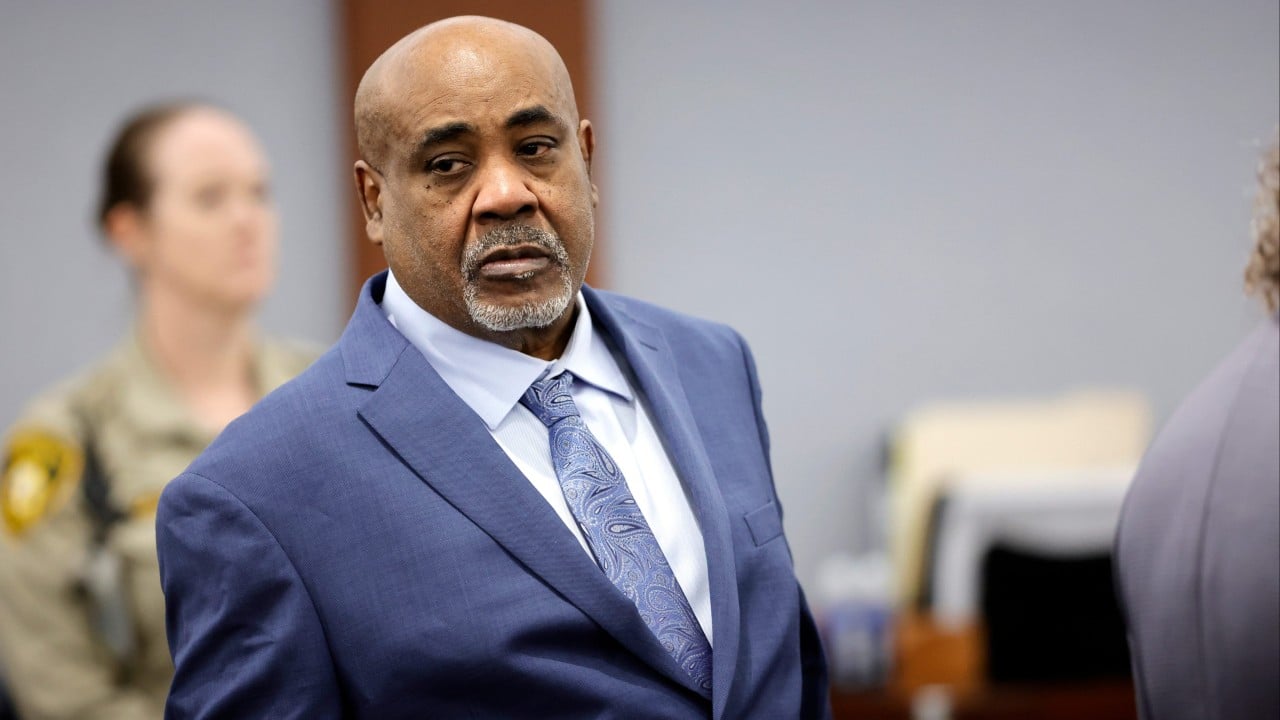
We love a courtroom drama. We want the gavel, the perp walk, the closure. Every mainstream headline about the Duane Davis trial screams about revenge, retaliation, and street justice.
It is a comfortable narrative. It reduces a structural catastrophe into a Hollywood Western.
Stop buying the lazy consensus.
The media wants you to believe that a aging street figure standing trial decades later equals justice. It does not. It is theater. It is an expensive, state-sanctioned distraction designed to make us ignore the complete institutional failure that engineered the death of Tupac Shakur in the first place.
If you think a murder trial in 2024 or later solves the systematic rot of 1996 Los Angeles and Las Vegas law enforcement, you are asking the wrong question entirely. You are asking who pulled the trigger while ignoring why the weapon was loaded, aimed, and handed to the shooter by a culture of absolute indifference.
The Myth Of The Lone Act
The standard narrative frames the September 1996 shooting on the Las Vegas Strip as a spontaneous eruption of gang beef. A scuffle at the MGM Grand involving Orlando Anderson. A retaliation plot. A drive-by shooting.
Clean. Linear. Safe for television.
It is also historically and practically absurd.
I have spent decades watching high-stakes security operations, media conglomerates, and municipal agencies protect their flanks. When a multi-million-dollar cultural asset like Death Row Records operates in an environment as volatile as mid-nineties Las Vegas, nothing happens in a vacuum.
Let us look at the data that mainstream reports gloss over. Las Vegas Metropolitan Police Department officers were feet away from the scene of the initial casino brawl. Security protocols that should have been ironclad were bypassed. The movement of high-profile targets without adequate protective details was normalized because the entertainment industry treated human life as expendable collateral for record sales.
The trial of Duane Davis focuses intensely on verbal admissions made on podcasts and documentaries. Prosecutors are relying on confessions wrapped in bravado, treating them like smoking guns. But a confession to a crime does not fix a broken systemic apparatus. It just gives the state a body to sacrifice at the altar of public relations.
"We are treating a symptom with a twenty-year-old band-aid and calling it surgery."
The Economics Of Exploitation
Why does this trial command wall-to-wall coverage? Because outrage monetizes.
Every time a headline uses words like "revenge," "gang war," or "infamous murder," cash registers ring across media platforms. The entertainment industry made a fortune off Tupac Shakur dead that it never could have generated with him alive. Martyrdom is a profitable asset class.
Let us be brutally honest about the economics. In the mid-nineties, major record labels thrived on the manufactured friction between East Coast and West Coast factions. Executives fed the beast, fanned the flames, and cashed the checks while young Black men navigated a lethal matrix built by structural poverty and corporate voyeurism.
To focus solely on Duane Davis ordering a Glock is to absolve the corporate and municipal machinery that created an environment where a twenty-five-year-old icon could be hunted down on a major American thoroughfare without immediate intervention.
When you examine the trial transcripts, notice what is missing. There is very little discussion about why police response times were sluggish, why intelligence sharing between departments failed, or why the cultural normalization of violence was treated as entertainment rather than an emergency.
Dismantling The People Also Ask Fallacy
If you search for details on this case, the search engines feed you a steady diet of superficial queries: Who was in the car? What was the motive? How much did the gun cost?
These questions are traps. They keep you trapped in the weeds of true crime trivia while the macro-level failure escapes scrutiny.
- Did Duane Davis act alone? The state argues yes, organized through a local crew. The reality is that individual actors operate within ecosystems that encourage destruction. Focusing on the shooter ignores the ecosystem.
- Is this trial bringing closure? Closure is a marketing term. For the families involved, a court case decades later is an exhumation of trauma, not a resolution. True closure would require an honest reckoning with how law enforcement and media conglomerates enabled the violence of that era.
Imagine a scenario where we held corporate executives and municipal agencies to the same standard of accountability as street-level participants. The entire landscape of modern entertainment and media would shift overnight.
The Uncomfortable Truth About Street Justice
We must address the romanticization of retaliation. The media loves framing this trial through the lens of "revenge." It fits the stereotype of hip-hop culture as inherently self-destructive.
This is a lazy trope designed to mask institutional racism and incompetence.
When a corporate entity cuts corners on security, we call it a business decision. When young men in marginalized communities navigate a broken security landscape, the media calls it a war zone.
Duane Davis sitting in a courtroom does not vindicate the system. It validates the system's ability to sweep its own complicity under the rug. By putting an aging participant on trial for actions committed nearly thirty years ago, the justice system performs a magic trick: it looks busy while changing nothing about the conditions that made the murder possible.
What Real Accountability Looks Like
If we actually care about justice—rather than entertainment disguised as jurisprudence—we have to stop accepting courtroom verdicts as substitutes for systemic reform.
Actionable insight requires brutal honesty.
- Stop consuming trauma porn. When true crime coverage prioritizes sensational confessions over structural analysis, turn it off. Refuse to fund the re-traumatization of communities for clicks.
- Examine institutional failures. Demand transparency from municipal police departments regarding how high-profile threats are handled, both then and now.
The trial will end. A verdict will be read. The pundits will declare victory for the rule of law.
Do not fall for it. The real tragedy is not that a man is finally on trial. The tragedy is that it took thirty years of media circus to avoid asking the questions that actually matter.