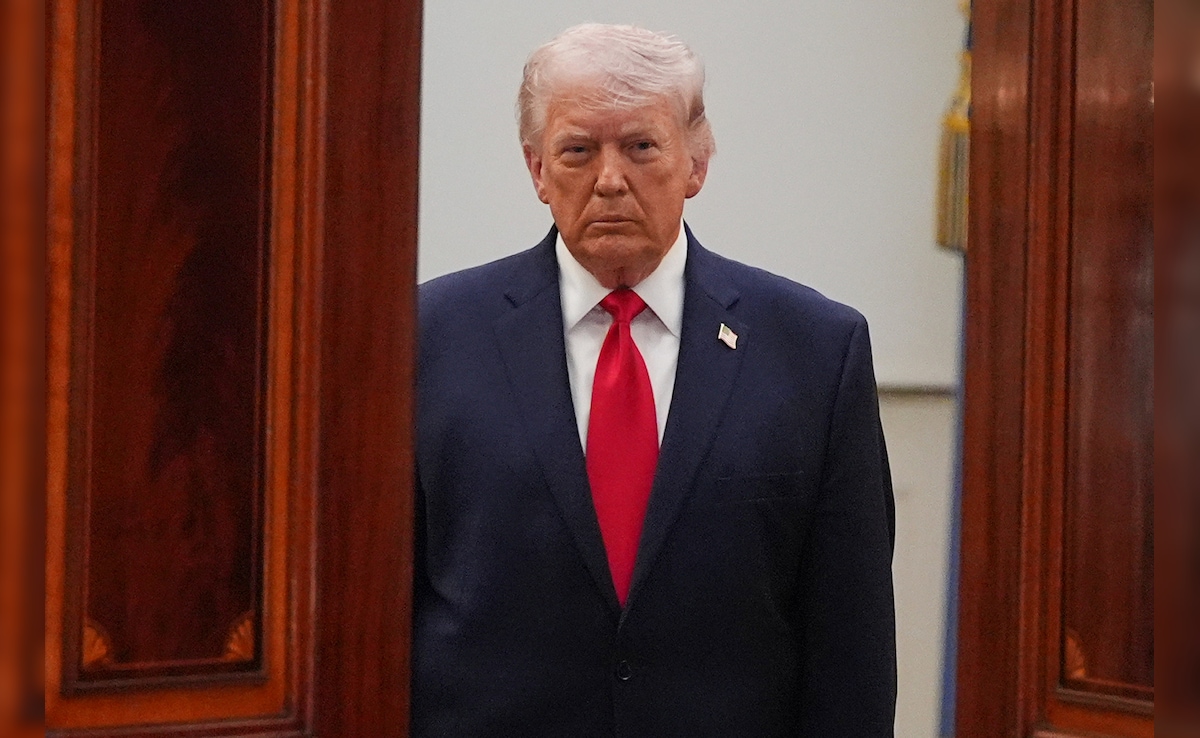
The media is reliably panicking over reports that Donald Trump is gathering his top national security team in the Oval Office to weigh military action against Iran. The mainstream narrative is set: the April ceasefire is on life support, Tehran rejected Washington’s draft agreement, the Strait of Hormuz remains an economic choke point, and an emergency meeting with JD Vance, Marco Rubio, and Pete Hegseth means we are on the precipice of a dramatic escalation.
It is a neat, cinematic storyline. It is also completely wrong.
If you believe these high-stakes White House meetings are actually about planning a massive, coordinated invasion or a decisive strike to finally end the 2026 Iran war, you are misreading the basic mechanics of how this administration operates. I have watched political theater pass for military strategy in Washington for years, and this is a textbook example.
The emergency meeting is not a prelude to a new war. It is a substitute for one.
The Flawed Premise of the "Sudden Escalation"
Mainstream commentators are treating Iran’s rejection of the U.S. proposal as a shocking diplomatic failure that forces Trump’s hand. They point to his aggressive rhetoric on Truth Social, where he warned that "the Clock is Ticking" and that Iran "better get moving, FAST," as proof of imminent action.
This view ignores the reality of what actually happened during Operation Midnight Hammer back in February. The United States and Israel already executed their high-intensity, decapitation-style campaign. They hit 75% of their targeted sites, eliminated top leadership including Ali Khamenei, and completely altered the geopolitical chessboard.
What is left to hit? The remaining 25% of infrastructure is deeply buried, highly fortified, or hidden in underground bunkers in Isfahan.
A high-profile meeting involving a Special Envoy like Steve Witkoff and Defense Secretary Pete Hegseth is not where you quietly map out highly sensitive, high-risk Special Forces operations to seize enriched uranium. If the administration were truly preparing an immediate, covert operation of that magnitude, the details would not be neatly fed to reporters via anonymous officials claiming Trump wants to "put them in their place a little bit."
The Leverage Illusion
The core misconception embedded in modern foreign policy reporting is that military force and diplomacy exist as a binary switch. The conventional press believes that when diplomacy fails, the military switch gets flipped.
In reality, the threat of restarting the bombing campaign is the only diplomatic card Trump has left to play, and he is playing it as loudly as possible because his options are profoundly limited.
Consider the current strategic bottleneck:
- The Strait of Hormuz Choke Point: Iran’s asymmetric naval strategy—using low-cost fast boats and sea mines—has successfully bottlenecked one-fifth of the global oil trade. Shipping companies are forced to negotiate individual passage, and global crude prices are sitting past $105 a barrel.
- Regional Resistance: "Project Freedom," the U.S. naval operation meant to escort oil tankers through the Strait, was paused because it lacks regional backing. America's primary Gulf ally, Saudi Arabia, explicitly refused to allow its airspace or military bases to be used for operations it deems escalatory.
- The Reconstitution Reality: Decades of observing regional conflicts show that entrenched regimes build resilient, decentralized command architectures. Even after devastating strikes, the means of military production remain. Iran retains the capability to reconstitute its drone and missile programs, meaning a return to bombing achieves diminishing marginal returns.
Trump is facing a complex stalemate, not a straightforward tactical problem. He needs a deal that looks like a total victory before his high-profile summit with Chinese President Xi Jinping in Beijing. He cannot walk into those meetings with global energy markets in chaos and a volatile war completely unresolved. The public theater of an "emergency military meeting" is designed to create a sense of inevitable destruction, forcing Tehran back to the negotiating table through sheer psychological pressure.
The Succession Vacuum
The media loves to debate whether the U.S. will pivot toward complete regime change. Trump himself publicly mused about supporting regime change earlier this year, but the administration has run into a wall of its own making.
By utilizing aggressive decapitation strikes, the U.S. and Israel eliminated the very pragmatic, institutional figures within the Iranian system who could have facilitated a stable transition—what insiders call the "Venezuela model" of leadership replacement.
Instead, the strikes triggered a consolidation of hardline power dominated by the Revolutionary Guards. There is no viable, organized domestic opposition ready to take the reins, and exiled figures lack the necessary internal backing to hold the state together.
The administration knows this. They are fully aware that total state collapse in Iran would create a massive power vacuum, destabilize the entire Middle East, and drag the U.S. into an indefinite, multi-trillion-dollar occupation. They do not want to govern Iran; they want Iran to stop blocking the Strait and surrender its uranium stockpiles.
The Strategic Reality
The true danger right now is not a carefully planned military invasion, but the inherent volatility of using brinkmanship as a primary diplomatic tool.
When you draw bright lines and declare that a ceasefire is on "massive life support," you leave yourself very little room to maneuver. If Tehran calls the bluff, the administration will be forced to launch symbolic, limited airstrikes to protect its credibility. Those strikes will not destroy Iran’s hidden nuclear architecture, but they will guarantee that the Strait of Hormuz remains locked down, sending oil prices even higher and damaging the global economy.
The upcoming meeting in the Oval Office is about managing this exact dilemma. It is a tactical huddle to figure out how to project maximum threat without accidentally triggering a prolonged, full-scale economic war that destroys the domestic economy.
Stop reading the headlines that treat every White House meeting as a countdown to World War III. The roaring from Washington isn't a sign that a new offensive is starting. It is the sound of an administration realizing that dropping bombs is a lot easier than cleaning up the geopolitical fallout.