You learned in fourth grade that if something drops 100% in price, it’s free. If it drops 110%, the store owes you money. But in the current White House, those rules don’t seem to apply. Donald Trump and Health Secretary Robert F. Kennedy Jr. are doubling down on a bizarre brand of "alternative math" that’s leaving economists and mathematicians staring at their calculators in disbelief.
This isn’t just a slip of the tongue. It’s a deliberate strategy. They’re claiming drug price reductions of 600%, 1,000%, and even 1,500%. If you’re wondering how a $600 prescription can be cut by 600% and still cost you $10 at the pharmacy, you’re not crazy. You just know how to use a decimal point. Meanwhile, you can find similar events here: The Digital Megaphone and the Erosion of Political Civility.
The 600 percent reduction that isn't
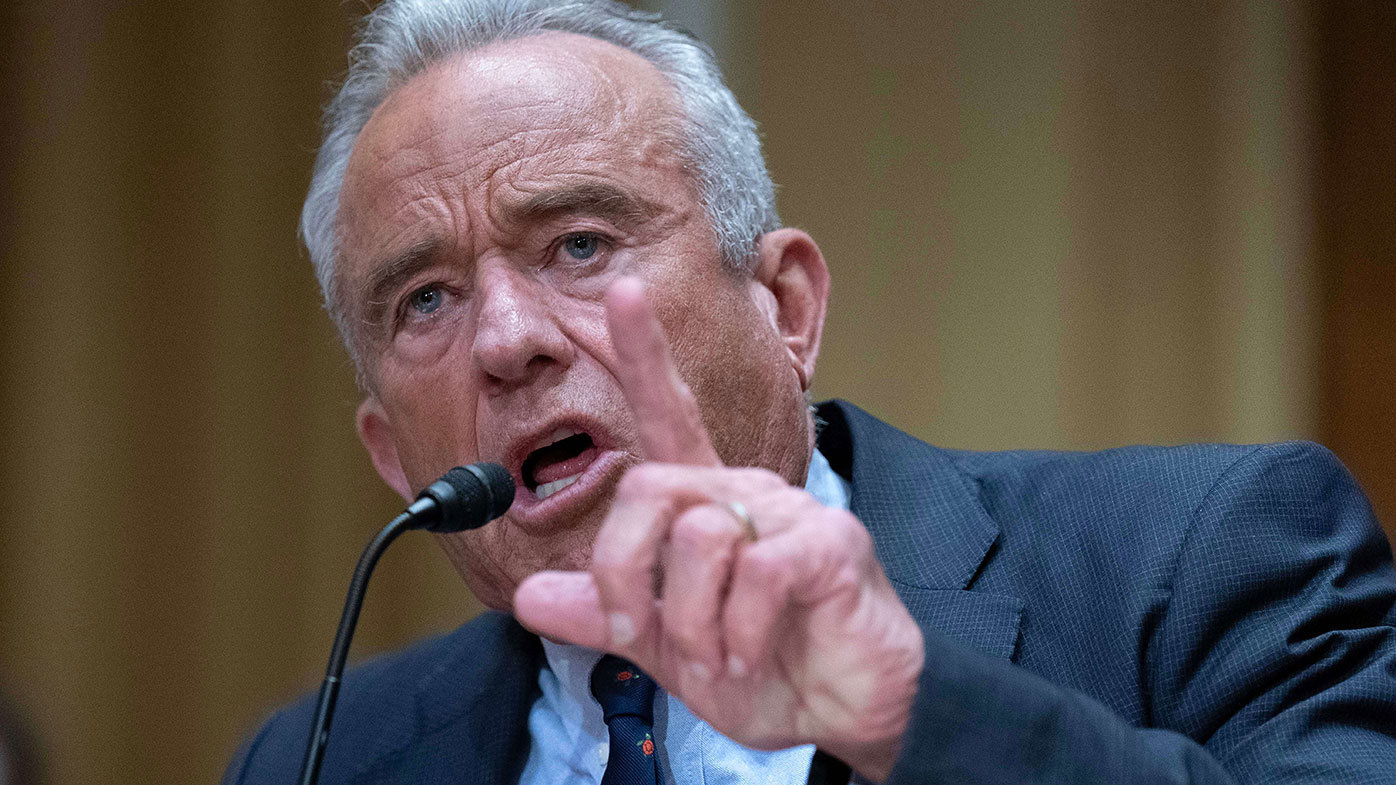
During a Senate Finance Committee hearing on April 22, 2026, Sen. Elizabeth Warren put RFK Jr. on the spot. She asked about the "TrumpRx" website, which lists massive discounts. Kennedy didn’t blink. He told the committee that if you take a drug that used to cost $600 and drop the price to $10, that’s a "600% reduction."
Let’s look at the actual math.
To find a percentage decrease, you take the amount of the drop ($590) and divide it by the original price ($600). To see the full picture, check out the recent report by BBC News.
$$\frac{600 - 10}{600} = 0.983$$
That’s a 98.3% reduction. It’s a huge discount, sure. But it’s not 600%. For a $600 drug to have a 600% reduction, the pharmaceutical company would have to give you the medicine for free and then hand you a check for $3,000.
RFK Jr. claims the President has a "different way of calculating." He argues that because the price rose by hundreds of percent in the past, "wiping out" those gains counts as a 600% savings. It sounds catchy in a stump speech. It’s just physically impossible in reality.
Why the White House is redefining arithmetic
Trump isn’t backing down. In an Oval Office event the day after the hearing, he defended the logic. He admitted he sometimes says "50% or 60%" because people understand it better, but insisted that "either way, it doesn't make any difference."
But it does matter. When you’re talking about the national debt or healthcare costs, precision isn't a luxury. It's the whole point. By using these inflated numbers, the administration is trying to manufacture a sense of victory that doesn't exist on the balance sheet.
Think about the Bitcoin proposal. Trump has floated the idea of "handing them a little crypto check" to wipe out $35 trillion in national debt. The theory is that the government could use the appreciation of a Bitcoin reserve to pay off creditors.
The math there is just as shaky. Bitcoin is a speculative asset. To pay off $35 trillion with Bitcoin, the coin would need to reach prices that would essentially collapse the value of the US dollar itself. You can't just wish away debt with a digital token and a "trust me" attitude.
The danger of alternative facts in your wallet
When politicians mess with the definitions of words, it’s annoying. When they mess with the definitions of numbers, it’s dangerous.
- Social Security: If the administration uses this "Trump math" to calculate cost-of-living adjustments, your check might not cover your groceries.
- Healthcare: If "1,000% savings" actually means "you still pay $50," families can't budget effectively.
- National Credit: Global markets rely on the US Treasury being the "adult in the room." If the Treasury starts using "alternative math" to report debt, interest rates will skyrocket.
We’re seeing a shift where the feeling of a "big win" is more important than the actual data. If it feels like a 600% win, they’ll call it that, even if your bank account says otherwise.
How to spot the math trap
Don't get distracted by the big percentages. Whenever you hear a claim about a price "reduction" over 100%, stop. It's a red flag.
- Look for the dollar amount: Ignore the percentage and ask what the actual out-of-pocket cost is today versus last year.
- Check the baseline: Politicians love to compare today's prices to a hypothetical "what if" scenario instead of what you actually paid yesterday.
- Verify the math: Use a simple calculator. If the "reduction" is larger than the original price, someone is lying to you.
The administration is betting that you won't do the math. They're counting on the "600%" sounding more impressive than "98%." While 98% is a great number, it’s not a "miracle." And in this political climate, only miracles will do. Keep your eyes on the actual dollars leaving your pocket, not the impossible percentages being touted from the podium.