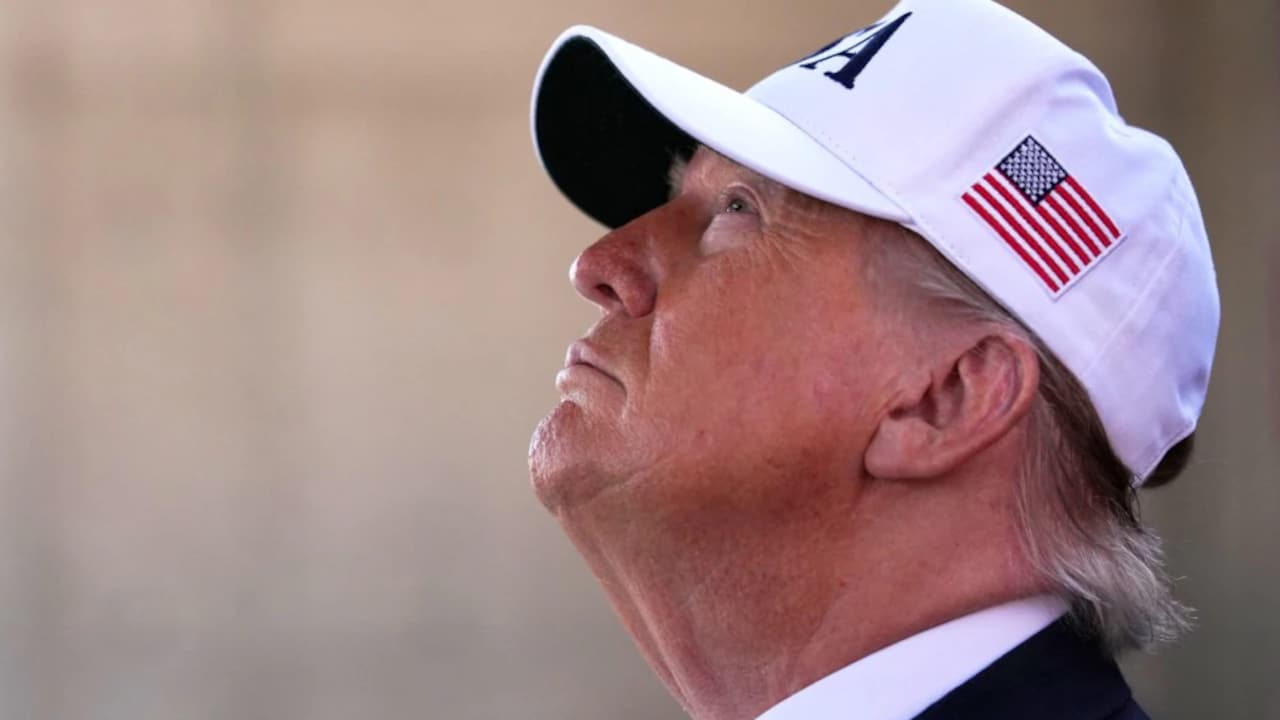
For nearly a decade, Donald Trump operated under a completely different set of political gravity than every other American politician. Scandals that would have ended a normal career in forty-eight hours barely dented his approval ratings. Impeachments became fundraising goldmines. Indictments turned into rallying cries. You watched it happen in real time, and honestly, it started to feel like traditional political consequences simply didn't apply to him anymore.
Then the 2026 midterm elections arrived, and the bill finally came due.
When voters went to the polls in November 2026, they delivered a blunt rebuke that broke Trump's streak of political invincibility. While his core base stayed fiercely loyal, the broader electorate—specifically suburban independents, cost-conscious working-class voters, and younger demographics—rejected his handpicked candidates and punished the Republican Party for two years of chaotic governance. If you want to understand why the Teflon finally wore off, you have to look past the cable news shouting matches and examine the cold, hard math of midterm turnouts and kitchen-table economics.
The Myth of Permanent Political Immunity
Political analysts spent years calling Trump a Teflon president, borrowing the nickname once used for Ronald Reagan. For a long time, the label fit. From the Access Hollywood tape in 2016 to the fallout of January 6, 2021, and his subsequent felony conviction in New York, Trump survived controversies that would have vaporized any conventional campaign.
Why did that happen? Because in primary elections and high-turnout presidential races, Trump's ability to dominate media oxygen and mobilize low-propensity voters outweighed his liabilities. He turned every legal or political attack into a personal grievance shared by millions of his supporters. When critics attacked him, his voters felt attacked too.
Midterm elections operate on entirely different mechanics.
Without Trump's name physically printed at the top of the ballot, that magical turnout machine sputters. Political scientists like Alan Abramowitz and data analysts at the Pew Research Center have documented this pattern for decades. Midterm electorates are older, slightly more educated, and far more focused on tangible policy outcomes than on cultural warfare. When Trump isn't personally running, his ability to transfer his unique political immunity onto down-ballot surrogates drops off a cliff.
We saw early warning signs of this back in 2018 and 2022. In 2018, Democrats swept the House by 41 seats. In 2022, a widely predicted "red wave" fizzled out because Trump-endorsed candidates in swing states like Pennsylvania, Arizona, and Georgia alienated moderate voters. By November 2026, with Trump back in the White House and Republicans holding full control of Washington, voters had a direct target for their frustration.
How the 2026 Midterms Broke the Streak
When a party controls the White House, the House, and the Senate, they own every single problem in the country. There's nobody left to blame.
During the first two years of Trump's second term, his administration pursued an aggressive agenda centered on sweeping tariffs, mass deportation operations, and dramatic shakeups across federal agencies. While those moves thrilled his die-hard supporters at rallies, they created immediate friction in the real world.
Tariffs and the Grocery Bill Reality Check
You can't message your way around a receipt at the supermarket. Trump campaigned in 2024 on bringing down prices on day one, tapping into genuine voter anger over post-pandemic inflation. Once in office, though, his reliance on broad import tariffs drove up costs on everyday goods, electronics, and building materials.
Economists from institutions like the Peterson Institute for International Economics warned early on that aggressive tariff regimes act as a regressive tax on American consumers. Voters didn't need an economics degree to feel the pinch. By the autumn of 2026, independent voters who had backed Trump in 2024 purely out of frustration with the cost of living realized their wallets weren't getting any thicker. They punished GOP incumbents in suburban districts from Pennsylvania to California.
The Exhaustion Factor Returns
There's also a psychological toll that comes with constant political turbulence. I've tracked voter sentiment across multiple election cycles, and one of the most underrated forces in American politics isn't ideology—it's exhaustion.
Swing voters in places like Wisconsin, Michigan, and North Carolina don't wake up every morning excited about partisan warfare. They want stability. They want predictable governance. When headlines are dominated daily by executive branch firings, constitutional standoffs, and erratic policy reversals, moderate voters eventually reach a breaking point. In 2026, that fatigue translated directly into Democratic enthusiasm and Republican stay-at-home apathy.
What Most People Get Wrong About Trump's Base
A common mistake commentators make after a tough election for Republicans is assuming Trump's base is abandoning him. That's completely false.
If you look at exit polling and county-level precinct data from November 2026, deep-red rural counties stayed overwhelmingly loyal to Trump and the GOP. His floor of support—roughly 40 to 43 percent of the electorate—remains rock solid. He still commands the Republican Party with an iron grip, and no GOP primary challenger can touch him.
The real shift happened on the margins. You don't lose a midterm election because your biggest fans suddenly hate you. You lose because the middle ten percent of the country decides they've had enough.
- Suburban women swung sharply against Republican congressional candidates, driven by a mix of economic anxiety, healthcare concerns, and frustration with constant political chaos.
- Independent voters, who broke toward Trump in 2024 over inflation and border security, flipped back toward Democrats by double-digit margins in key battleground states.
- Low-propensity Trump voters, the folks who only show up when Trump himself is on the ticket, simply stayed on the couch.
That combination is lethal in a midterm year. You can't win swing districts in Ohio, Virginia, or New Jersey with rural turnout alone.
Why Down-Ballot Candidates Couldn't Copy the Playbook
For years, ambitious Republicans tried to mimic Trump's style, thinking his confrontational rhetoric was the secret sauce to winning elections. They quickly learned a brutal lesson in political physics.
Trump is a singular media figure with decades of celebrity branding behind him. When an ordinary congressman or Senate candidate tries to copy his insults, his grievances, or his defiance of democratic norms, it doesn't come across as authentic strength. It comes across as weird and unhinged.
During the 2026 cycle, several Republican challengers in winnable Senate and House races ran campaigns built entirely around loyalty to Trump rather than local issues. Instead of talking about infrastructure, local jobs, or healthcare costs, they focused on settling political scores. Swing voters rejected them flatly. Meanwhile, the few Republicans who survived tough districts did so by keeping a careful distance from Washington drama and focusing relentlessly on local constituent services.
The Structural Consequences of Losing Congress
Losing control of Congress in a midterm isn't just a symbolic bruise for a sitting president. It fundamentally alters the final two years of a presidency.
First, the legislative agenda grinds to a halt. Major tax reforms, deregulatory bills, and conservative judicial appointments become infinitely harder—or outright impossible—to push through without Democratic cooperation. Trump can still use executive orders, sure, but executive actions are fragile, easily tied up in federal courts, and reversible by the next administration.
Second, the subpoena power flips overnight. When Democrats take the gavel in House committees, oversight hearings begin immediately. Administration officials spend half their week preparing for congressional testimony instead of running their agencies. Investigations into conflicts of interest, agency dismantlings, and executive branch overreach dominate the news cycle, putting the White House permanently on the defensive.
Third, and perhaps most importantly for Trump personally, a midterm defeat shatters the aura of inevitability.
In Washington, power is largely about perception. Lawmakers fall in line behind a president because they fear his wrath or believe he can carry them to victory. Once politicians see that a president's endorsement can't save them—or worse, actually hurts them in a general election—their self-preservation instincts kick in. Senators up for reelection in 2028 start hedging their bets. Donors begin looking toward the next generation of leaders.
How to Read the Political Fallout Going Forward
If you're trying to make sense of where American politics goes from here, stop watching daily cable news panels and start tracking the actual levers of power.
Pay close attention to how vulnerable Republican senators behave over the next six months. Watch the voting records of GOP lawmakers from purple states like Maine, North Carolina, and Wisconsin. When they start breaking with the White House on budget bills or cabinet nominations, you'll know the spell has truly broken.
Keep an eye on economic indicators tied directly to trade policy, particularly consumer price index reports and manufacturing data in the Midwest. If tariff-driven inflation persists into 2027, the political damage for the administration will compound rapidly ahead of the next presidential cycle.
Track special elections and state-level gubernatorial races in 2027. Off-year elections in states like Kentucky, Louisiana, and Virginia serve as the ultimate early warning radar for whether the 2026 midterm backlash was a temporary correction or a lasting realignment.
Donald Trump built an unprecedented political movement by breaking every rule in the book, and for years, the rules bent to accommodate him. The 2026 midterms proved that even the most disruptive figure in modern American history can't outrun the basic laws of voter accountability forever.


