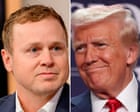
Donald Trump just tossed a massive political grenade into the Los Angeles mayoral race, and it’s blowing up right in Spencer Pratt’s face.
On Wednesday, Trump smiled for reporters and dropped what he clearly thought was a helpful nod for The Hills reality star turned politician. Trump called Pratt a "character," admitted he doesn't know him personally, but added, "I heard he's a big MAGA person. I'd like to see him do well."
For any Republican running in a red district, that's pure gold. For Spencer Pratt, currently trying to pull off the impossible in one of the bluest cities in America, it's a poison pill.
If you're wondering why a simple quote matters so much, you don't understand the brutal math of LA politics. Local elections here are nonpartisan, but registration data doesn't lie. Registered Republicans make up barely 20% of the city's voters. To win the mayor's office, you absolutely must win over moderate Democrats and independent voters who would rather do almost anything else than vote for someone carrying the MAGA banner.
The Deadly Math of the LA Mayoral Race
Pratt entered this race on January 7, 2026, exactly one year after losing his Pacific Palisades home in the devastating 2025 wildfires. He channelled real, justifiable rage. He blamed incumbent Mayor Karen Bass and the Department of Water and Power for the slow emergency response and the bureaucratic nightmare of rebuilding.
It worked. He didn't just sit on the sidelines selling crystal jewelry through his Pratt Daddy business. He wrote a memoir, hit the pavement, and watched his poll numbers climb from 10% in March to a shocking 22% in May. He managed to push progressive City Councilmember Nithya Raman down into third place, positioning himself as the prime challenger to force Bass into a November runoff.
Then Trump opened his mouth.
Political consultants in California know exactly what happens next. In a city where Trump is historically unpopular—especially after his administration deployed the military to handle local protests following street-level immigration detentions—the MAGA label is a death sentence.
How Bass and Raman are Using the Endorsement as a Weapon
Incumbent Mayor Karen Bass didn't even wait for the ink to dry on the press reports before pouncing. She immediately tied Trump’s words to her own narrative, claiming that both Trump and Pratt want federal immigration enforcement agencies to "invade our city."
Nithya Raman quickly followed suit, blast-mailing her progressive base with clips of Trump's comments. Her message to voters was clear: a vote for Raman is the only way to block a "Big MAGA person" from making the general election.
Pratt has been scrambling to play damage control. He went on Billy Bush's podcast to insist that local issues have nothing to do with who sits in the White House. He’s repeatedly stated that his platform centers on basic city management:
- Filling potholes and fixing broken sidewalks
- Cracking down on violent street takeovers
- Increasing funding for the LAPD to protect synagogues and community centers
- Cutting the red tape that stalls wildfire recovery
But in modern American politics, nuance dies fast. You don't win a major metropolitan mayoral race by explaining the difference between local municipal management and national partisan alignment. When the President of the United States calls you a "big MAGA person," that becomes your label whether you want it or not.
The Strategy Behind the Runoff
Here is the real irony: Trump's endorsement actually helps Karen Bass secure her path to re-election.
Political strategists on both sides of the aisle agree that Bass's team wants to face Spencer Pratt in a two-person runoff this November. Facing a traditional progressive like Raman forces Bass to defend her record from the left on issues like homelessness spending and police funding. Facing Pratt, however, allows her to turn the entire election into a referendum on national politics.
If Bass can frame the race as a choice between a seasoned Democratic leader and a Trump-backed reality television villain, the city's overwhelming progressive majority will fall right into line. She won't have to defend the slow pace of housing construction or the state of the city's streets. She just has to say "Trump," and the donor money will flood in.
Pratt’s campaign relied heavily on the idea that voters were angry enough about quality-of-life issues to ignore party lines. He pointed to his effective debate performances, where he compared his community advocacy style to a young Barack Obama. He tried to walk a razor-thin line by acknowledging conservative support while claiming he only registered as a Republican because he wanted a concealed carry permit after receiving death threats during his television days.
That tightrope just snapped.
What Happens Next on the Campaign Trail
With the primary election just two weeks away on June 2, Pratt has very little time to shift the narrative back to local issues. If he leans into the Trump endorsement, he solidifies his hold on the conservative base but guarantees a hard ceiling on his support that makes winning a general election impossible. If he denounces the comments too harshly, he risks alienating the very voters who built his initial 22% foundation.
For voters who genuinely wanted a nonpartisan manager to fix LA's broken infrastructure, this endorsement effectively ends that debate. The race is no longer just about potholes, emergency readiness, or how the city handles "super meth" addiction on the streets. It's a nationalized political circus, and in Los Angeles, everyone knows how that show ends.