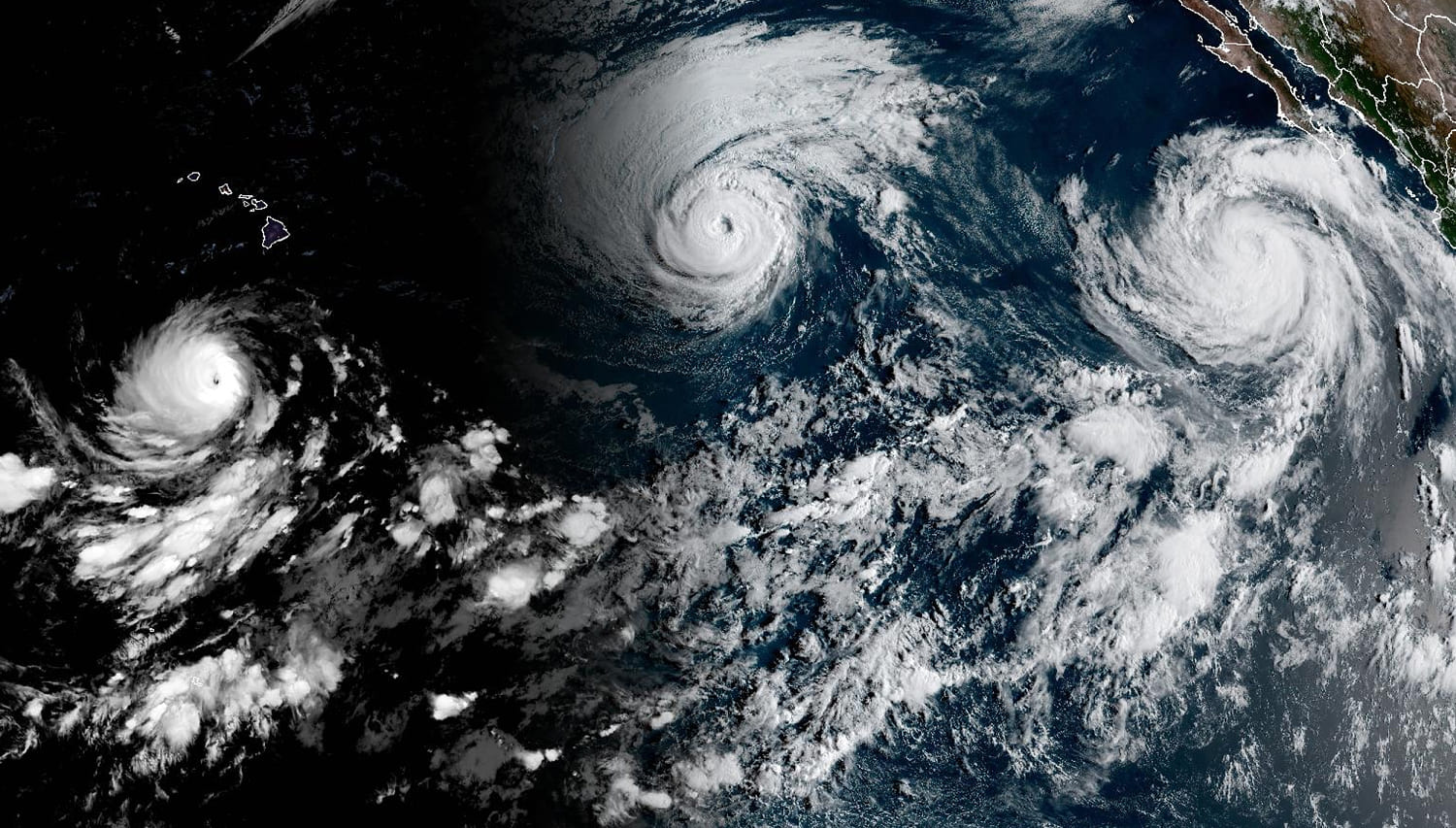
Ocean temperatures tell stories long before the clouds ever gather. Right now, the Eastern Pacific is telling a story of intense thermal energy, and meteorologists are watching the text rewrite itself in real-time. When three simultaneous hurricanes churn across the basin, casual observers call it bad luck. Atmospheric scientists call it a signature. That signature belongs to El Nino, a climate phenomenon that shifts global weather patterns by warming the central and eastern tropical Pacific Ocean.
The mechanics driving this activity are straightforward yet devastating. Warm water acts as rocket fuel for tropical cyclones. When sea surface temperatures climb well above historical averages, they pump massive amounts of heat and moisture into the lower atmosphere. This thermal engine creates unstable air columns, driving rapid convection, towering cumulonimbus clouds, and organized cyclonic rotation. During an active cycle, the normal trade winds weaken or reverse direction. This shift drags warm water eastward, expanding the breeding ground for major storms far beyond their traditional boundaries.
The Anatomy of a Triple Confluence
Simultaneous storm clusters do not happen by accident. They require a synchronized atmospheric environment, and the current warming cycle provides precisely that stage.
Why Multiple Storms Form Together
- Madden-Julian Oscillation: This eastward-moving disturbance of clouds, rainfall, and winds often interacts with oceanic warming pulses to create favorable corridors for cyclonic development.
- Reduced Wind Shear: High-altitude winds that typically tear apart developing storm tops weaken during active thermal shifts, allowing vertical cloud columns to strengthen uninterrupted.
- Expanded Thermal Basins: Higher baseline ocean temperatures broaden the geographical zone where storms can sustain themselves, preventing them from drifting into cold water and dying out prematurely.
Watching satellite imagery of three distinct hurricanes spinning in close proximity highlights a profound vulnerability in coastal infrastructure. Emergency management systems are built to handle singular shocks. They are rarely engineered to coordinate simultaneous evacuations across different jurisdictions while sharing federal rescue assets.
Beyond the Surface Heat
Attributing a cluster of major storms solely to surface temperature ignores the deeper ocean dynamics at play. Beneath the waves, the thermocline—the transition layer between warm surface water and deep cold water—deepens significantly during these climate phases. This creates a vast reservoir of heat that prevents upwelling from cooling the surface. Storms passing over this region do not lose intensity because the underlying energy source remains virtually inexhaustible.
Furthermore, moisture transport changes drastically. Enhanced evaporation pumps atmospheric rivers of humidity into the upper troposphere. When these moisture plumes collide with continental topography, the resulting rainfall shatters historical records. Coastal communities experience compound disasters where severe wind damage serves merely as the prelude to catastrophic inland flooding.
The Historical Precedent
This is not an unprecedented anomaly, though the frequency of intense clusters demands analytical scrutiny. Similar multi-storm configurations appeared during the historic thermal events of 1997 and 2015. Each occurrence left behind a trail of revised risk models and billions of dollars in infrastructure repairs.
Insurance markets have begun factoring these synchronized events into risk pricing. Traditional actuarial tables, which calculate probabilities based on isolated historical storms, are failing. When multiple high-severity events hit overlapping supply chains and reinsurance markets simultaneously, the financial shockwaves ripple globally. Construction materials, logistics networks, and municipal bond ratings all feel the pressure of climate volatility.
Preparing for the Next Convergence
Mitigating the risks of concurrent oceanic threats requires a shift in civil defense philosophy. Regional emergency response cannot rely on mutual aid agreements that assume neighboring states or municipalities have spare capacity. If three severe weather systems threaten different coastlines at the exact same moment, national disaster reserves face immediate depletion.
Upgrading coastal defenses, hardening power grids against salt-water corrosion, and modernizing flood drainage systems are no longer long-term objectives. They are immediate operational necessities. The thermal engine driving these storms shows no sign of slowing its output, and the coastline remains squarely in the path of the current.