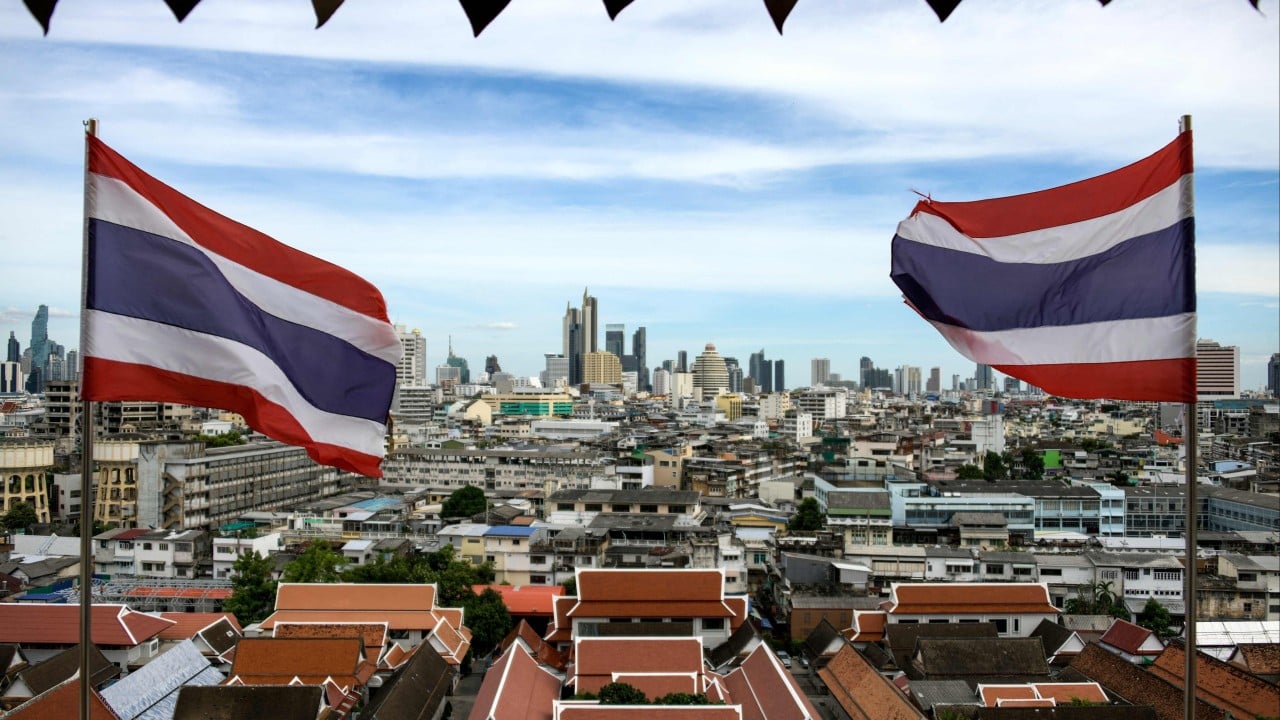
Every armchair trade analyst on LinkedIn is currently writing the obituary for cross-border Chinese e-commerce in Southeast Asia. The headline narrative is predictable, neat, and completely detached from operational reality. Bangkok slaps a 30% import duty on low-value parcels, closes the de minimis loophole that previously exempted goods under 1,500 baht from Value Added Tax and customs duties, and suddenly Temu, Shein, and thousands of Shenzhen drop-shippers are supposed to pack their bags and go home.
They won’t. In fact, this tariff is the best thing that could have happened to the dominant Chinese platforms.
The lazy consensus assumes that Chinese e-commerce wins solely on ultra-cheap, tax-free parcel shipping from Guangzhou straight to a consumer’s doorstep in Chiang Mai. That was true in 2019. In today’s market, that model is already obsolete for anyone operating at scale. By focusing on the sticker shock of a 30% duty, mainstream commentary misses the structural transformation already underway across the Mekong subregion.
The tax doesn’t protect local Thai manufacturers. It merely acts as a regulatory moat that wipes out small-time, cross-border arbitrageurs while handing the entire Southeast Asian market on a silver platter to well-capitalized Chinese supply chain giants.
The De Minimis Myth and the Reality of Unit Economics
To understand why the panic over a 30% tariff is misplaced, you first have to understand what the de minimis exemption actually did—and what happens when you strip it away.
For years, cross-border sellers exploited Thailand’s 1,500-baht threshold. By breaking shipments down into individual, direct-to-consumer parcels, platforms bypassed both the 7% VAT and standard Most Favored Nation (MFN) customs duties, which frequently hit 20% to 30% on textiles, footwear, and consumer electronics. Local Thai retailers screamed bloody murder, arguing they were competing with one hand tied behind their backs because they had to pay corporate taxes, import duties on bulk stock, and VAT at the register.
They were right about the unfairness. They are dead wrong about the cure.
Let’s look at the actual math of a fast-fashion blouse or a plastic phone case manufactured in Yiwu or Dongguan. The ex-works factory gate price—the raw cost of the item before shipping and platform fees—is often less than 15% of the final retail price.
Imagine a scenario where a Chinese seller lists a dress on a marketplace in Bangkok for 300 baht. The manufacturing cost is roughly 45 baht. International air-cargo consolidation and last-mile delivery via J&T Express or Flash Express eat up another 70 baht. Customer acquisition and platform commissions take 90 baht. Even with zero taxes, the seller is banking a healthy 95-baht gross profit—a 31% margin.
Now, apply a 30% import duty and a 7% VAT. Does the retail price jump to 411 baht? Only if the seller is an amateur.
First, customs duties are assessed on the declared CIF value (Cost, Insurance, and Freight), not the final retail markup. A 30% tariff on a declared value of 115 baht isn’t 90 baht; it’s 34.5 baht. Second, Chinese factories operate on utilization rates, not rigid margin targets. When domestic demand in China softens—a persistent reality given the prolonged slump in Chinese property and consumer sentiment—manufacturers in Guangdong will happily eat half that tariff just to keep their assembly lines running at 90% capacity.
The consumer doesn’t see a 30% price hike. They see a 5% price adjustment, buried beneath a flash-sale coupon. Meanwhile, the local Thai retailer buying wholesale from a distributor in Sampeng Market is still paying more for the exact same product.
The Regulatory Moat That Crushes Small Competitors
I have watched dozens of mid-sized brands and independent e-commerce aggregators burn millions of dollars trying to play cross-border arbitrage in Southeast Asia. They build sleek Shopify stores, run Meta ads targeting Bangkok and Nonthaburi, and drop-ship single units from Shenzhen warehouses.
Those businesses are finished. A 30% tariff plus strict customs clearance doesn't just add cost; it adds friction. Parcels get held at Suvarnabhumi Airport. Customers refuse Cash-on-Delivery (COD) packages because the delivery driver demands an unexpected customs fee at the gate. Return rates—already notoriously high in COD-heavy markets like Thailand—skyrocket past 25%, wiping out net profitability overnight.
The giants don't care. Why? Because the giants aren't shipping single parcels anymore.
When you raise the cost and compliance burden of cross-border B2C shipping, you force the market toward B2B bulk importation and localized fulfillment. And nobody on earth executes bonded warehousing and localized supply chain integration faster than Chinese tech conglomerates.
Look at how Alibaba’s Cainiao Network, TikTok Shop, and Shein operate. They don't wait for an order in Bangkok to put a box on an airplane. They use predictive demand algorithms to ship container loads of high-velocity SKUs via sea freight or the China-Laos railway straight into bonded warehouses in Thailand’s Eastern Economic Corridor (EEC).
By moving inventory in bulk before the consumer clicks "buy," they unlock three massive advantages that destroy the tariff's intended effect:
- Drastically Lower Freight Costs: Sea and rail container shipping reduces per-unit logistics costs by up to 70% compared to air-mail small parcels. That savings alone absorbs a huge chunk of the new customs duty.
- Tariff Engineering and Valuation Optimization: Bulk B2B importers have customs brokers who legally classify goods under optimal Harmonized System (HS) codes, utilize ASEAN-China Free Trade Area (ACFTA) certificates of origin (Form E) to reduce tariffs to zero on qualifying categories, and declare true wholesale transfer prices rather than inflated retail values.
- Same-Day Delivery: Once the goods clear customs in bulk and sit in a fulfillment center in Samut Prakan, the Chinese seller is no longer a "foreign" merchant. They are a local merchant offering 24-hour delivery with zero customs friction at the doorstep.
The Thai government thought it was building a wall to keep Chinese goods out. Instead, it built a filter that eliminates small, fragmented sellers and guarantees an oligopoly for the massive Chinese platforms that have the capital to set up local entities, lease bonded warehouses, and hire compliance teams.
Asking the Wrong Question About Southeast Asian Retail
If you are a retailer, investor, or policymaker, asking "Will a 30% tariff threaten Chinese e-commerce sales?" is a waste of your time. It is the wrong question entirely.
The real question is: How do local brands survive when Chinese manufacturers stop being suppliers and become their direct landlords?
Let’s dismantle the most common myths circulating in boardrooms across Bangkok, Jakarta, and Manila right now.
Will Thai manufacturers finally regain market share from Chinese imports?
No. Raising tariffs on finished goods does nothing to fix the underlying cost structure of Thai manufacturing. Thailand suffers from higher industrial electricity rates, higher minimum wages, and a lack of upstream raw material production compared to southern China. If a Thai garment factory has to import fabric, thread, and zippers from China—paying duties and freight on the raw materials—it will never beat a vertically integrated factory in Guangzhou on price, even if you slap a 50% tariff on the finished shirt. Protectionism without upstream industrial policy just makes everything more expensive for local consumers while failing to revive domestic factories.
Does this mean local consumers will go back to shopping at physical malls?
Wishful thinking from commercial real estate developers. Southeast Asian consumers didn't move to e-commerce solely because of tax loopholes. They moved because mobile penetration is near universal, logistics networks reach rural provinces that modern retail ignores, and algorithmic discovery on platforms like TikTok makes shopping an entertainment habit. A marginal price increase on imported goods won't drive a consumer in Khon Kaen into a traffic jam to visit a department store. They will simply buy slightly fewer items per cart, or shift from premium imported tiers to budget imported tiers.
Can local e-commerce sellers out-market Chinese competitors?
Only if they abandon the commodity game entirely. If you are a Thai reseller buying generic phone accessories, kitchen gadgets, or unbranded apparel on 1688.com and marking them up 3x on Shopee or Lazada, your business model has an expiration date. The factory you are buying from is already opening its own storefront on the exact same platform, using AI-generated Thai copywriting, local KOLs (Key Opinion Leaders) for live-streaming, and localized fulfillment. You cannot out-market a competitor who owns the tooling and the raw materials.
What Actually Works: The Anti-Commodity Playbook
I have advised brands across Asia-Pacific through tariff shocks, platform algorithm changes, and supply chain collapses. The companies that survive aren't the ones lobbying politicians for higher taxes. They are the ones that recognize where Chinese supply chains are structurally weak.
China’s manufacturing superpower is built on scale, speed, and standardization. That very strength creates massive blind spots. If you want to beat them on your home turf, stop fighting them on price and logistics. Attack their blind spots instead.
1. Exploit Cultural Nuance and Hyper-Localization
Chinese platforms rely heavily on data-driven replication. They look at what is trending globally or regionally and clone it at warp speed. What they cannot easily replicate is deep, authentic cultural resonance, local humor, and hyper-specific consumer habits.
In beauty and personal care, for example, global and Chinese brands routinely miss the mark on local climate realities and skin tones. A Thai skincare brand formulated specifically for 90% humidity, tropical UV exposure, and local herbal traditions—marketed through genuine, unscripted storytelling by local founders—commands a level of trust that a faceless Shenzhen storefront cannot buy with ad spend.
2. Master High-Touch Community and Post-Purchase Service
Cross-border sellers treat transactions as disposable. Customer service is usually an automated chatbot translating Mandarin into broken Thai. Returns are a nightmare. Warranties are non-existent.
If you sell anything with technical complexity—home appliances, fitness equipment, automotive accessories, specialty electronics—your moat is physical presence. Offer instant warranty replacements, local repair centers, and real human support via LINE Official Accounts. When a consumer buys a 5,000-baht espresso machine, they don't care about saving 400 baht from a cross-border seller if it means tossing the machine in the trash when a gasket blows six months later.
3. Weaponize Speed of Iteration on Micro-Trends
While a Chinese container ship is sitting in port clearing customs in Laem Chabang, a nimble local brand can spot a micro-trend on Thai Twitter (X) or TikTok on Monday, run a small-batch production locally by Wednesday, and sell out by Friday.
Chinese supply chains dominate macro-trends at massive volume. They are far less agile when it comes to hyper-local, fleeting cultural moments that require small MOQs (Minimum Order Quantities) of 200 to 500 units. Own the micro-niches that are too small for a giant factory in Zhejiang to bother retooling its machines for.
The Uncomfortable Truth About This Strategy
Let’s be brutally honest about the trade-offs of building a brand around cultural nuance, high-touch service, and micro-trends: you will never achieve the venture-scale margins or explosive top-line growth of a tech-enabled commodity aggregator.
This path is slower. It requires higher operational overhead, real physical real estate, local customer support payroll, and relentless creative output. You cannot automate your way to cultural relevance. Many founders hate this reality because it doesn't look sexy on a pitch deck. They want the illusion of infinite scale without the messy reality of operational depth.
Yet, when regulatory winds shift—whether it’s a 30% tariff in Thailand, a sudden import ban in Indonesia, or a de minimis overhaul in the United States—the "scalable" arbitrageurs get wiped out in a single fiscal quarter. The brands with real local roots, genuine intellectual property, and direct customer relationships barely flinch.
Stop Waiting for Politicians to Save Your Margins
The 30% Thai import duty is political theater designed to appease vocal domestic retail lobbies while generating a modest bump in customs revenue. It will slow down the amateurs. It will bankrupt the drop-shippers. It will cause a temporary dip in cross-border air cargo volumes.
And within six months, the biggest Chinese e-commerce players will have completed their pivot to local bonded fulfillment, Form E tariff optimization, and domestic Thai corporate entities. They will be faster, cleaner, and more entrenched in the Thai retail ecosystem than they were before the tax existed.
If your business strategy depends on a customs officer protecting your profit margins, you don't have a business. You have a countdown clock. Audit your supply chain today, kill every generic SKU that can be easily cloned in Guangdong, and start building something a container ship can't replace.