Introduction to Temporal Arbitrage
Traditional musical performance models operate within strict human physiological constraints. Standard durations are bound by breath control, cognitive fatigue, and the finite attention spans of audiences. When John Cage composed ASLSP (As Slow as Possible) in 1987, he introduced an open-ended constraint rather than a fixed temporal boundary.
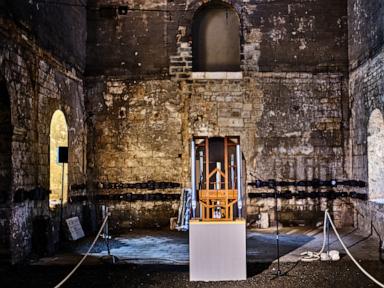
The ongoing performance at the St. Burchardi Church in Halberstadt, Germany, which began in 2001 and is scheduled to conclude on September 5, 2640, transforms this musical instruction into a multi-generational engineering and philosophical stress test. Evaluating this project requires moving past superficial romanticizations of slow art and examining the structural mechanics, mechanical constraints, and longevity protocols that govern a 639-year performance.
The Three Pillars of the Halberstadt Implementation
The execution of a multi-century musical composition is not merely an artistic choice; it is an exercise in long-range institutional design. The project relies on three distinct operational pillars to maintain continuity across generations.
1. Mechanical Determinism Versus Human Intermittency
The performance relies on a custom-built organ housed in the right transept of the St. Burchardi Church. Because human operators cannot maintain a key depression or monitor wind supply for centuries, the system substitutes biological labor with mechanical constants.
Weights and sandbags applied directly to the organ pedals hold the structural keys down indefinitely. An electric blower supplies continuous compressed air, backed by redundant power systems. Human intervention is strictly isolated to discrete, scheduled events: the manual addition or removal of specific organ pipes to execute chord transitions. This operational model minimizes human error by reducing interaction frequency to once every few months or years.
2. Historical Calibration and Symbolic Chronology
The duration of 639 years was not derived from the musical score itself, which contains no explicit temporal length. Instead, project organizers anchored the performance duration to a historical metric.
The year 2001 marked 639 years since the installation of the first documented blockwerk organ in the nearby Halberstadt Cathedral in 1361. By mapping the composition's duration to a historical institutional milestone, the project created a symmetrical numerical bridge between medieval instrument engineering and a hypothetical distant future.
3. Spatial Acoustics and Environmental Buffering
The St. Burchardi Church, a former Cistercian convent building, provides a raw acoustic environment characterized by bare stone and minimal soft furnishings. The long decay times of stone architecture allow sustained chords to blend continuously.
However, sustained sound production introduces physical stress on both the building and the local environment. The installation of an acrylic glass enclosure around the instrument serves as a dampening mechanism, mitigating excessive volume pressure within the restricted stone enclosure.
The Cost Function of Infinite Sustain
Maintaining a continuous tone for decades incurs distinct mechanical, energetic, and financial expenditures. Unlike digital systems that can simulate persistence via software states, a physical pipe organ requires continuous material throughput.
[Energy Source: Electric Blower]
       │
       ▼
[Pneumatic Pressure: Air Conduits]
       │
       ▼
[Mechanical Weight: Sandbag-Depressed Pedals]
       │
       ▼
[Acoustic Output: Selected Organ Pipes]
       │
       ▼
[Environmental Interaction: Stone Resonance & Decay]
The primary cost variable is resource continuity. The mechanical valves, leather components within the bellows, and wooden pipes are subject to material fatigue, oxidation, and biological degradation (such as wood rot or mold from humidity fluctuations within an unheated medieval church).
The financial model relies on the John Cage Organ Foundation Halberstadt, funded through donations, sponsorships, and visitor tourism. The cost function is front-loaded with capital expenses for custom engineering, followed by a long tail of low-intensity, high-reliability maintenance operations. The risk profile shifts over centuries from active mechanical failure to passive institutional attrition—specifically, the generational transfer of organizational knowledge and funding stability.
Addressing Operational Mechanics
To understand how a project of this scale functions on a day-to-day basis, several operational mechanisms must be addressed:
- How are notes sustained without human intervention? Mechanical weights, specifically sandbags placed on the instrument's pedals, keep specific keys depressed continuously without requiring muscular endurance.
- What happens during power outages or mechanical failures? The system utilizes redundant power setups and manual oversight by local supervisors who inspect the air supply and mechanical weights during scheduled chord changes.
- Who decides when the notes change? The John Cage Organ Foundation strictly adheres to a translated interpretation of Cage's original score, which maps out the exact calendar dates for each transition based on proportional time scaling.
Strategic Longevity Assessment
The architecture of the Halberstadt performance offers a blueprint for long-term cultural preservation, but it also highlights the limits of physical artifacts.
A critical vulnerability of the project is its reliance on a single geographic point of failure: the St. Burchardi Church building itself. Medieval stone structures degrade under freeze-thaw cycles and moisture infiltration. Without continuous structural remediation of the host building, the physical environment could fail long before the target date of September 5, 2640.
Future stability depends on decoupling the mechanical performance from the structural integrity of any single architectural shell. Institutionalizing redundancy—such as digital preservation, mirrored mechanical installations, and legally bound trust funds—represents the necessary next phase for projects attempting multi-century execution. Organizations undertaking extreme-duration initiatives must prioritize modular asset replacement over static preservation to survive the inevitable decay of their host environments.