Every headline out of Taipei praises the latest massive defense spending package as a sign of unyielding grit. The standard narrative is predictable. Beijing increases military pressure, and Taipei responds by writing bigger checks for more hardware, buying expensive jets, missiles, and heavy armor to match the adversary dollar for dollar, tank for tank.
It is a comforting illusion for politicians who need to show action. It is also a straight path to strategic bankruptcy.
I have spent years watching defense budgets get treated like corporate tech acquisitions, where the side that spends the most cash automatically wins the market. That philosophy works in Silicon Valley. In modern asymmetric combat against a near-peer giant, chasing symmetrical military volume is financial suicide. Taiwan does not need a bigger defense budget. It needs to stop playing a game designed entirely by its opponent.
The Flawed Logic of Symmetrical Deterrence
The lazy consensus in modern defense journalism rests on a basic arithmetic error. Commentators look at gross domestic product, manpower pools, and procurement budgets, then conclude that Taipei must buy more high-ticket platforms to close the capability gap.
This assumes that defense is a linear equation. It is not.
When a smaller actor attempts to match a continental superpower in traditional heavy military hardware, they are falling straight into an economic trap. Taiwan cannot out-build, out-procure, or out-manpower a manufacturing base that dwarfs almost every other industrial output on earth. Every billion dollars spent on multi-role fighters or main battle tanks is a billion dollars diverted from what actually breaks an amphibious invasion.
The real question nobody in the mainstream media wants to ask is why Taipei continues to prioritize prestige assets that would likely be sitting ducks in the opening hours of a conflict. Huge airbases, deep-water ports, and massive armored columns are stationary or centralized targets. They light up every satellite and radar array across the strait with ease.
Buying more of them does not deter aggression. It simply gives the adversary a more lucrative target set.
The Asymmetric Reality Check
Real deterrence in the twenty-first century is about denial, not punishment. It is about making the cost of aggression so absurdly high, complex, and protracted that the invasion calculus breaks down before the first troop transport leaves the dock.
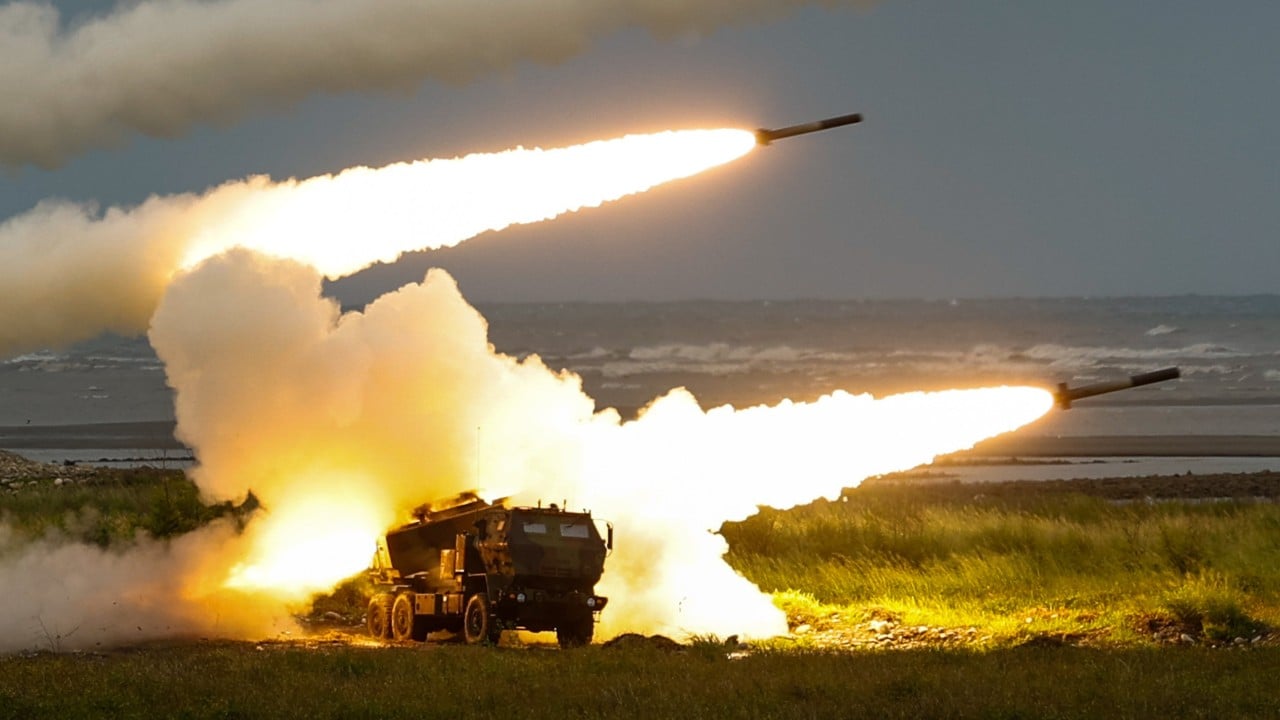
Military analysts who actually understand operational research point to decentralized, highly mobile, and attritable systems. Think thousands of cheap loitering munitions, distributed anti-ship missile batteries hidden in civilian commercial traffic, and sea-denial networks that turn the Taiwan Strait into a maritime meat grinder.
Yet, defense procurement boards continually face institutional pressure to buy the shiny toys. Generals love platforms. Politicians love ribbon-cutting ceremonies for multi-billion-dollar defense contracts.
I have watched defense contractors wine and dine procurement officers into buying systems that look magnificent on a parade ground but possess zero survivability in a saturated electronic warfare environment. The incentive structure is entirely broken. Contractors get paid for units delivered, not for wars prevented or strategies won.
The Economic Attrition Trap
Let us look at the financial math. If Taipei spends record sums on traditional hardware, it strains its fiscal health while playing directly to the industrial strengths of its rival.
Beijing wants a conventional arms race. It has the shipyards, the steel mills, and the state-directed capital to sustain a prolonged military buildup across conventional vectors. When Taipei takes the bait and tries to match that pace through conventional procurement, it drains capital away from critical civil defense, cyber resilience, and societal hardening.
A truly resilient defense strategy looks less like a miniature superpower and more like an armed hedgehog. It involves hardening critical infrastructure, decentralizing power grids, stockpiling essential medical supplies and food, and turning every coastline into a layered maze of distributed firepower.
A battery of mobile anti-ship missiles hidden behind a shipping container on a commercial truck costs a fraction of a new frigate. More importantly, it is infinitely harder to find and destroy.
Rewriting the Defense Playbook
If you want to understand why current defense policies are failing, look at how logistics are handled under fire. A modern conflict across the strait will not be decided by dogfights between elite fighter squadrons. It will be decided by supply lines, communications redundancy, and who can reconstitute lost capabilities the fastest.
Taiwan must ruthlessly shed its attachment to legacy military prestige. That means canceling redundant aircraft orders, freezing purchases of vulnerable heavy armor, and redirecting every spare dollar into distributed lethality, civil resilience, and asymmetric denial packages.
The status quo is a slow-motion defeat disguised as strength. Pouring more cash into traditional military budgets while ignoring the structural mismatch of the battlefield is like buying a faster car to outrun an incoming missile.
Stop funding the targets. Start funding the traps.
/LouvresengchyeteoGettyImages-5a14669aaad52b00370c599e.jpg)