Every time a cruise ship crew member goes overboard and gets pulled out of the Pacific alive hours later, the mainstream travel press writes the exact same fairy tale. They frame it as a miraculous triumph of human willpower, applaud the Coast Guard's heroic search-and-rescue efforts, and pat the cruise line on the back for turning the ship around.
It is lazy journalism. Worse, it is dangerous propaganda that lets a multi-billion-dollar industry off the hook for systemic negligence.
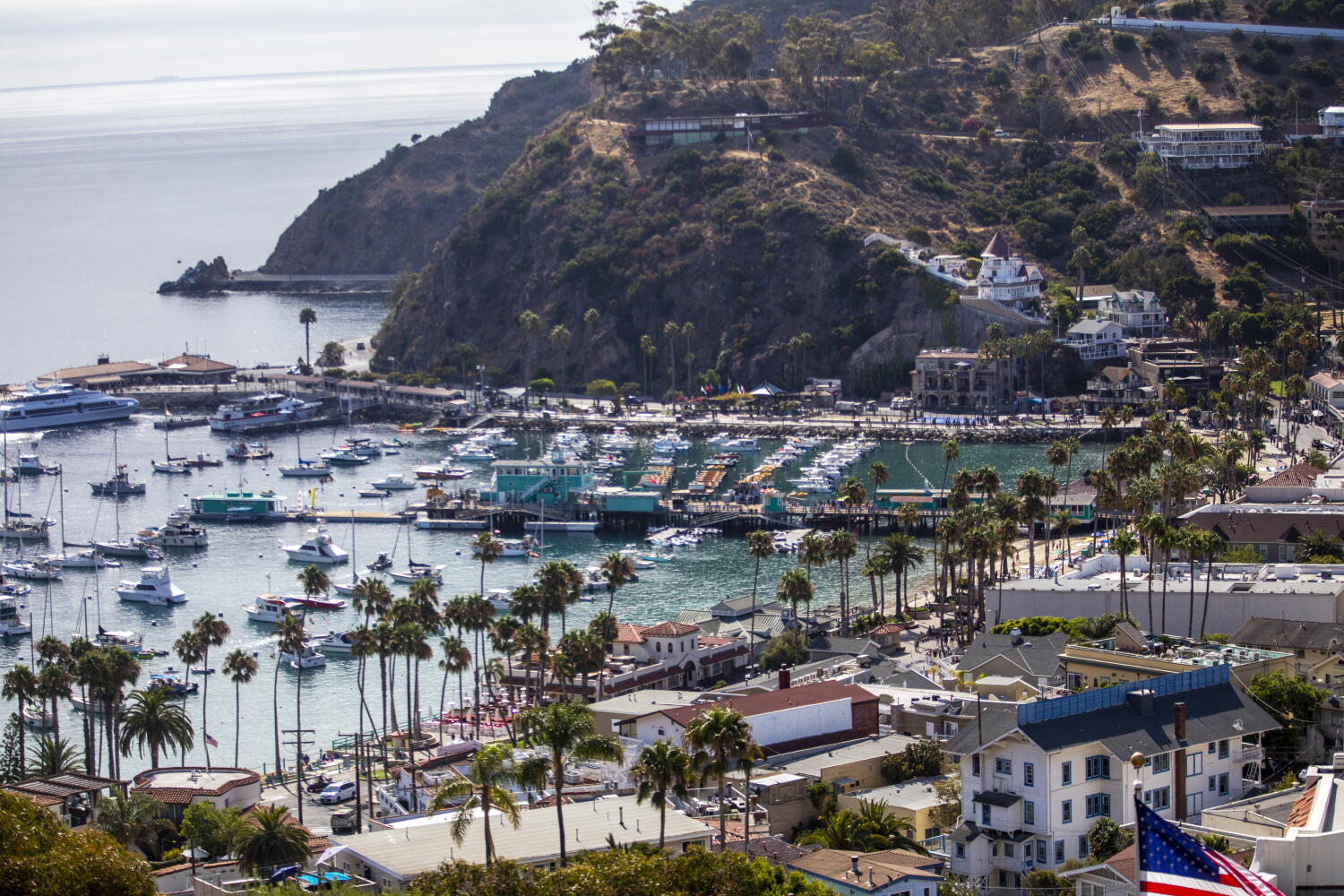
When a crew member treads water for nine hours off the coast of Catalina Island before being spotted, that is not a feel-good survival story. It is a catastrophic indictment of how modern cruise ships monitor their decks, treat their labor force, and delay emergency responses. If you are celebrating the rescue without asking why a human being was floating undetected in open shipping lanes for nearly half a day, you are asking the wrong question entirely.
The Myth of the Instant Man Overboard Alarm
Most passengers board a mega-ship assuming it is packed with military-grade surveillance capable of detecting a dropped smartphone, let alone a falling human being. They assume that the second someone crosses the railing, klaxons blare on the bridge, GPS buoys drop automatically, and the captain executes a textbook Williamson turn within sixty seconds.
That is pure fiction.
In reality, the overwhelming majority of cruise ships operating in North American waters still rely on human eyeballs and manual reporting to detect a Man Overboard (MOB) event. A crew member goes missing. Hours pass before their supervisor notices they failed to show up for a shift. Security then spends more precious time reviewing grainy closed-circuit television (CCTV) footage—often manually scrubbing through dozens of camera feeds—just to confirm the person didn't simply fall asleep in an empty lounge.
By the time the ship actually reverses course, the vessel is dozens of nautical miles away, and the person in the water has been drifting in cold currents for half the night.
Why Automated Detection Exists Everywhere Except Where It Matters
The technology to prevent a nine-hour search has existed for over a decade. Automated MOB systems combine thermal imaging, radar, and computer vision to detect the exact thermal signature and splash profile of a human body breaking the plane of the ship’s hull. When triggered, these systems alert the bridge in under ten seconds and drop an automated datum marker on the electronic chart.
So why aren't they standard on every ship sailing out of Long Beach or Miami? Money and liability.
Under the Cruise Vessel Security and Safety Act (CVSSA) of 2010, cruise lines are required to integrate technology that can be used for capturing images of passengers or detecting passengers who have fallen overboard, to the extent that such technology is available. That final clause is a loophole wide enough to sail an Oasis-class ship through. Cruise operators have spent years lobbying and dragging their feet, claiming false positives from sea birds, waves, or thrown trash make automated radar and thermal systems too disruptive to bridge operations.
I have sat in maritime safety briefings where executives agonized over the $500,000 per-ship capital expenditure of installing true automated thermal detection, while simultaneously approving $50 million budgets for onboard go-kart tracks and robotic bartenders. They know the math. False alarms annoy paying guests and cost fuel when a captain has to slow down to verify a splash. Letting a crew member tread water for nine hours costs the company nothing until the press finds out.
The Dark Reality of Crew Overboard Incidents
When a passenger goes overboard, it makes international headlines before the ship even docks. When a crew member goes over, the story is routinely buried, sanitized, or framed around the worker's "miraculous" stamina.
Let’s look at the mechanics of life below the waterline. The people running the galleys, scrubbing the decks, and turning down your cabin are overwhelmingly migrant workers from the Global South working under brutal, high-stress contracts. They routinely pull 10-to-14-hour shifts, seven days a week, for six to nine months straight without a single full day off.
Sleep deprivation is not an anomaly on a cruise ship; it is the baseline operating condition.
When a worker ends up in the ocean at 2:00 AM off Catalina Island, there are usually only two possibilities: catastrophic exhaustion leading to an accidental fall in a poorly lit, low-railing crew area, or an acute mental health crisis triggered by isolation, predatory labor contracts, and zero access to confidential psychiatric care.
What Happens to the Human Body in the Catalina Channel
To understand just how close to death a nine-hour swim in Southern California waters actually is, strip away the romanticized "will to live" narratives and look at basic physiology.
Even in late summer or early autumn, water temperatures in the San Pedro Channel between Catalina Island and the mainland hover between 60°F and 68°F (15.5°C to 20°C). At 65°F, the human body loses heat roughly 25 times faster than it does in air of the same temperature.
Here is the brutal timeline of immersion in those waters:
- Minutes 1 to 3: Cold shock response. Involuntary gasping, hyperventilation, and a massive spike in heart rate and blood pressure. If you inhale water during this phase, you drown before the ship is even out of sight.
- Minutes 3 to 30: Cold incapacitation. Blood vessels in the extremities constrict violently to protect the core. Grip strength vanishes. Swim failure sets in—even Olympic swimmers struggle to maintain horizontal propulsion once forearm muscles cool below 80°F.
- Hours 1 to 4: Onset of clinical hypothermia. Core temperature drops below 95°F (35°C). Shivering becomes violent and uncontrollable, burning through glycogen reserves at a terrifying rate. Cognitive function degrades; confusion and apathy take over.
- Hours 4 to 9: Severe hypothermia and exhaustion. Shivering stops because the body has run out of fuel. Heart arrhythmias become imminent. Survival at this stage is almost entirely dependent on whether the victim is wearing clothing that traps a thin layer of warmed water, whether they adopt the Heat Escape Lessening Posture (HELP) rather than thrashing, and sheer metabolic luck.
Surviving nine hours in that environment without a personal flotation device (PFD) puts a person in the statistical fraction of a percent. According to independent maritime safety studies compiled by experts like Dr. Ross Klein, who has tracked cruise industry incidents for decades, the overall survival rate for all cruise ship overboard incidents hovers around 17% to 20%. Once someone is in the water for more than three hours without a life jacket, that probability craters into single digits.
Calling a nine-hour ordeal a "miracle" obscures the reality that the victim was minutes away from cardiac arrest solely because nobody knew they were missing for hours.
Dismantling the Industry’s Favorite Excuses
If you ask a cruise line spokesperson or a mainstream travel blogger why these incidents happen and why rescues take so long, you will get a predictable set of talking points. Let’s take a sledgehammer to the three biggest lies.
Lie 1 "You Cannot Fall Off a Cruise Ship by Accident"
This is the industry's favorite deflection. Whenever someone goes over, PR teams subtly imply the person was drunk, reckless, climbing on furniture, or intentionally jumping.
While high-railing passenger promenade decks are generally safe if you keep both feet on the floor, crew working decks are a completely different environment. Mooring stations, tender platforms, waste disposal bays, and exterior crew gangways have lower barriers, wet steel surfaces, heavy machinery, and constant vibration. When you are exhausted at the end of a 12-hour shift, dealing with a rolling swell in the Pacific, a single slip near an open stern gate or low bulwark puts you over the edge in half a second.
Lie 2 "The Ocean Is Too Big to Track One Person"
Critics of automated MOB mandates love to point out that a 1,000-foot vessel cannot stop on a dime. That is true. A modern mega-ship traveling at 20 knots needs well over a mile and several minutes just to bleed off forward momentum and execute a turn.
That physical limitation is the exact reason automated instant detection is non-negotiable. If the bridge knows at the exact second someone goes over, the ship drops a GPS marker and maintains visual or radar contact with the datum point while turning. The search area is a few hundred square yards.
When the ship doesn't realize someone is missing for four hours, the vessel has traveled 80 nautical miles. The search area expands from a few hundred yards to hundreds of square miles of shifting currents, wind drift, and swell. At that point, the Coast Guard is looking for a human head the size of a coconut in a vast expanse of dark water.
Lie 3 "The Coast Guard Handled It Seamlessly"
The United States Coast Guard Sector Los Angeles-Long Beach deserves immense credit for pulling off rescues in the Catalina Channel. Their helicopter crews and cutter captains are among the best maritime SAR operators on earth.
However, relying on the Coast Guard to bail out private corporations for failing to monitor their own vessels is a massive public subsidy for corporate negligence. Every hour a MH-60 Jayhawk helicopter and a Coast Guard cutter spend grid-searching the Pacific costs taxpayers tens of thousands of dollars—money spent compensating for the cruise line's refusal to install infrared cameras on its own hull.
The Uncomfortable Truth About Who Pays the Price
To be completely fair, mandating military-grade automated MOB systems across every commercial cruise vessel is not a silver bullet without trade-offs.
False positives do happen. Heavy sea spray, breaching marine mammals, and unauthorized crew throwing garbage bags over the stern can trigger optical and radar sensors. Every time an alarm sounds on the bridge, officers must verify the feed, potentially slow the vessel, and log the event. Over a 365-day operating schedule, that creates administrative friction and minor fuel penalties. Furthermore, cruise ticket prices would inevitably absorb the capital and maintenance costs of outfitting fleets with redundant thermal and radar arrays.
Those are completely acceptable costs.
If an airline refused to install collision-avoidance radar because birds occasionally triggered false alerts, regulators would ground the fleet before sunset. Yet in the maritime sector—protected by flags of convenience in Panama, the Bahamas, and Liberia—cruise operators routinely sidestep strict US occupational safety standards the moment they cross the twelve-mile territorial limit.
Consider a hypothetical scenario where an American factory worker fell into an unguarded vat of freezing water, wasn't noticed missing until the next shift, and survived nine hours only because a passing passerby heard them screaming. OSHA would shut the plant down, levy millions in fines, and executives would face criminal negligence probes. On a foreign-flagged cruise ship operating off California, it gets spun into a heartwarming news segment about grit and survival.
What Needs to Change Before the Next Person Goes Over
If you are a traveler who books cruises, or an industry insider who actually cares about maritime safety rather than stock buybacks, stop applauding survival stories and start demanding structural accountability.
- Mandatory Real-Time Thermal Detection: Regulators must strip the "to the extent available" loophole out of the CVSSA. Any cruise ship embarking passengers at a US port must be equipped with multi-sensor automated MOB systems capable of alerting the bridge within 15 seconds of a hull breach.
- Wearable Crew Transponders: Every cruise line already forces passengers to wear RFID wristbands or medallions so they can buy frozen drinks and unlock cabin doors. Giving crew members waterproof, low-energy Bluetooth or VHF man-overboard beacons integrated into their mandatory work uniforms costs pennies per head. If a beacon separates from the ship's local network or hits saltwater, an alarm triggers immediately.
- Independent Labor Audits: Crew work-hour logs are notoriously falsified across the maritime industry to satisfy Port State Control inspectors. Third-party, tamper-proof digital timekeeping and strict enforcement of rest periods would eliminate the chronic fatigue that causes late-night deck accidents in the first place.
- Transparent Incident Reporting: Cruise lines should be legally barred from burying crew overboard incidents in internal settlements. Every MOB event—whether it ends in a rescue or a recovery—must trigger an automatic, public investigation by the National Transportation Safety Board (NTSB) if the vessel operates out of US waters.
A human being surviving nine hours in the open ocean is a testament to their individual refusal to die. Treating that survival as a victory for the system that left them there to drown is an insult to every worker keeping those ships afloat.